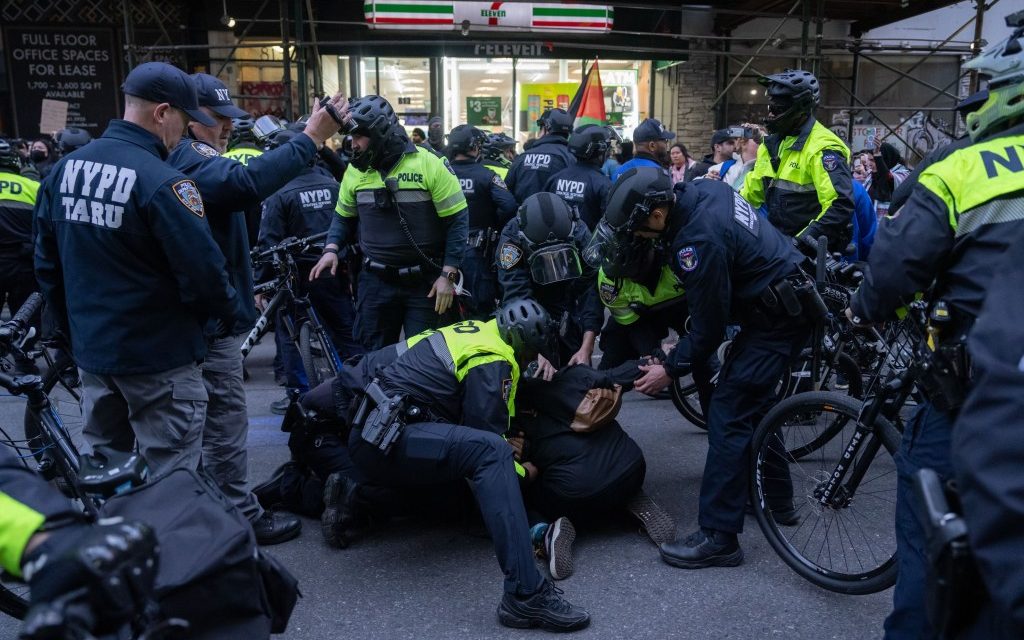
New York City Mayor Zohran Mamdani faced intense criticism after he declared plans to disband the New York City Police Department’s specialized counterterrorism unit. This unit, which also handles crowds at protests, will be replaced by a new, civilian-led “community dialogue and de-escalation division” and a “First Amendment support team.” City Hall stated this new division will be unique in that it will “not have weapons or arrest powers.”
Mamdani emphasized his commitment to campaign promises, stating, “We are delivering on the promise to separate counterterrorism from protest response. New Yorkers exercising their constitutional rights should not face the same police response as a terrorism threat.”
The NYPD Strategic Response Group, established in 2015, has played a key role in managing protests and public safety incidents. Under the new plan, police can still be called for arrests, but the new civilian unit will lack weapons and arrest authority. The “First Amendment support team” will consist of 30 officers trained in communication and de-escalation techniques. Additionally, City Hall noted police will no longer use tear gas or pepper spray during protests, and the crowd-control method known as “kettling” will be ended.
NYPD Commissioner Jessica Tisch expressed concern, stating she would never support changes that weaken the department’s ability to protect New Yorkers. She believes these adjustments will enhance the department’s efficiency.
Several community leaders have voiced their unease. Inna Vernikov, a New York City Council member, warned the mayor’s decision unleashes greater risks on the Jewish community, referencing past violence against Jewish-owned businesses and synagogues. “Our community has already faced threats; this decision adds to our vulnerabilities,” she said.
Evan R. Bernstein, CEO of B’nai B’rith International, criticized the move as “a dangerous ideological betrayal of public safety.” He highlighted the significant threat of hate crimes against Jews, noting the SRG’s role in swiftly addressing antisemitic incidents. Bernstein argues that replacing trained officers with an unarmed civilian presence does not equate to reform.
The decision comes amid pressure from groups opposing Israel and recent incidents at Jewish institutions, as well as an increase in anti-Jewish hate crimes. In January, such crimes rose by 182%, and over half of all hate crimes in the city have targeted Jews, who comprise around 10% of the population.
Rabbi Chaim Steinmetz of Congregation Kehilath Jeshurun expressed worry over protests serving as intimidation rather than simple expressions of free speech. He fears that Mamdani’s actions may exacerbate such instances.
The World Jewish Congress has expressed confidence in the NYPD’s ongoing ability to protect Jewish lives despite the changes. Other voices in the community urge the city to maintain a strong response to threats against vulnerable communities.
Political commentator Jim Geraghty shared skepticism about the plan’s efficacy, noting, “It feels on brand for Mamdani, but it risks increased chaos and a sense of disorder.” These sentiments reflect a broader concern about the impact of these policy changes on the city’s safety and security.
 Allegations of Anti-Jewish Discrimination at CUNY School
 School Choice and the Texas Education Debate
 Trump’s Cryptocurrency Ventures and Their Impact on Supporters
 Amy Klobuchar’s Challenge as Minnesota Governor
 The Purpose and Challenges of Signature Collection for Political Candidates in Illinois
 Gray Wolves Stir Controversy Over Wildlife Management