In a significant rescue operation, Nigerian officials liberated over 308 people who had been held captive by jihadi kidnappers. This operation is recognized as Nigeria’s largest rescue effort to date.
Rescue in Kwara State
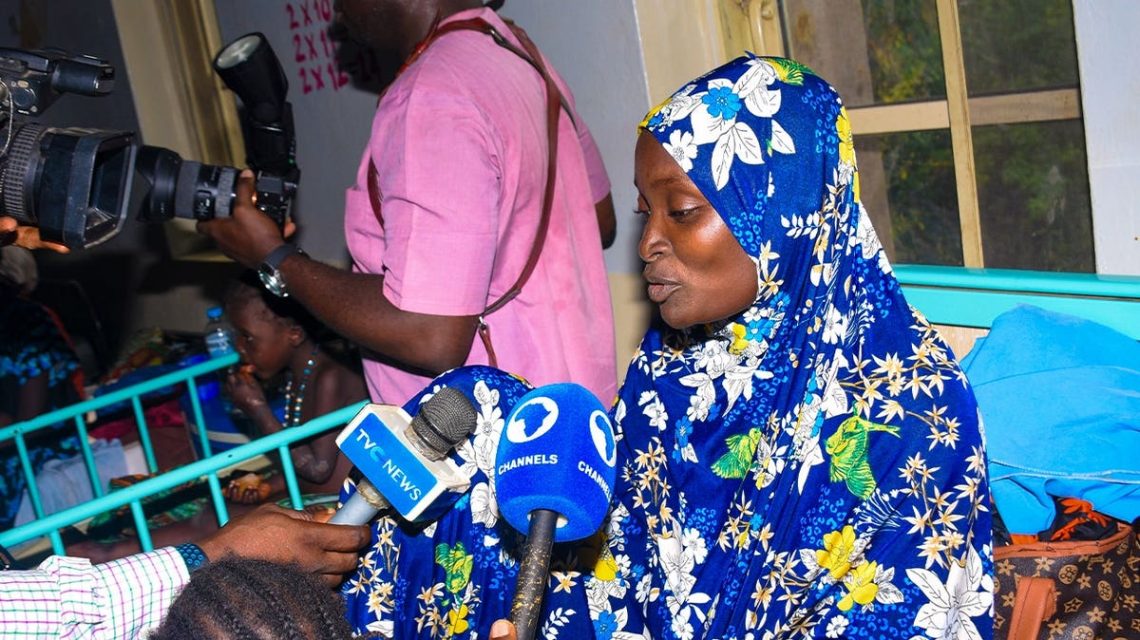
Among those rescued, 163 victims were from the Woro community in Nigeria’s Kwara State. They had been abducted during a raid on February 3, where the kidnappers killed 160 residents. The hostages reported that their captors took them as punishment for rejecting jihadi religious teachings.
“We prayed to God to help us go back home, but it never really crossed our minds that we were going to go back home,” said Hauwa Saliu, a freed captive.
Hauwa Saliu recounted how captors persistently questioned the captives about their acceptance of jihad.
Harsh Conditions in Captivity
Another victim, Amira Saliu, shared insight into their living conditions, describing how women and children were concealed in a forest close to a river. They had to extinguish fires and hide whenever helicopters were heard flying nearby.
Amira, a nurse, assisted ten women in childbirth without medical supplies. She stated, “I had no choice but to use my bare hands.” Their struggles extended to enduring days without food and burying fellow captives who had perished.
“I still cannot find the right words to describe what has happened to us. We saw death and suffering,” expressed Mary Ishaya, another former captive.
Aftermath and Reactions
Kwara State’s Governor, AbdulRahman AbdulRasaq, addressed the situation, revealing that 46 victims were receiving medical care at a hospital.
“This is indeed, indeed a very sad situation. We’ve not yet come to terms with it,” AbdulRasaq stated during a news conference. “It’s truly a shame that this has happened.”
The incident underscores ongoing tensions between Nigeria’s Islamic insurgency in the north and the country’s substantial Christian population, comprising approximately 45% of citizens.
International Involvement
On Christmas Day, President Donald Trump, working with Nigeria’s government, authorized precise missile strikes on the Islamic State-affiliated groups in the northern region. This action aimed to protect Nigeria’s Christian communities.
Continuing these efforts, a joint military operation in May reportedly led to the death of senior Islamic State leader Abu Bakr al-Mainuk.
Sources: Associated Press
 Former CEO Sentenced for Bank Fraud and Sanctions Evasion
  Russia’s Potential Incursion Into Estonia: NATO’s Resilience Under Scrutiny
  Senators Urge Action to Free Imprisoned Journalist in Iran
  Trump’s Address at UNGA and Key Political Developments
  Irish Athletes Urge Boycott Against Israel
  U.S.-China Summit and the Taiwan Dilemma