On July 6, 1776, John Hancock, then president of the Continental Congress in Philadelphia, sent a significant letter to General George Washington in New York. This letter included copies of the new Declaration of Independence. Hancock highlighted that the congress had engaged with one of the ‘most interesting and important subjects’ of their time. The result was the declaration of independence from Britain, which Hancock considered a duty owed to themselves and posterity. He requested Washington to proclaim it to the army in a manner he deemed appropriate.
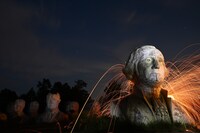
Washington’s subsequent actions marked his enduring connection to the country’s founding. He remains an honored historical figure today, especially in Washington, D.C. Photographer Matt McClain, ahead of America’s 250th birthday, captured images reflecting how Washington’s influence remains a unifying symbol amid modern divisions.
On July 9, Washington, aged 44, ordered the Continental Army to assemble at 6 p.m. on parade grounds across Manhattan to hear the declaration read by officers. This event stirred a profound response. According to a general order, Washington emphasized that the peace and safety of the country depended on the success of their arms.
People visiting the U.S. Capitol Rotunda often stand in front of the painting “Surrender of Lord Cornwallis,” depicting the British surrender in Yorktown, Virginia, in 1781. This event concluded the final major battle of the war. Throughout Alexandria and Mount Vernon, Washington’s presence lingers from bobbleheads in gift shops to projections on his monument during national celebrations.
The reading of the declaration became a sensation. Doug Bradburn, CEO of George Washington’s Mount Vernon, stated in an interview that it was likely delivered via a stack of printed declarations sent by courier. According to Samuel Blachley Webb, one of Washington’s aides, the troops greeted the reading with enthusiastic ‘huzzas.’ Washington informed Hancock the day after that the soldiers heartily supported the declaration.
While Americans celebrated, the British prepared to send over 40 warships and 30,000 soldiers and sailors to New York for an inevitable confrontation. This tension underscored the seriousness of America’s quest for independence.
Reenactments at Mount Vernon bring history back to life. Participants like Doug Thomas portray Washington during military demonstrations. Joe Whitney, John Williams, and others engage in these historical celebrations with dedication.
Doug Bradburn argued that Washington was the most crucial recipient of the Declaration of Independence. While congress penned the declaration, Washington was tasked with achieving victory and securing actual independence. The American victory at Yorktown in 1781, with Washington and French allies leading, turned the declaration into reality.
The Yorktown Battlefield today serves as a solemn reminder of this pivotal victory. Visitors frequent the American Revolution Museum, the Historic Tour Road, and the French cemetery, exploring the sites that witnessed history.
In 1776, Washington might not have anticipated his future legacy. He couldn’t predict cities and monuments would bear his name, or that his residence in Mount Vernon would become a national treasure, with his birthday celebrated annually. Even his dentures have become a notable historical artifact on display.
Visitors continue to explore George Washington’s Birthplace National Monument and other historically significant places linked to him, reflecting a lasting appreciation of his contributions to the nation.
 Congressional Inaction Amid AI Concerns
  Zohran Mamdani Faces Backlash at Staten Island Event
  Legal Battle Over Media Ban at White House
  Governor Pritzker Addresses Hasan Piker Controversy
  Trump and NYC Mayor Mamdani: Political Divides and Collaborative Efforts
  Rep. Jared Golden Endorses Mike Lawler for Reelection