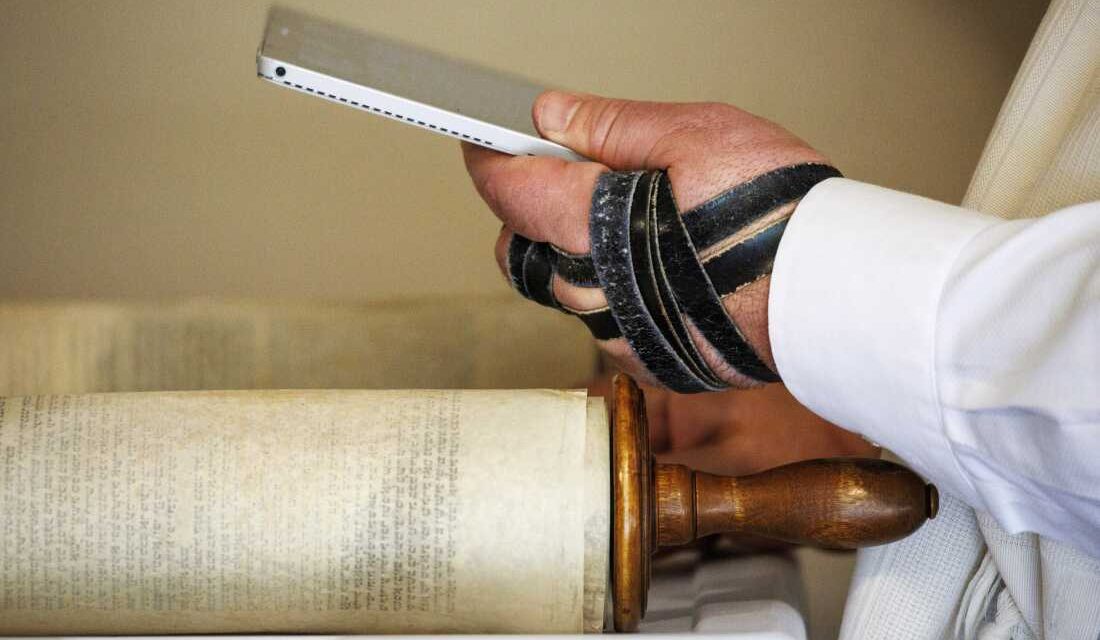
Rabbi Haim Ovadia reads the Torah during a Zoom meeting for a virtual minyan from his Maryland home in 2020. The topic of permanent daylight saving time has gained attention as the House of Representatives voted overwhelmingly to eliminate the clock-changing ritual. Orthodox Jewish organizations are actively opposing the bill.
The Sunshine Protection Act passed in the House with a 308-117 vote, moving next to the Senate, where its future is uncertain. President Donald Trump supports the legislation, criticizing the current system as a ‘ridiculous, twice yearly production’ on his Truth Social account.
If implemented, this bill would offer more evening sunshine in winter, but shift winter sunrises an hour later. This is troubling for Orthodox Jews, who begin their day with the Shacharit morning prayer service that traditionally starts at sunrise. “If prayers start an hour later, it affects work schedules and school start times,” stated Rabbi A.D. Motzen of Agudath Israel of America.
Other Orthodox Jewish groups like the Orthodox Union and the Coalition for Jewish Values also oppose the measure. By Jewish law, certain prayers require communal recitation in a minyan of ten Jewish adults, impacting morning schedules.
Rabbi Motzen highlighted the communal challenge of synagogues not managing to gather ten men at traditional prayer times due to job commitments. He mentioned supportive senator Tom Cotton, R-Ark., who previously halted the bill’s fast-tracking.
Although Orthodox Jews form 9% of the 5.8 million Jewish adults in the U.S., larger Jewish groups remain neutral. Historically, Congress has addressed clock-switching extensively. A law in 1974 temporarily stopped it but was repealed due to public objection.
Beyond Orthodox Judaism, medical advocates argue for standard time’s alignment with the body’s biological clock. School boards and parents express concerns about dark winter mornings risking children’s safety.
The issue of permanent daylight saving time affects sunrise schedules, making it past 8 or 9 a.m. in various U.S. regions. Agudath Israel notes that South Bend, Indiana would see 55 days with sunrise after 9 a.m., and Detroit would experience 23 days. Hawaii and most of Arizona adhere to standard time, as do territories like Puerto Rico and Guam.
This collaborative story by NPR and Religion News Service highlights the ongoing debate surrounding daylight saving time’s permanence.
 Trump Administration Seeks to Influence NIH Grantmaking
  Protests in Austin: Analyzing the Coordination Behind Anti-ICE Demonstrations
  Controversy Surrounds Inglewood Mayor Amid Allegations
  White House Launches Trump TV Amidst Press Dispute
  Media Organizations Sue Trump Administration Over Press Access
  VP JD Vance Trails Potential Democratic Contenders in Early Polling for 2028 Election