
New York is set to provide an excellent backdrop for viewing the Perseid meteor shower. The event is most promising for observers in the Northern Hemisphere.
The peak viewing time is Wednesday night into Thursday morning, coinciding with a total solar eclipse across Spain, Iceland, and Greenland. Additionally, a parade of six planets will feature, but the prime viewing for the Perseids comes after the eclipse totality.
In ideal conditions, observers might see 50 to 100 meteors per hour, according to NASA. The American Meteor Society suggests rural areas could see 30 to 50 meteors hourly. Random meteors appear in dark skies nightly.
Meteor showers occur as Earth passes through trails of debris from comets or asteroids, yielding streaks of light known as shooting stars. The Perseids originate from comet 109P/Swift-Tuttle, completing its orbit every 133 years. Its next return is in 2125. This meteor shower has been observed for over two millennia and is favored for its bright fireballs and summer occurrence.
Astronomer Zach Vanderbosch from McDonald Observatory in Texas noted the appeal of watching meteors without enduring a cold night. With the moon in the new phase at peak time, viewing is enhanced. Astronomer Aparna Venkatesan from the University of San Francisco commented that the absence of moonlight allows more meteors to be visible.
“The moon is beautiful, but it’s such a diva,” Venkatesan expressed.
For optimal viewing, head outside after dark, avoiding clouds and city lights. Venkatesan plans to travel to the Sierra Nevada for the event. The best viewing occurs between midnight and dawn when the Perseus constellation is highest in the northern sky. Meteors appear to originate from this constellation.
Allow your eyes about 30 minutes to adjust to darkness. Focus on one spot in the sky and wait for bright streaks to appear, even in peripheral vision. Vanderbosch advises against phone usage during this time.
“There’s just something magical about it,” Vanderbosch stated.
The Associated Press Health and Science Department receives support from the Howard Hughes Medical Institute’s Department of Science Education and the Robert Wood Johnson Foundation. All content responsibility remains with the AP.
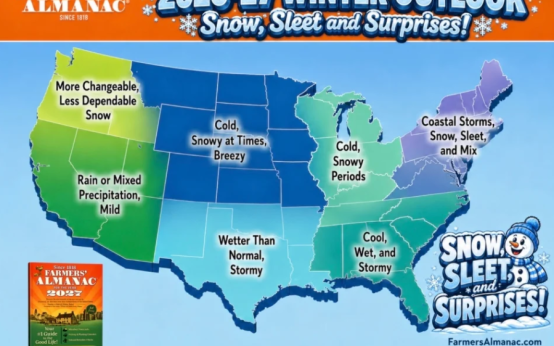 Winter Weather Forecasts for 2026-2027
  Underwater Discoveries: Exploring the Lost Town of Shipden
  Virginia Tech Researchers Investigate Black Bear Hibernation
  Significant Viking Age Silver Hoard Discovered in Finland
  Dogs Use Similar Language Recognition Techniques as Human Infants
  Discovery of Tilcayo Tiger Cat, a New Wild Cat Species in Bolivia