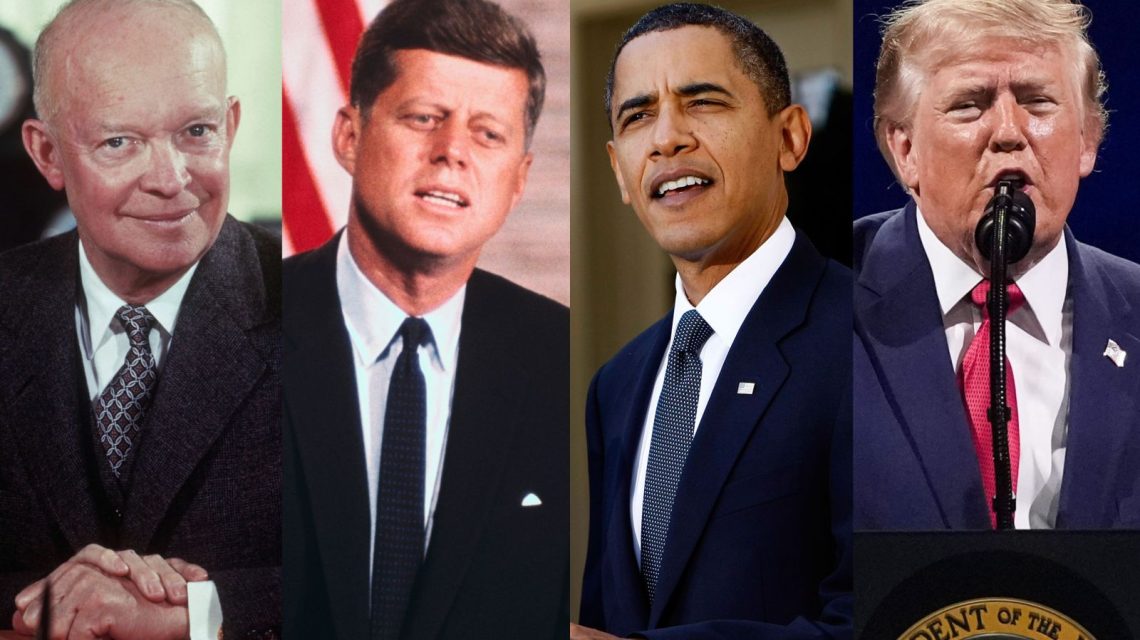
During Dwight D. Eisenhower’s presidency, Americans generally liked their presidents regardless of political affiliation. Today, increasing polarization makes cross-party support nearly impossible. A Pew Research Center survey indicates that the partisan divide in presidential approval is the widest it has been since Eisenhower’s time.
Current Approval Ratings and Historical Comparisons
As of mid-July, President Donald Trump’s approval rating stood at 34 percent. This is lower than any point in his first term, though consistent since joint U.S.-Israel strikes on Iran in late February. These actions have contributed to ongoing Middle East conflict and rising inflation in the U.S. Trump’s approval rating is even lower than Joe Biden’s 37 percent in the summer of 2022 when inflation was similarly high.
Approval ratings often decrease between a president’s inauguration and the midterms. However, Trump’s current lack of support from the opposing party is notable. His approval averages 84 percent among Republicans and 6 percent among Democrats, marking a 78-point gap. This gap is almost a record; only during Trump’s first term was the gap wider at 80 percent.
Historical Partisan Gaps
The largest partisan gap is not unique to Trump. Other presidents, including Biden and Obama, have faced similar challenges. Biden’s gap is 71 points, while Obama’s was 67 points. Eisenhower and Kennedy had more bipartisan support, with 49 percent approval from the opposing party.
Data suggests this division has grown since the 1970s, according to Julian Zelizer of Princeton University. Presidents such as Lyndon B. Johnson and Richard Nixon saw similar partisan divides. The gap narrowed slightly under Gerald Ford but widened again with presidents like Jimmy Carter and Ronald Reagan.
Zelizer noted that the current divide is part of a trend that has become more pronounced over time. William A. Galston from the Brookings Institution adds that this polarization also manifests as ‘affective polarization,’ where emotional divisions extend beyond political disagreements.
Reasons Behind the Divide
The divide has been exacerbated by recent events like long wars post-9/11, the financial crisis, and the COVID-19 pandemic. These events have polarized the nation further, contrary to expectations that they might unify it. Galston suggests that Trump’s strategy has emphasized division to consolidate his base, albeit not inventing the polarization. He employs it as a tool to maintain his grip on the Republican party.
Future Implications and Potential Changes
The trend suggests ongoing polarization. Galston believes the partisan divide will be a significant issue in future presidential primaries. He mentions the potential for conciliatory candidates but acknowledges the challenges they would face. The risk of a divided country is its diminished strength both domestically and internationally.
Galston emphasizes the need for a conciliatory approach but questions its viability in the current political climate. Addressing the divide could help the U.S. maintain its role as a pro-democratic force globally.
 Sen. Tom Cotton Opposes Year-Round Daylight Saving Time Amid Trump Pressure
  Pressure Mounts on Democratic Governors to Join Trump’s Federal Scholarship Program
  A Meeting with Steve Hilton’s Vision Amid California’s Political Dynamics
  BP Lockout Spurs Push for Indiana Legislation on Unemployment Benefits
  Urgent Reforms Needed in Republican Nomination Process
  Debate Heats Up Over Permanent Daylight Saving Time