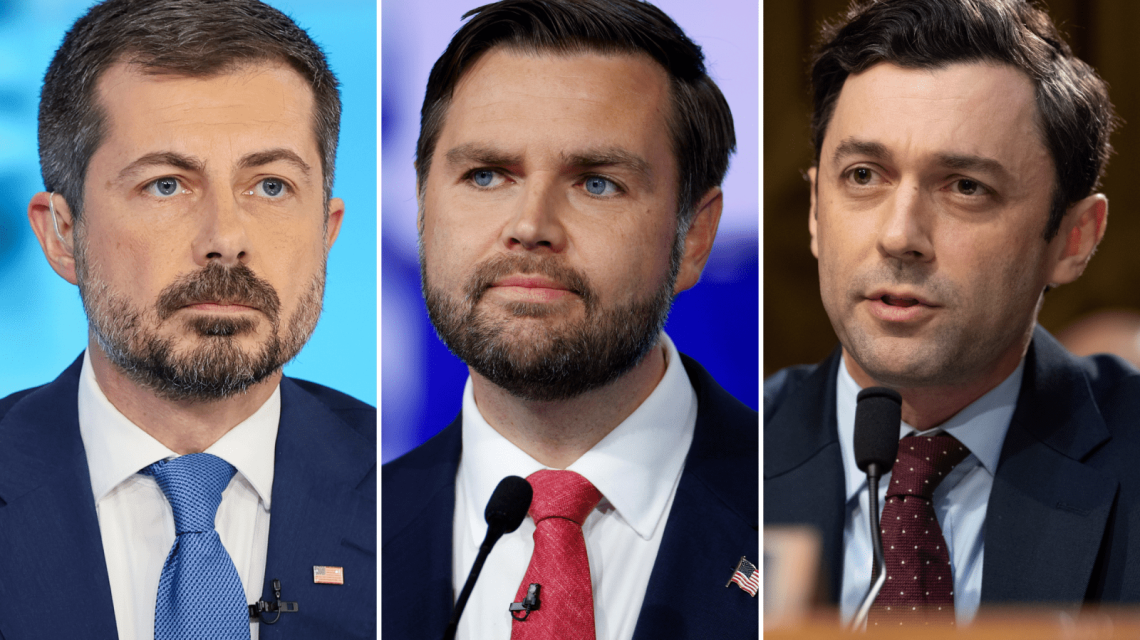
A recent Emerson College poll highlights which Democratic candidates may have the best chance against Vice President JD Vance and Secretary of State Marco Rubio in the 2028 presidential race. Typically, candidates start announcing their intentions after the midterm elections, but some move earlier to prepare. As the initial votes are still over a year away, these polls provide insights into candidate momentum.
Donors and voters can interpret early polls to assess a candidate’s viability. Such polls measure potential candidates’ name recognition and are important for fundraising and attracting media attention. The Democratic field is predicted to be competitive, including possible candidates like former Vice President Kamala Harris, California Governor Gavin Newsom, New York Representative Alexandria Ocasio-Cortez, Georgia Senator Jon Ossoff, and former Transportation Secretary Pete Buttigieg.
Democratic Performance Against Vance and Rubio
The Emerson College poll surveyed 1,000 likely voters from August 16-17, 2026, with a margin of error of ±3 percentage points. Buttigieg was shown to lead Vance and Rubio by 5 points, 49 percent to 44 percent each. Ossoff also led Vance by 5 points and Rubio by 3 points. Newsom showed a 5-point lead over Vance and a 2-point lead over Rubio. Harris led Vance by 4 points, but Rubio was ahead of Harris by 5 points. Vance and Rubio held leads over Ocasio-Cortez, with Vance leading by 2 points and Rubio by 5 points.
Newsweek reached out to representatives of the Democrats and Republicans involved for comment.
Leading Candidates in the Democratic Primary
Current Democratic primary polls show a divided field, with Harris often at the forefront. An Echelon Insights poll revealed Harris with 18 percent, followed by Buttigieg at 13 percent, and Newsom at 12 percent. Ocasio-Cortez had 11 percent, while Arizona Senator Mark Kelly and others followed. Emerson College’s poll placed Buttigieg in the lead with 19 percent, closely trailing Newsom, and Ossoff, among others.
Republican Primary Overview
Vance and Rubio are also prominent in Republican primary polls. The Echelon Insights poll showed Vance leading with 39 percent. Rubio followed at 22 percent, while Emerson College noted a closer gap between the two with 39 percent and 38 percent respectively.
Statements from Potential Candidates
Vance indicated he would consider the 2028 race after the midterms, suggesting presidential support for his decision. Harris, having traveled to several states, intimated a possible run. Newsom mentioned the possibility during an interview and attributed his decision to fate. Ocasio-Cortez aimed to focus on policy change over personal ambition. Ossoff declared no interest in the 2028 race.
Future Developments
The 2026 midterm elections are expected to influence the 2028 presidential race significantly. After the midterms, potential candidates will likely intensify their efforts in campaign planning. Candidates are anticipated to focus on fundraising and reaching out to voters in early primary states as they prepare for the crowded race ahead.
 Evanston Seeks Accountability for Federal Agent Actions on Halloween
  Cook Political Report Updates Senate Race Ratings
  Reunion of Donald Trump and Michael Cohen: Forgiveness and Reflection
  Florida Democrat Addresses Socialist Influence After DSA Candidate’s Primary Win
  Atlanta Mayor Criticizes DNC over 2028 Convention Choices
  Missouri’s Congressional Map Remains in Republican Favor