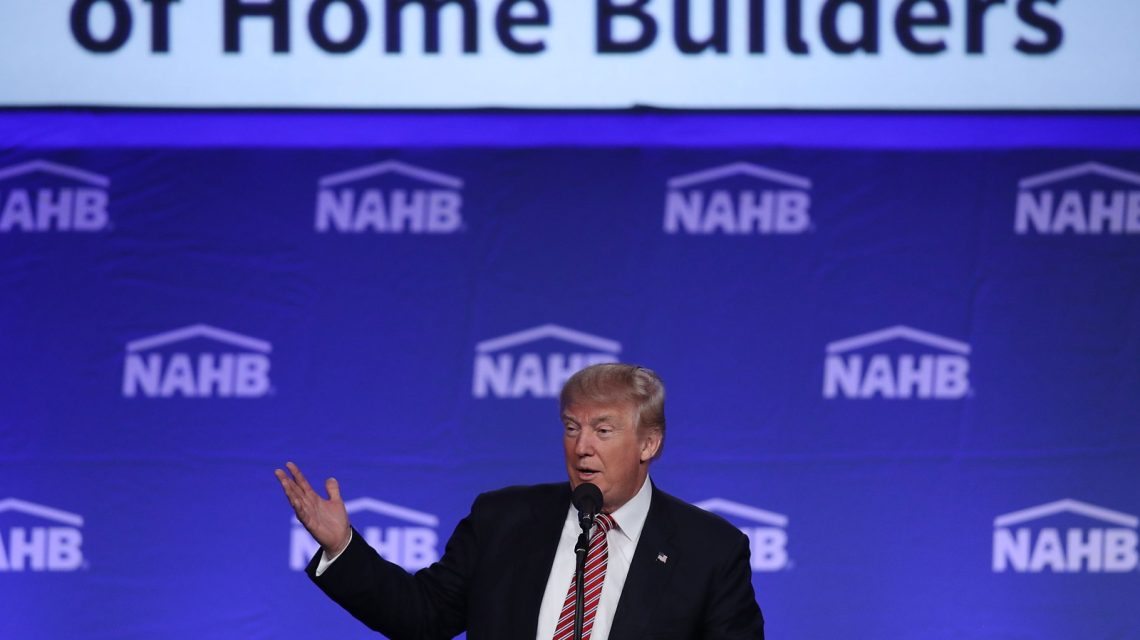
President Donald Trump’s recent measures on Canadian imports have sparked tension with a key Republican supporter, the National Association of Home Builders (NAHB). On July 20, the White House enacted tariffs of 50 percent on selected Canadian goods under Section 338 of the Tariff Act of 1930. This marks the first instance of a president using this authority. Items affected include wine, hockey sticks, and cement, irrespective of their status under the United States-Mexico-Canada Agreement. The tariffs are set to impact approximately $20 billion in annual imports starting August 19.
The NAHB expressed concerns soon after, highlighting potential disruptions in building material supply chains and rising costs. They emphasized the significant impact on cement, plywood, and furniture, pressing for these materials to be exempt from the trade policy to prevent further strain on the housing market. “Recent tariff developments could create more uncertainty for home builders over building material supply chains and pricing,” they noted in a blog post.
A Key GOP Supporter
The NAHB is a substantial player in GOP finances. In the 2024 election cycle, its political action committee allocated over $1.6 million to Republican candidates, accounting for 80.8 percent of its total contributions, compared to $393,099 given to Democrats, as per OpenSecrets. The association’s total contributions reached over $3.3 million, with lobbying expenses reported at $3.45 million.
The BUILD-PAC aims to back housing-friendly politicians, placing the NAHB among the top lobbying forces in Washington. Despite this, they have spent over a year advocating for construction materials to be excluded from these tariffs. Legislators like Senators Jacky Rosen and Chris Coons have also participated in initiatives such as the Housing Tariff Exclusion Act to protect these materials from tariffs.
Data from the association indicated that approximately 60 percent of builders have already encountered cost increases due to tariffs, with the average cost impact of these actions calculated at $10,900 per home. As Canada is a major supplier, providing up to 85 percent of U.S. softwood lumber imports, the NAHB stresses the importance of maintaining stable trade with Canada.
GOP Concerns in Congress
Republican lawmakers have expressed similar reservations. Senate Majority Leader John Thune and Senator Mike Rounds voiced concerns over the undefined purpose of the tariffs and their potential effects on affordability amid rising inflation.
According to Politico, some within the White House worry that these actions could harm GOP messaging on economic costs ahead of the November midterms. They warn against discussions of tariffs unless to reduce them.
The administration argues these tariffs aim to counteract Canadian discrimination against American products like cars and dairy, intending to balance trade benefits. Canadian Prime Minister Mark Carney criticized the measures as a breach of the North American trade agreement, adding that the conflict increases costs, especially for American families. However, he noted ongoing negotiations with President Trump to resolve the issue before the tariffs take effect.
Polls and Public Opinion
Recent polling reveals declining approval of Trump’s economic management. A July survey by the Washington Post/ABC News/Ipsos showed 65 percent of adults disapprove of his economic policies, with 66 percent labeling groceries as unaffordable.
Republican strategist Alex Patton commented on the strain these events place on GOP candidates. He noted the divide within Republican voters over the tariffs, with approval dropping among non-MAGA Republicans as concerns about affordability grow.
Contact Newsweek editors on this story: Jenni Fink and Sam Wilson.