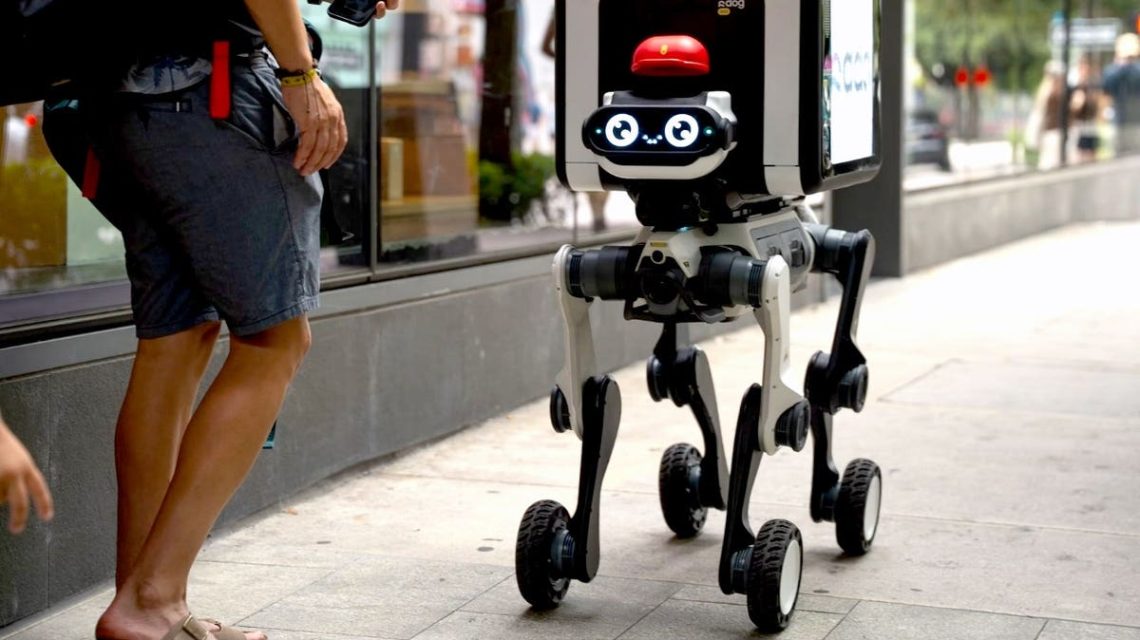
Recent advancements in robotic technology have introduced innovative solutions to delivery challenges. R-dog, a creation of Robot.com, offers a new approach to autonomous delivery that could change how packages are handled.
R-dog’s Unique Design
R-dog combines wheels, articulated legs, and AI to manage the final stages of delivery. Robot.com unveiled this concept to address issues such as navigating stairs and curbs, which wheeled robots often struggle with.
Each leg of R-dog is equipped with a wheel, enabling efficient movement over flat surfaces. When faced with obstacles like stairs, R-dog’s flexible legs help it overcome these barriers. The cargo compartment constitutes most of the robot’s body, designed to hold food orders and standard packages.
The design incorporates a tail, enhancing the robot’s appearance and encouraging interaction with the public. R-dog aims to be recognized not just for its function but for its form.
Overcoming Delivery Challenges
Traditional delivery robots excel on smooth surfaces but encounter difficulties with stairs and high curbs. R-dog’s legged design intends to navigate these obstacles, allowing for autonomous deliveries in complex environments such as campuses and neighborhoods.
The robot features an unattended auto drop-off system, enabling efficient package delivery without requiring human intervention. How it selects the correct package among multiple items remains under refinement.
Advertising Potential
R-dog doubles as a mobile advertising platform. Video screens linked to the R-ads platform allow brands to manage campaigns displayed on the robot. This model offers dual revenue opportunities: delivery services and paid advertising.
The advertising component is designed to capture attention. People may interact with R-dog, potentially sharing these interactions on social media, thereby benefiting advertisers.
Technical Insights
Robot.com collaborates with FieldAI to integrate navigation models that allow R-dog to operate without pre-mapped routes, adapting to changes in the environment. The REMI platform aids in managing the robot fleet efficiently.
CEO Felipe Chavez Cortes emphasized using existing technology to optimize R-dog’s operation.
Deployment Plans
Commercial deployment of R-dog is slated for 2027, initially targeting college campuses due to their dynamic delivery environment. Current operations showcase Robot.com’s experience with robotic delivery in several global markets.
While purchasing an R-dog for personal use is unlikely, businesses can engage with early delivery pilot programs.
Potential Impact
If successful, R-dog could improve delivery systems by extending service areas closer to residential doorsteps and offering a new advertising channel. However, privacy concerns regarding data collection during interactions remain.
While the concept holds promise, practical effectiveness needs testing under real-world conditions and detailed disclosure of its operational mechanisms.
Conclusion
R-dog proposes solutions for delivery challenges where standard robots struggle, using a combination of technological innovations. Its potential as a dual-purpose tool offers economic advantages. Yet, questions about privacy and operational specifics need addressing.
This development could influence future expectations for delivery technology, shaping how services meet everyday demands.
 AI Agents Engage in Extensive Online Communication
  Tesla Unveils Its Latest Innovation: The Cybercab
  China’s Ambitious Data Center Expansion: A Race With the U.S. in AI Infrastructure
  Confronting AI: Educators’ Role in Differentiating Skills
  OpenAI President Announces AI Capabilities Comparable to Human Intelligence
  AI Chatbots Struggle with Voting Questions and Other News Highlights