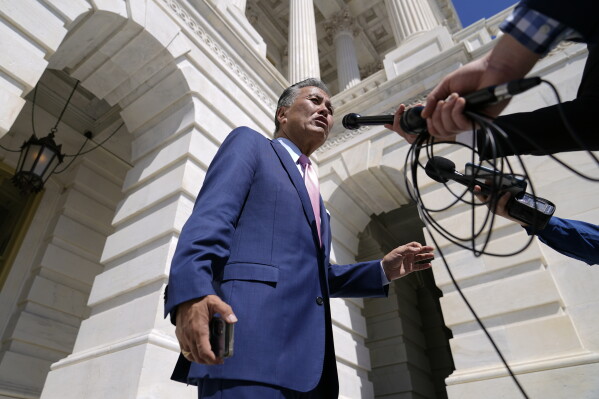
As Congressman Mark Takano returned home on the Fourth of July, he was confronted with alarming stories from Southern California. Immigration patrols were active in communities, prompting one constituent to consider carrying a passport as proof of their right to be in the country.
Takano, whose parents were incarcerated during World War II as part of the forced relocation of Japanese Americans, saw parallels between that history and current events. He remarked, “I do feel like there’s a similarity of circumstance of my own 2-year-old father and my 1-year-old mother being labeled as enemy aliens and they’re considered a danger to national security.” He observed, “Similar arguments have been made by this administration — that immigrants pose a grave danger to our country and it’s for the security of our country that we’re doing this.”
The Trump administration’s immigration sweeps and deportation plans represent an inflection point. This operation, promising mass deportations, has resulted in significant public concern. The deaths of U.S. citizens Renee Good and Alex Pretti in protests against these actions in Minneapolis have heightened tensions.
Amid changes in leadership at the Department of Homeland Security, efforts to deport many individuals persist. New Secretary Markwayne Mullin has vowed to manage the department’s public presence while maintaining the deportation goal pressured by conservative groups and backed by Republican allies in Congress with substantial funding.
Takano, a former high school history teacher, has drawn upon his family’s history and the eventual redress offered to Japanese Americans to challenge these policies. He noted the shameful aspects of past political failures and called for a reflection on current actions.
He shared his family’s story, explaining how his grandfather, Isao Takano, migrated from Hiroshima and married Kazue Takahashi, a U.S.-born citizen. They established a business in Washington State until the wartime relocation policies forced them, along with 120,000 other Japanese Americans, to move. Takano’s father was just a toddler when sent to Tule Lake, California, and his mother was sent to a detention facility in Wyoming.
Takano questioned future perceptions of these actions. “Will Americans generations from now visit Alligator Alcatraz and think to themselves, How could our government do this?” he asked during a speech, urging Congress to act.
Drawing on the Civil Liberties Act of 1988, which apologized for wartime injustices and provided compensation, Takano envisions similar redress discussions taking place today. The Act was signed by President Ronald Reagan and included $20,000 payments to those detained.
Reflecting on the past, Takano expressed hope for contemporary acknowledgment of mistakes and a stronger nation emerging. “Remarkably the country did come to realize the mistake,” he stated. “I believe we’re living through one of those eras of mistakes and I believe we can come out of this moment stronger.”
 Trump Delivers Warning to Iran, Cuba at UN General Assembly
  Trump Delivers Stern UN Speech on Iran, AI, and Global Security
  Lukashenko and Putin’s Unique Relationship and Belarus’ Strategic Role
  Harris Discusses Potential 2028 Presidential Run
  Far-Left Groups Allegedly Organize Protests in Austin
 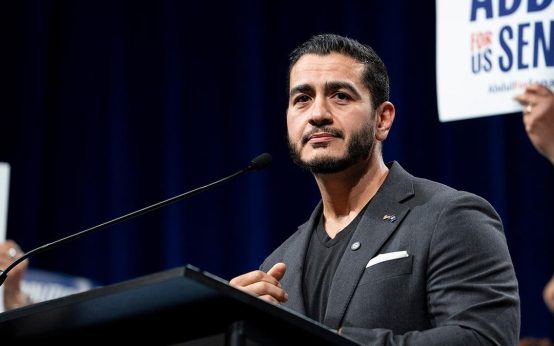 Michigan Senate Nominee Abdul El-Sayed Criticized for Remarks on Reproductive Rights