
A protest took place at City Hall Park against artificial intelligence and data centers, coinciding with a New York City Council Committee hearing. The protest highlighted rising concerns about AI and its regulation.
The movement against modern technology, often labeled as neo-Luddite, is gaining traction. It romanticizes the past, overshadowing the health and comfort improvements most people experience today compared to earlier times. American life now offers comforts even past royalty could not access.
Consider the past: many lived without light after sunset, and about half did not survive past age 20 in early modern Europe. Cannibalism occurred during famines not long ago. The once-magnificent Versailles lacked basic sanitation.
Chelsea Follett, in “The Grim Old Days,” discusses how technological advancements, especially those from the Industrial Revolution, have vastly improved living conditions. She emphasizes that our norm of electricity, running water, and surplus food were once unimaginable.
Follett, a research fellow at the Cato Institute, points out that technology has enhanced every aspect of life from birth to death across all social classes. Her book seeks to dispel romanticism about historical lifestyles by illustrating the harsh realities faced by our ancestors. Cities we often romanticize, such as Renaissance Florence and imperial Rome, lacked street lights and became perilous after dark.
George Washington, according to his own records, spent what would now be $15,000 a year simply to burn a candle for five hours each night. Even King’s wine would freeze on winter tables due to scarce heating. Henry VIII’s Hampton Court lacked modern plumbing, with communal toilets serving multiple people at once.
Follett argues the Industrial Revolution alleviated centuries of hardship for the first time. As much economic output has occurred in the past two centuries as in all prior centuries combined, freeing individuals from brutally sustained labor. Today, only 2% of people in developed nations work as farmers compared to up to 90% in preindustrial times.
The book’s release is timely as skepticism towards AI grows. A July poll found only 30% felt positively about AI, despite its economic significance. Follett emphasizes learning from history’s lessons, warning against missing opportunities similar to those from the Industrial Revolution.
Understandably, the AI revolution causes anxiety as it changes living, working, and thinking patterns. However, historical perspective suggests prosperity and creative opportunities arising from such transformations. History often favors embracing change over resisting it.
 Protests Rise in Spain Against Data Center Expansion
 Lego Fortnite Supply Llama: A Tween’s Dream Gift with Huge Savings
 Jensen Huang’s Controversy Highlights Challenges for Corporate America
 Federal Agencies Face Cybersecurity Challenges
 FBI’s Crime Database Faces Hacking Threat
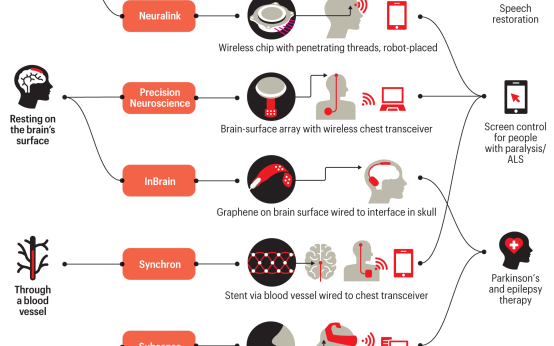 Neuralink’s Impact on Brain-Computer Interfaces