Rethinking Horror Tropes
Horror films have often served as allegories for societal issues, such as racism in ‘Get Out’ (2017). Recently, ‘Curry Barker’s Obsession’ (2025) tackled male entitlement. However, the ‘final girl’ trope, representing the last woman standing, rarely receives a redemption story. Jane Schoenbrun’s ‘Teenage Sex and Death at Camp Miasma’ changes that narrative.
Hannah Einbinder, speaking to Newsweek, expressed her enthusiasm for the project due to its genre ambiguity and empowerment aspect. She noted the film’s unique use of horror slasher tropes to present something empowering.
The Story and Characters
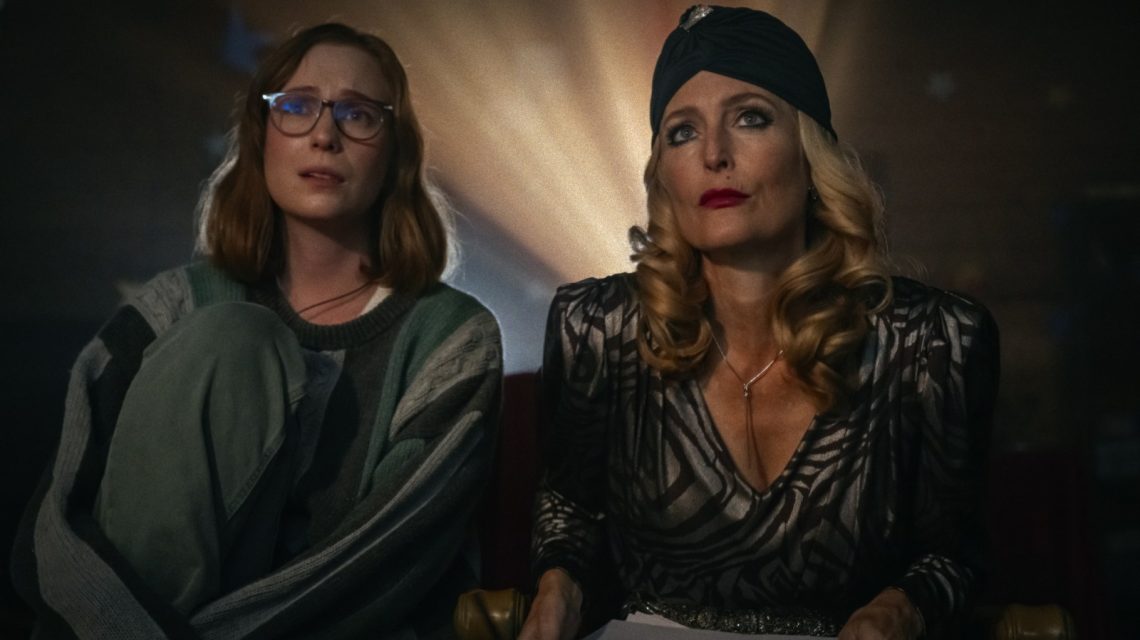
In the film, Einbinder portrays Kris, a director aiming to revitalize a slasher franchise by casting Billy Wilder, the final girl from the original movie. Billy, played by Gillian Anderson, is pivotal in reclaiming the narrative from a male-driven series. As Kris persuades Billy to join the film, they engage in a psychosexual exploration, promising a unique viewing experience.
Anderson remarked on the impactful set design, which contributed to the film’s sensory experience. She highlighted the film’s ability to unite diverse audiences, emphasizing its significance beyond genre boundaries.
A Shift in Horror Narratives
Horror traditionally told stories from a male perspective, but recent films, including ‘A Girl Walks Home Alone at Night’ (2014) and ‘The Substance’ (2024), challenge this norm. ‘Camp Miasma’ is a fresh addition to this shift, blending reverence for horror with a queer, female-led narrative.
Einbinder emphasized the personal nature of Schoenbrun’s films, making ‘Camp Miasma’ more than a genre exercise. Gillian Anderson’s character, Billy, echoes Norma Desmond from ‘Sunset Boulevard,’ challenging Hollywood’s biases against aging women.
Exploring Character Depth
Einbinder noted the psychoanalysis in the film’s dialogue, providing a modern reflection on characters’ motivations. Billy’s choice to isolate reflects a deeper narrative analysis compared to classic horror spectacles.
Gillian Anderson’s Career Perspective
Anderson’s diverse roles, from Dana Scully in X-Files to Margaret Thatcher in The Crown, demonstrate her refusal to be typecast. Her rapport with fans balances activism with acknowledgment of her iconic roles.
‘Camp Miasma’ resonates with Anderson and a particular fan base. She appreciates the ability to engage with her work humorously and meaningfully.
Final Girl Discussions
Reflecting on the ‘final girl’ trope, Anderson and Einbinder discuss their favorites. Einbinder chooses Carrie from Brian De Palma’s 1976 adaptation, linking her assertion of power to the film’s theme.
‘Camp Miasma’ redefines the final girl, empowering the trope by giving the character agency over her narrative.
 Ella Langley’s Record-Breaking Chart Success: The Rise of ‘Choosin’ Texas’
  Presley Gerber’s Death: Tributes from Friends and Family
  Exploring the 2025 Booker Prize Shortlist
  Speculation Around Aaron Rodgers and Mallory Edens’ Alleged Relationship
  Circumstances Surrounding Hayden Panettiere’s Death
  The Rise and Fall of USC Football