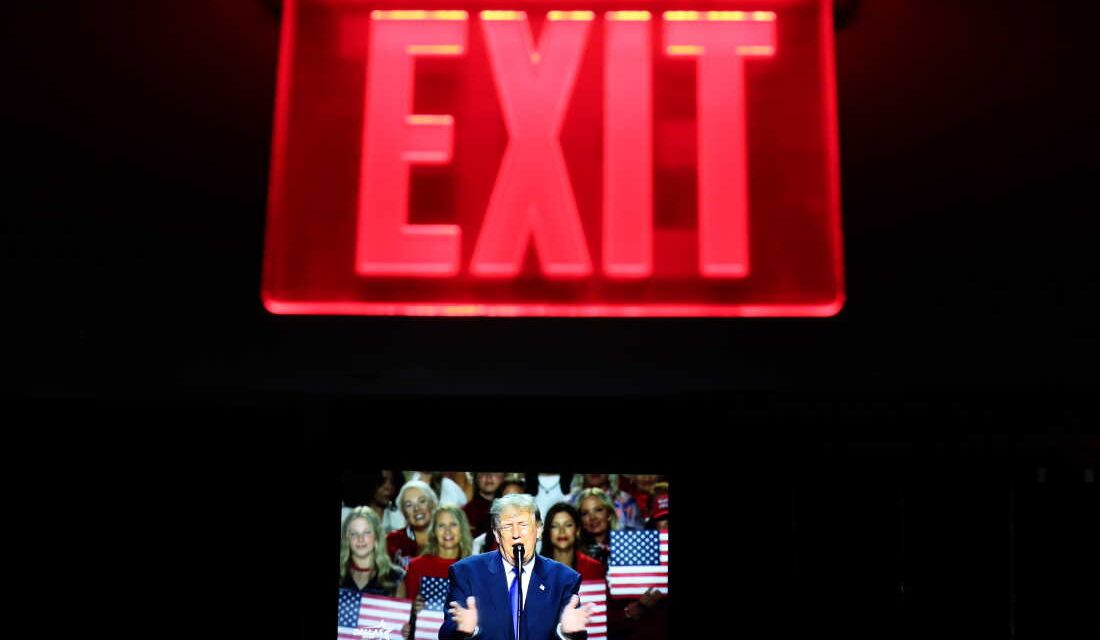
President Trump spoke at the opening of the 2026 Republican convention in Dallas against a backdrop of dissent within his own party. While loyalty has been a hallmark of Trump’s tenure, various Republican figures are distancing themselves from certain aspects of his agenda, including the U.S. war with Iran and prominent issues like immigration. This dissent arises at a pivotal moment as the GOP works to retain a slim congressional majority, with elections approaching and critical races in the balance.
Despite historically low approval ratings, Trump encourages voters to vote as though he’s on the ballot. However, a recent NPR/PBS News/Marist poll suggests that 45% of voters, along with the majority of independents, plan to vote against Trump. GOP strategist Sarah Longwell notes that the president’s influence derives largely from voters, causing Republicans to avoid opposing him. Yet, as national sentiment shifts, more GOP members are finding it easier to challenge Trump on significant issues.
Notably, Utah Sen. John Curtis, not facing re-election until 2030, has called for an investigation into Donald Trump Jr., highlighting potential weakening of Trump’s coalition. Meanwhile, dissent within Republican ranks continues beyond campaign trails, affecting publicly visible decisions in Congress.
“You are starting to see the very beginnings of people recognizing that Trump just doesn’t have the juice that he once did and starting to push back.”
Polling consistently shows cost of living as Americans’ top concern, linked to financial strains aggravated by conflict. GOP candidates like Ashley Hinson of Iowa and Mike Rogers of Michigan emphasize these issues in their campaigns, breaking from Trump’s stance on the war in Iran. Without directly naming Trump, both politicians advocate for ending the war, citing economic relief as a crucial outcome.
Their statements represent a departure from the administration’s narrative, as Trump has defended the war’s necessity and minimized its economic impacts. On Capitol Hill, impatience grows regarding the war, evidenced by increasing bipartisan support for a resolution to withdraw U.S. forces from Iran.
The electoral stakes push Republican candidates facing tough races to assert their independence from Trump. According to strategist Ron Bonjean, emphasizing independence counters voter perceptions of complete alignment with Trump.
Independence becomes pivotal given shifting political allegiances among key voter demographics, notably Hispanic voters. In states like Texas and Florida, areas with substantial Hispanic populations see declining Republican support. Florida Rep. María Elvira Salazar publicly criticized Trump’s immigration policies through campaign ads, though she maintains open communication with the president.
Salazar reflects broader Republican carefulness, balancing criticisms with maintaining relationships within the party framework. This involves providing honest feedback to Trump while aligning with district needs.
With elections nearing, GOP candidates attempt to differentiate their platforms by challenging Trump, emphasizing independent leadership, and addressing voters’ urgent concerns.
 Potential Breakthrough in Permitting Reform
  Voter Uncertainty and Trust in Elections
  Trump Rejects Iranian Proposal to Reopen Strait of Hormuz
  Escalating Tensions at the UN: Russia Accuses Europe of Blocking Peace Plans
  Senate Democrats Question if Kennedy Struck Deal in Vaccine Lawsuit
  Trump’s Beef Import Policy Impact on Approval Ratings