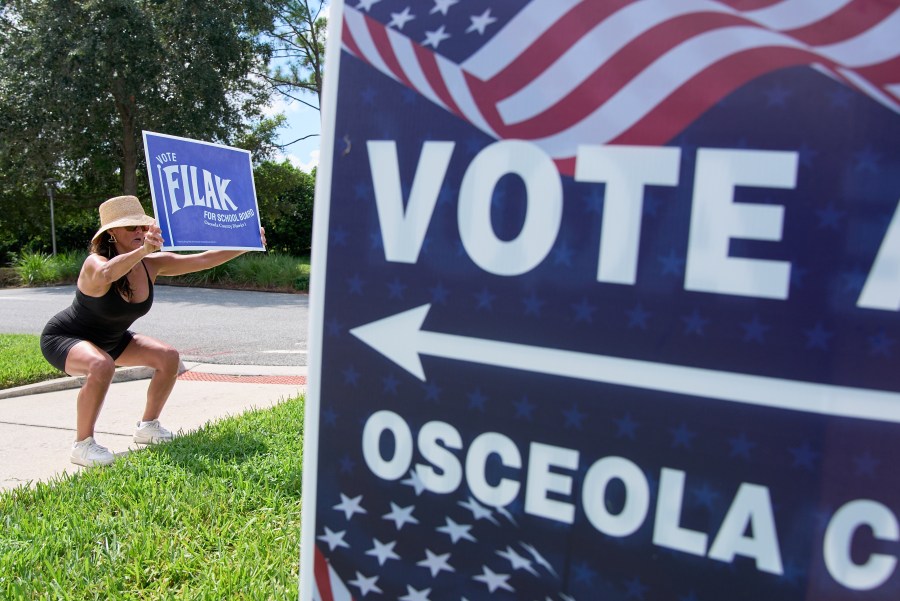
Regardless of the campaign signs in your yard or how much you support a candidate, any outward support of that person or party may affect your voting experience. More than half of U.S. states prohibit voters from wearing campaign apparel while casting their ballot, and nearly all states restrict signs, banners, or literature near polling places, according to the National Conference of State Legislatures.
These restrictions have sparked controversy before, notably in 2024 when then-vice presidential candidate JD Vance commented on a photo of a woman purportedly voting shirtless after being informed by a poll worker that her Trump campaign shirt violated electioneering prohibitions. The woman chose to remove the shirt following an exchange of expletives with the worker.
According to Quinn Yeargain, an associate professor of law at Michigan State University, electioneering rules aim to prevent voters from feeling pressured or intimidated while voting. He stated, “This is not something that functions to chill anybody’s free speech. This is to keep polling places neutral locations.”
Be Aware of What You Wear
Twenty-seven states have rules against campaign wearables, such as stickers, shirts, and buttons, as reported by the NCSL. In Vermont, voters with “candidate paraphernalia” must cover it, and similar restrictions are in place in Michigan, Minnesota, and Texas. Vermont officials emphasize, “The polling place is about voting, not campaigning – once voters have entered the polling place the campaigns have ended.”
In Colorado, Louisiana, and Nebraska, voters are prohibited from wearing anything regarding a candidate or a ballot measure they’re voting on. Delaware, Georgia, and Oklahoma voters cannot wear items supporting a candidate at polling places. Other states with similar prohibitions include Arkansas, California, Hawaii, Indiana, Kansas, Maine (small buttons allowed), Massachusetts, Montana, Nevada, New Jersey, New Mexico, New York, North Dakota, Ohio, Rhode Island, South Carolina, and Tennessee.
Maryland and Iowa permit campaign-related buttons or clothing, but voters must leave immediately after voting. New Hampshire allows voters to “expeditiously register to vote or vote” if it is unreasonable to cover electioneering clothing. Alabama voters are advised not to loiter or leave materials at polling places, while Pennsylvania prohibits campaigning inside. In Virginia, voters, but not election workers, can wear campaign apparel.
Leave the Signs at Home
Most states ban campaigning and electioneering within a set proximity to polling places. Massachusetts, for example, restricts political activities within 150 feet of a polling site, as does Georgia. Nebraska enforces a 200-foot limit, Idaho 250 feet, Oklahoma 300 feet, and South Carolina begins restrictions at 500 feet. Louisiana mandates a distance of 600 feet.
Shorter restrictions apply in Pennsylvania, with a limit of “at least 10 feet from the voting-room entrance,” and Alabama prohibits campaigning within 30 feet of the entrance. Maryland establishes limits “as near as practicable to 100 feet” from polling place entrances. Colorado maintains a 100-foot rule, as do Minnesota, Texas, and West Virginia. New Hampshire mandates “no-electioneering corridors” at least 10 feet wide, extending “a reasonable distance” from all polling place entrances.
Before heading to the polls, it is wise to verify the local rules on campaigning to ensure compliance.
 Democratic Backlash Against Haley Stevens’ GOP Endorsement
 Senator Chris Murphy Hospitalized After Stroke
 Progressive Democrats’ Fundraising Efforts and Donation Restrictions
 Political Reactions and Controversies as Midterm Elections Approach
 DOJ Efforts to Halt Election Certification in Alaska
 Trump Invites Michigan Rep. Haley Stevens to Join GOP After Senate Endorsement Switch