Iconic buildings often capture the public imagination, becoming landmarks that define cities. Beneath their acclaim, some architects see flaws, questioning design choices, context, and function in ways not always visible to the public. Architectural priorities have shifted, with many professionals advocating for renovating older buildings to ensure their longevity and relevance.
Gordon Gill, architect of the world’s tallest building, emphasized the importance of refreshing existing structures rather than constructing new icons. The United States reflects this trend, with nearly half of America’s 125 million buildings over 50 years old, according to the American Institute of Architects. Adaptive reuse is booming, with RentCafe reporting nearly 25,000 apartments created from converted buildings in 2024—a 50% increase from the previous year.
Fallingwater, Pennsylvania
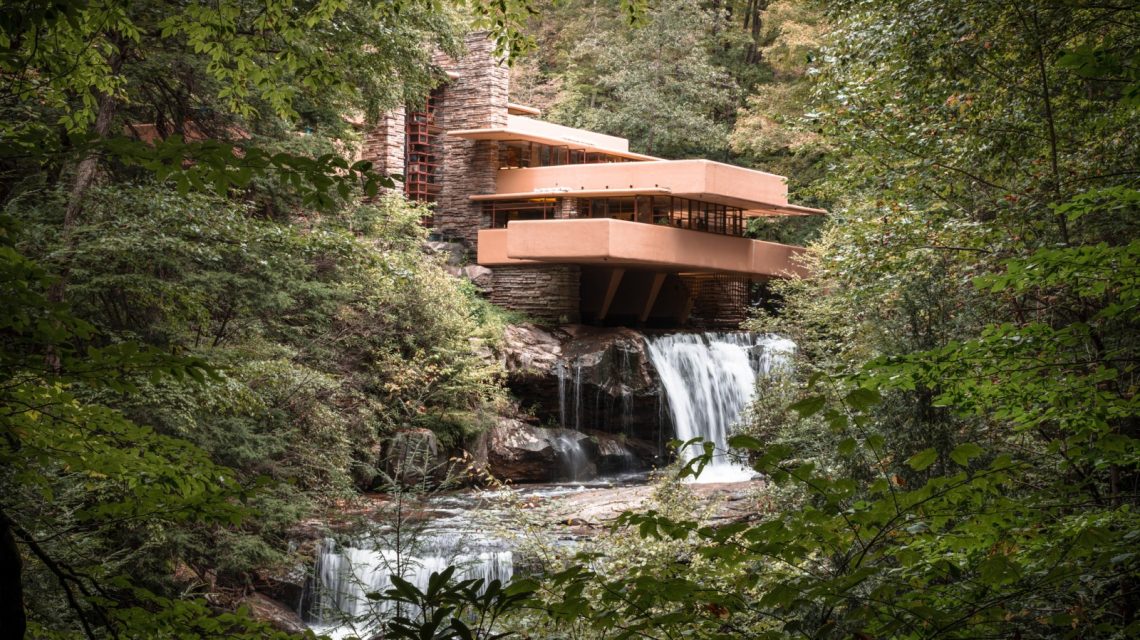
Frank Lloyd Wright’s Fallingwater is lauded as a masterpiece, dramatically situated over a waterfall, now recognized as a UNESCO site. Architect Dan D’Agostino, founder of Plan Architecture, shared reservations. “Controversial take, but I’m not a fan,” he said. While the homeowners desired waterfall views, Wright placed the house atop it, obscuring the sight. D’Agostino critiqued the engineering, noting Wright’s omission of steel reinforcement despite contractor recommendations. “It’s a great idea but a frustratingly problematic design,” D’Agostino stated.
Miles Smith, an architect at Graphisoft, echoed these sentiments. Smith acknowledged the compelling form of Fallingwater but described it as “a bit of a travesty.”
The Guggenheim Museum Bilbao, Spain
The Guggenheim Museum Bilbao, crafted by Frank Gehry, is celebrated for its sculptural form and city-transforming influence. Criticism exists regarding its design. Smith notes the building’s “curvilinear and organic massing frequently comes across as untethered.” After Gehry’s passing, architects began recognizing his impactful contributions to the field.
The Glass House, Connecticut
Philip Johnson’s Glass House in New Canaan is praised for minimalist design, yet Smith believes it falls short compared to Mies van der Rohe’s Farnsworth House. Smith commented, “It’s conceptually pure, but upstaged by Farnsworth’s transparency.” Johnson’s placement of structural columns at the corners forms a visible “box,” differing from Farnsworth’s setback columns enhancing openness.
McCormick Place, Illinois
Chicago’s McCormick Place, North America’s largest convention center, is an engineering landmark yet criticized. Brian Turcza, architectural design director at DyeLot, expressed disfavor, noting its disconnection from the environment and city’s social fabric. Turcza lauded the main hall’s engineering feat but criticized it for lacking movement and orientation clarity. Environmental concerns include at least 40,000 bird deaths due to its glass façade. Retrofits have reduced this by 95%, but Turcza argued the building ignores its ecological context.
The Shard, United Kingdom
The Shard in London, Western Europe’s tallest building by Renzo Piano, garners praise for its glass form. Zaeem Chaudhary, director at AC Design Solutions, expressed dissatisfaction. “Structurally impressive, but as urban design, a missed opportunity,” he remarked. While London’s skyline reflects a dialogue of eras, Chaudhary argued, “The Shard doesn’t join that conversation; it merely shouts over it.” He criticized its weak relationship with the surrounding streets and asserted that significant architecture should enhance its context, not merely tolerate it.
Have an architecture or design story to share? Email [email protected] for a chance to feature your story.
 Artistic Chronicle of Communities’ Recovery Post-Hurricane Helene
  Chicago History Museum’s Latin American Exhibit Sparked by Student Protests
  DNA Links Jefferson to Hemings Descendants
  Ari Emanuel’s Memoir: A Business-Centric Narrative
  Celebrating Day of the Dead: Students Craft Calaveras in Pilsen
  Controversial Revelations from Charles Spencer’s New Book on Princess Diana