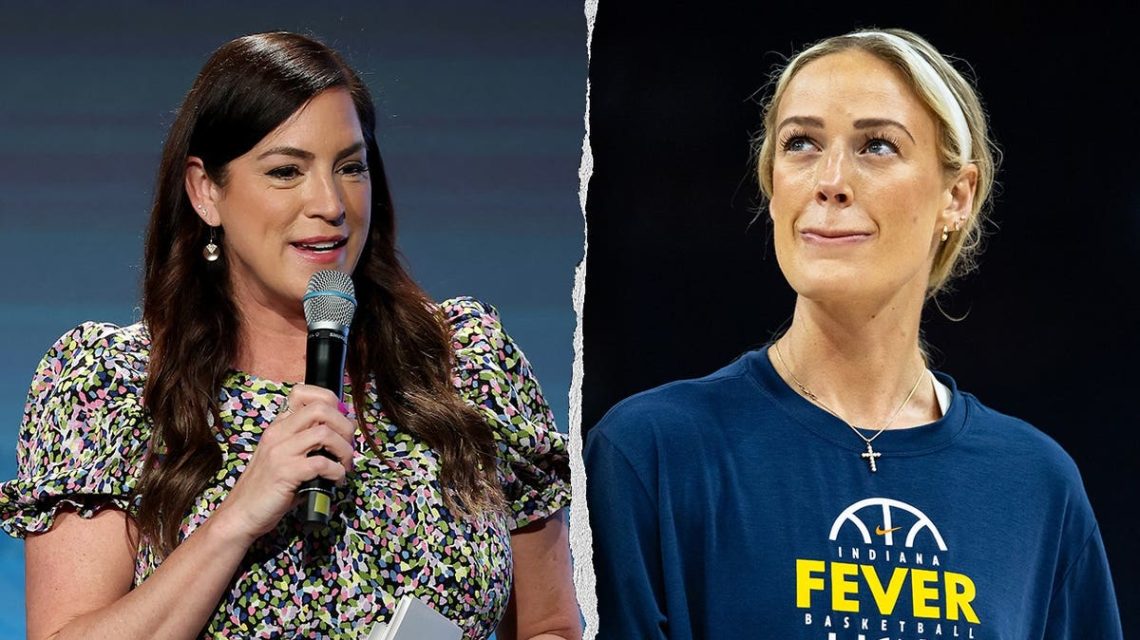
Sarah Spain often presents herself as a strong advocate for women, frequently referring to the NBA as the “MNBA” to emphasize equality between men’s and women’s basketball leagues. However, her treatment of women with differing political views raises questions about her genuine respect for all women.
Spain recently used her “Good Game” podcast to critically attack Indiana Fever guard Sophie Cunningham. This attack was not limited to a disagreement about Cunningham’s stance on transgender athletes competing in women’s sports. Spain challenged Cunningham’s character, intentions, upbringing, and supportive network, dismissing any empathy for Cunningham’s concerns.
Spain criticized Cunningham’s comments about protecting young girls as “filled with offensive language” and entirely lacking nuance or care.
Cunningham’s statement was explicitly about concern for others, yet Spain interpreted it as selfishness. Spain’s critique revealed a significant double standard, especially when her own assertions were at odds with Cunningham’s intent.
Cunningham spoke up against biological males competing in women’s sports, explaining her desire to protect young girls in locker rooms and athletics. Her focus was clear: safeguarding those with less power and voice than herself.
Spain took a darker turn by trivializing Cunningham’s experience with stalking. An Indianapolis man faced felony stalking charges after allegedly targeting Cunningham persistently, including hand-delivering packages and sending threatening messages. Spain described Cunningham’s ordeal as “complaining,” a stark minimization of the actual threat she endured.
Spain’s dismissal used Cunningham’s serious stalking situation to argue against her character, adding to the narrative that white players must tackle issues faced by Black and queer players.
Spain shifted gears during her conversation with ESPN reporter Holly Rowe, discussing the role of WNBA Commissioner Cathy Engelbert. They debated whether Engelbert should prioritize emotional support for players facing harassment, with Spain arguing women’s sports require a different commissioner’s role.
Spain claimed that women’s sports leagues face unique challenges due to racial and homophobic abuse, differing substantially from the male sports leagues. Rowe countered, saying the WNBA should have similar leadership roles to men’s leagues and disagreed strongly with Spain’s premise.
Spain suggested that because of threats, female athletes are more pressured, prompting a need for different league leadership. Yet, when Cunningham speaks about biological differences in sports, Spain finds it offensive, creating a conflict within Spain’s ideology.
Spain’s positions cast doubts on her feminist principles, implying they shift based on agreement with her views rather than an unwavering support for all women. Rather than strengthening women’s advocacy, this selective empathizing undermines genuine feminism, illustrating hypocrisy.
 Criticism of Kaepernick’s NFL Draft Comparison
  Handling Rumors About Neighbors When Selling a Property
 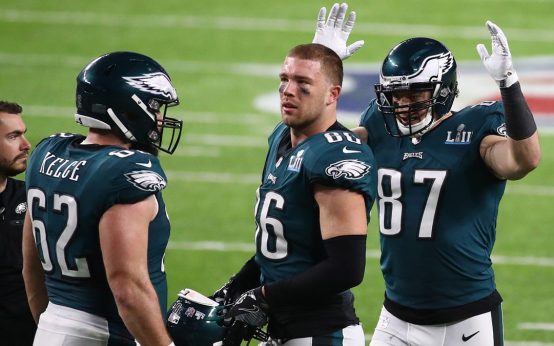 Lane Kiffin Faces Criticism After Ole Miss Loss; Zach Ertz Returns to Eagles
  Nikole Hannah-Jones’ Reflection on School Integration and the Impact on Her Daughter
  Engaging in Political Conversations with Open Minds
  Understanding Tax Debates: ‘Fair Share’ in America’s Tax System