
A group of scientists has captured the clearest images yet of the Sun’s surface, showcasing a rugged and dynamic facade. While it’s dangerous to look directly at the Sun without protective eyewear, researchers managed to observe the scorching surface using the Daniel K. Inouye Solar Telescope, located on the island of Maui, Hawaii.
The initial intention behind capturing these images was different; scientists aimed to calibrate and test the telescope’s limits. However, upon examining the results, they realized they had photographed the Sun’s outer layer with a resolution never achieved before. Strange feather-like patterns were seen undulating across the surface.
Solar physicist Ruizhu Chen of Stanford University, not involved in the study, remarked that the imagery reminded him of famous paintings like Van Gogh’s swirling skyscape in ‘Starry Night’. The researchers observed instability waves on the Sun’s surface caused by fragments of magnetized plasma moving alongside each other at varying speeds, akin to waves formed when the wind brushes over water. This phenomenon, which explains fluid dynamics, has been observed on Earth and other planets like Jupiter and Saturn, but never at such a detailed level on the Sun’s surface.
Co-author Friedrich Wöger from the National Solar Observatory noted this as a first for solar observation. The findings, published in the journal Nature, are crucial for understanding the Sun’s internal workings and could help predict large energy bursts known as coronal mass ejections. These massive eruptions, when directed towards Earth, can trigger solar storms with the potential to disrupt GPS communications and also produce colorful auroras.
The Associated Press receives support for its health and science coverage from the Howard Hughes Medical Institute’s Department of Science Education and the Robert Wood Johnson Foundation. AP is solely responsible for its content.
This story was translated from English by an AP editor using a generative artificial intelligence tool.
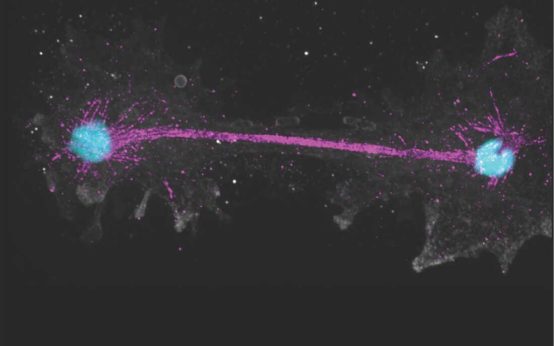 The Discovery of Incendiamoeba cascadensis: A Fire Amoeba
 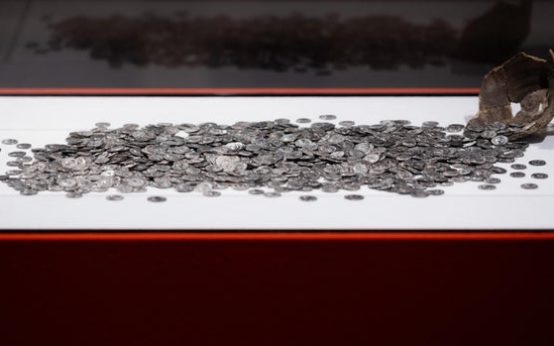 Archaeological Discovery in Germany: Largest Hoard of Roman Coins Found
  Hurricane Formation and Strengthening
 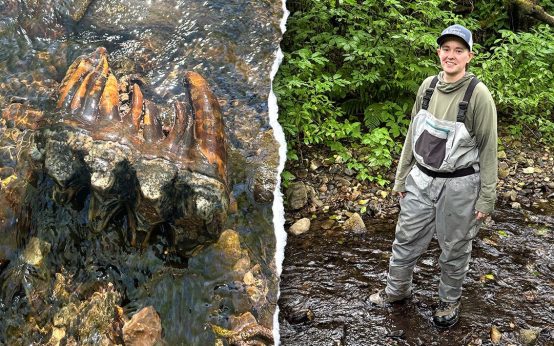 Ancient Mastodon Tooth Unearthed in California Creek
 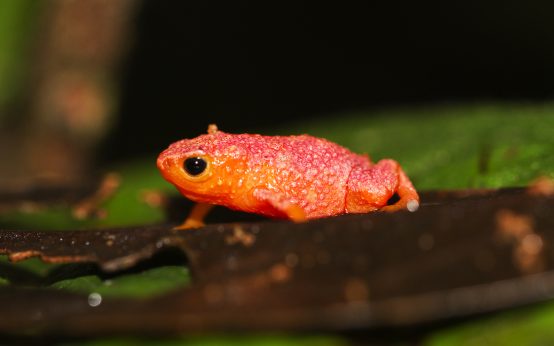 The Tiny World of the Pumpkin Toadlet
  Chimps and Self-Medication: Insights from Gombe Stream