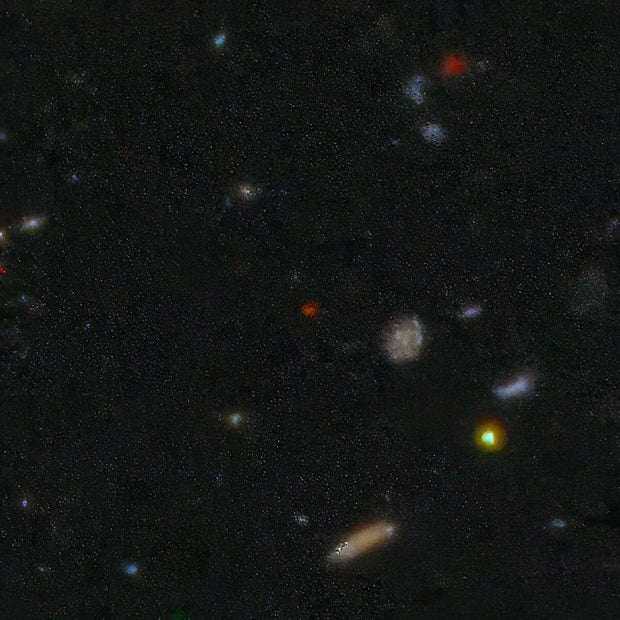
On November 24, 2026, astronomers announced the discovery of the most distant quasar known to date. It marks a significant achievement in the understanding of the early universe. This discovery involves a galaxy’s core, which houses a black hole believed to have formed approximately 630 million years after the Big Bang. This positions it in a crucial timeline within the universe’s 13.8-billion-year history.
The European Space Agency’s Euclid telescope played a vital role in this discovery. It provided an image showing the quasar as a visible red dot. Dubbed Dun Aonghasa by Julien Wolf of the European Southern Observatory, this quasar represents one of the earliest cosmic phenomena identified so far. The finding resulted from examining millions of Euclid telescope observations, launched in 2023 to study the cosmos.
“This time the leap in cosmic time is huge!” noted Wolf in a statement. “The previous two records each took us back by about 15 million years or less. This one takes us back by nearly 40 million years.”
A noteworthy aspect of this quasar is its accompanying black hole’s massive size, despite being relatively slow in consuming surrounding matter. Observations suggest that the black hole dates back 13.1 billion years, representing a time when the universe was less than 5% of its current age.
The black hole associated with this quasar has a mass equivalent to 360 million suns. This was confirmed through additional observations by the Hubble and Webb space telescopes along with other terrestrial and space-based observatories.
Julien Wolf’s research, presented in the journal Astronomy & Astrophysics, underscores the significance of this discovery. It provides a new reference point in understanding the universe’s evolution, showing the rapid growth of supermassive black holes in the early cosmic dawn.
“Dun Aonghasa gives us a new deadline for the early universe,” Wolf remarked. He noted the chance that this record could soon be broken, although it might stand the test of time.
 Spanish Scientists Explore the Connection Between Sudarium of Oviedo and Shroud of Turin
 Uncovering Mysteries at Westminster Abbey and Beyond
 Global Events and Key Developments
 Human Lifestyles Impact Dogs’ Gut Health
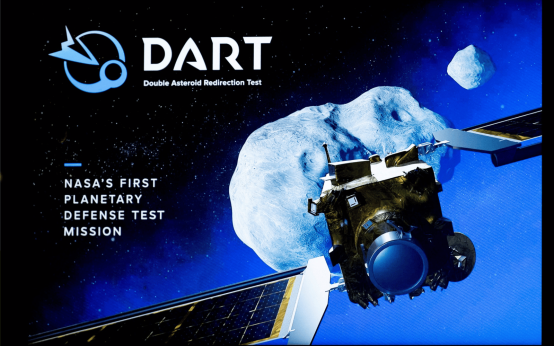 ESA’s Hera Mission Provides First Close-Up of Asteroid After NASA’s Collision
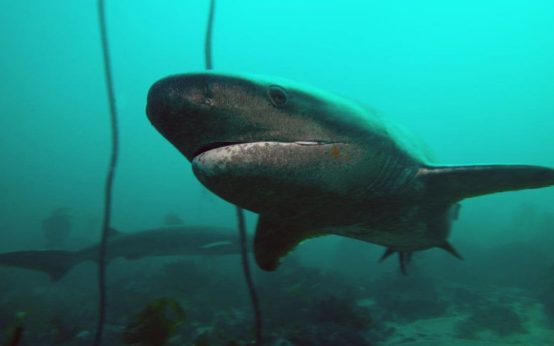 Underwater Encounter with Deep-Sea Giant