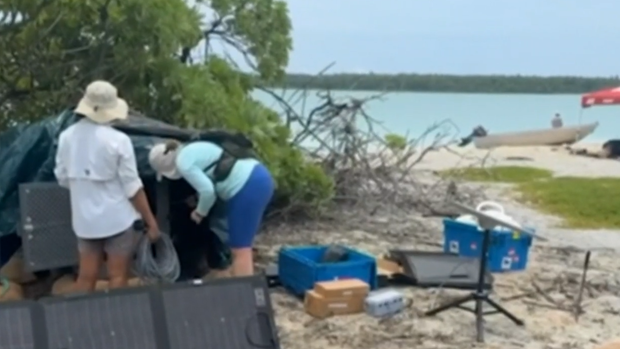
By October 14, 2026, a team of American researchers hinted at being close to discovering the remains of Amelia Earhart’s missing plane. They are working off a remote island in the South Pacific. The expedition is led by Steve Schultz from Purdue University and Richard Pettigrew from the Archaeological Legacy Institute. On Wednesday, they began a meticulous search for Earhart’s Lockheed Electra 10-E plane.
Richard Pettigrew explained to CBS News, “We’re examining the land and searching for any artifacts that might connect to Amelia Earhart.” According to Schultz, “We’re still very much in the data-gathering phase.” The search efforts are focused on the Taraia Object, a visual anomaly in a lagoon off Nikumaroro’s coast. This object is visible in aerial photos since 1938 but only gained attention after being seen in satellite images in 2020. This imagery prompted the current expedition.
The research team, consisting of 17 members, took five days at sea to reach this remote search area. They are hopeful of making an announcement within a few days about the possibility of having found Earhart’s plane. Pettigrew mentioned, “Our next step is a thorough analysis of the data collected, followed by using a hydraulic dredge to remove sediment from the bottom.”
Amelia Earhart disappeared on July 2, 1937, during her attempt to be the first person to fly around the equator. Along with her navigator, Fred Noonan, she vanished 22,000 miles into their journey. Nikumaroro lies within Kiribati, approximately midway between Australia and Hawaii. It is located about 400 miles southeast of Howland Island, believed to be the planned final destination of Earhart and Noonan’s equatorial journey. Their disappearance remains one of the greatest mysteries in history.
Pettigrew highlighted the uniqueness of their mission, stating, “We’re the only people who have put together a plan to do something like that. So it’s entirely new.”
 Rare Albino Caribou Calf Spotted in Alaska
  The Vision of Lifelong Joint Health: Howard Luks’ Approach
  Progress in Search for Noah’s Ark in Turkey
  Connecting Science and Comedy: Letonia Copeland-Hardin’s Innovative Approach
 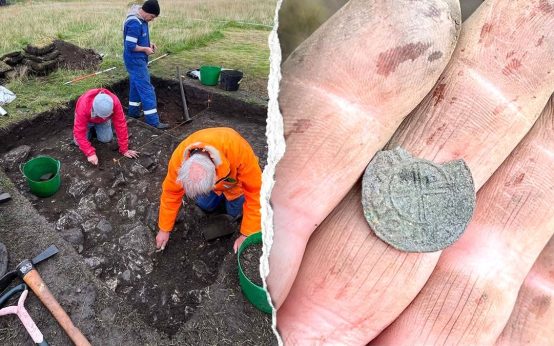 Ancient Anglo-Saxon Coin Unearthed in Scotland
  This Week In Science: Spiders, TV Pixels, and Storytelling