
Senator Jim Justice, representing West Virginia as a Republican, has accomplished what many might find astonishing: securing unanimous approval for a legislative bill amid the intense political polarization of the Senate. In a candid discussion with Fox News Digital, Justice shared insights into how he bypassed partisan obstacles to propose a monument for World War II hero Hershel “Woody” Williams on the National Mall.
Justice criticized the pervasive political discord, describing it as “romper-room behavior.” He emphasized the importance of dialogue and mutual respect, qualities that paved the way for the passage of his first Senate law honoring Williams. The Williams National Medal of Honor Monument Location Act designates a prominent site for the National Medal of Honor monument on the Reserve at the National Mall.
This law, Justice’s initial legislative achievement, commemorates Williams, a Medal of Honor awardee for his heroic acts during the Battle of Iwo Jima. Williams was the last surviving World War II Medal of Honor recipient before he passed away in 2022 at the age of 98. While the Senate approved the bill unanimously in March, the House endorsed it on August 31. The bill now awaits the signature of former President Trump.
Justice expressed optimism about the pending approval, stating, “We’re hopeful it’s going to be signed soon.” He reflected on the challenging journey to unanimous agreement, highlighting political divisions that reflect broader Senate discord.
The breakthrough, Justice recalled, occurred as he was poised to address the Senate floor with four Medal of Honor recipients. A candid conversation with Senator Martin Heinrich, a Democrat from New Mexico, facilitated the legislative progress. Justice acknowledged the rapport built over time with Heinrich, enhanced through shared committee work and personal connections, even involving Justice’s bulldog, Babydog.
Justice shared how Heinrich pinpointed the reluctance of Senate members to engage in earnest communication. “People here don’t talk to each other,” Heinrich admitted, eventually agreeing not to obstruct Justice’s proposal. This dialogue enabled rapid legislative movement, with the measure swiftly advancing to approval.
Justice urged fellow lawmakers to adopt mature discourse and overcome “childishness” obstructing Senate functions. He condemned the existing system, which he argues protects the political status quo, citing the 60-vote threshold to surpass filibusters and a lack of motivation to change.
Justice noted that many senators lack practical experience outside politics, relying heavily on fundraising and reelection efforts. His former chief of staff, Brian Abraham, elucidated the perpetual nature of political stagnation: “People here don’t want to get things done. They want it to keep going.”
The monument’s significance, Justice contended, transcends individual recognition. He emphasized that Woody Williams exemplified selflessness, always prioritizing collective well-being over personal interests. Justice reflected on Williams’ legacy, rooted in remarkable bravery during Iwo Jima, where his actions decisively advanced Marine forces.
Justice concluded by highlighting the enduring impact of Williams’ valor through the monument. His plans to share its importance with future generations underscore the symbolic and educational value of such memorials.
 Sanctuary Policies Criticized After New Jersey Highway Crash
 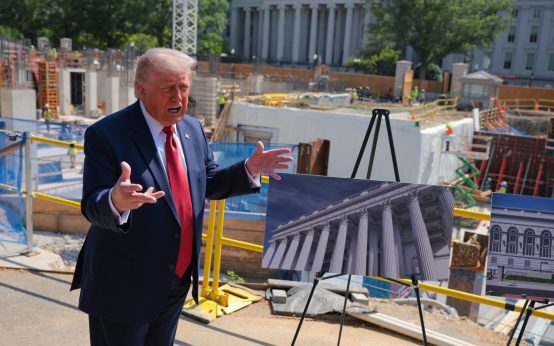 President Trump’s Construction Projects in Washington, D.C.
 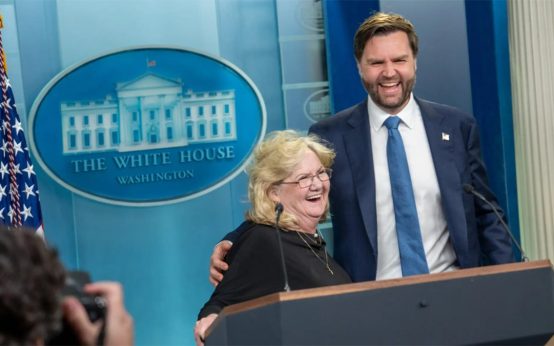 Public Scrutiny and Support: Usha Vance’s Journey
  New York Mayor’s Legal Move Against Promised Bonuses
  Diplomatic Efforts Amid Ongoing Conflict: Witkoff’s Strategy in Ukraine
  Can the U.S. Afford a Major War? The Impact of the Deficit on National Defense