
The ongoing debate within the Democratic Party is shaping its future. Recent elections and their coverage have highlighted the growing influence of the party’s progressive faction. This has initiated broader discussions about American political direction. While these developments are significant, they often encourage viewing the party’s future through primary elections and activist politics. However, this might not fully represent where the wider American voter stands. Voters participating in primaries do not determine general elections. The broader American electorate is signaling something different from the media headlines.
For over three decades, we have represented working communities in Congress. Our belief centers on serving constituents by delivering outcomes rather than merely engaging in arguments. This outlook led us to Next American Era and collaborating with Morning Consult to comprehend voter expectations from leaders today. As the 2026 midterm elections loom, voters express a need for something distinct from current Washington practices.
Voter Insights and Preferences
Political figures and commentators often depict the U.S. as irreparably divided. Yet, our research suggests a desire among Americans for leaders who address issues effectively. Most voters are not longing for broad ideological shifts but seek practical solutions. Indeed, 60% of them prefer targeted, commonsense strategies tackling specific problems with minimal disruption. This preference transcends party lines. A shared sentiment for collaboration over political point-scoring is evident in 72% of progressives and 71% of MAGA Republicans.
Even voters identifying with extremes of the political spectrum agree largely on wanting pragmatic governance over ideological struggles. This is significant, showcasing a mandate ignored by both parties. Data further reveals that 75% of voters want elected officials to compromise across party lines, aiming for enduring solutions. For 88% of progressives and 77% of MAGA Republicans, finding common ground is crucial. Around two-thirds prioritiz results-oriented approaches over ideological pursuits, even if it entails compromise.
Economic Factors and Policy Preferences
Current economic challenges make these findings critical. Over half of voters (58%) perceive America as moving in the wrong direction. Major concerns include inflation, energy and gas costs, and healthcare and prescription expenses. These aren’t theoretical issues — they impact family budgets, small business sustainability, and community affordability for workers.
When voters reviewed actual policy descriptions, moderate strategies consistently outperformed both progressive and MAGA alternatives. Moderates hold a clear lead over progressive policies regarding tariffs (plus-19 points), market competition (plus-14), and workforce development (plus-14). Similarly, moderate policies surpass MAGA approaches significantly in AI supervision (plus-27 points), gas prices, and tariffs (both plus-19).
In terms of party trustworthiness to tackle these challenges, the political landscape appears more competitive and fluid than Washington assumes. Democrats maintain a slight trust advantage in tested issues, particularly childcare costs (plus-10 points), healthcare affordability (plus-9), and housing affordability (plus-6). Nevertheless, this advantage is marginal; about a quarter of voters distrust either party to find effective solutions — a clear warning sign.
The Path Forward: Focusing on Results
This poll does not advocate for cautious politics. Voters seek leaders who are effective, not less ambitious. Across various issues, they favor solutions that seem workable, implementable, and capable of improving daily life. Achieving a broader, more lasting coalition might be easier than Washington imagines: Focus less on ideological battles and more on delivering tangible results.
In the Next American Era, success will reward leaders capable of bridging the gap between voter desires and Washington’s output. We believe this gap persists because loud voices receive more reward than those delivering practical results. We envision an economy fostering good jobs, reducing family costs, constructing necessary housing and energy infrastructure, and protecting consumers — an agenda not bound to any political wing but embraced by most Americans.
With midterms just months away, leaders in both parties have an opportunity to heed voter calls. They can choose between continuing ideological conflicts, breeding mistrust and pessimism, or pivoting to the practical governance that voters demand. We have chosen our path and hope others in Washington will join us.
Cheri Bustos is the president of Next American Era and the former chair of the Democratic Congressional Campaign Committee. She represented Illinois’s 17th District in the U.S. House of Representatives from 2013 to 2023.
Joe Crowley is a senior advisor to Next American Era and the former chairman of the House Democratic Caucus. He represented New York’s 14th District, including Woodside, Queens, in the U.S. House of Representatives from 1999 to 2019.
Copyright 2026 Nexstar Media Inc. All rights reserved. This material may not be published, broadcast, rewritten, or redistributed.
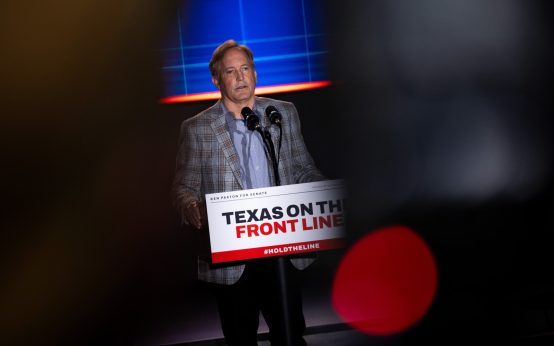 Texas Senate Race Tightens with Shifting Youth Support
  Flight 93 Hero’s Father Criticizes Ties Between Hasan Piker and Abdul El-Sayed
  House Races Shift Amid Democratic Momentum
 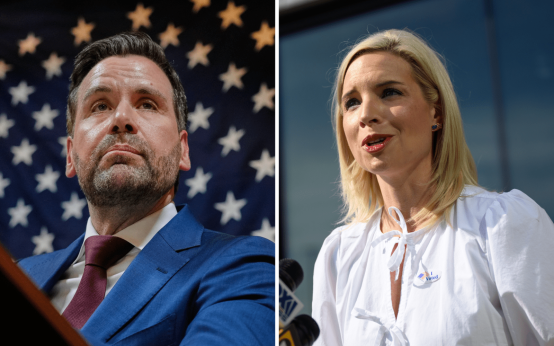 Iowa Senate Race: Marist Poll Shows Democrat Josh Turek Leading Republican Ashley Hinson
 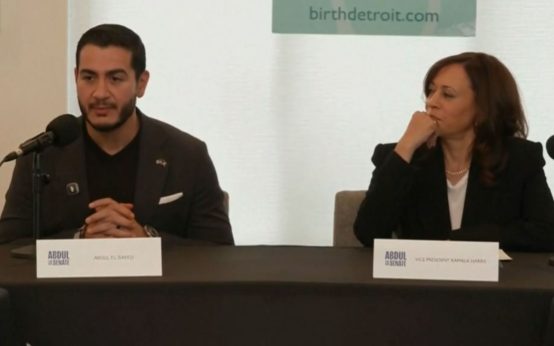 Kamala Harris and Abdul El-Sayed Campaign Together in Detroit
  Challenges Facing the Supreme Court’s Public Perception