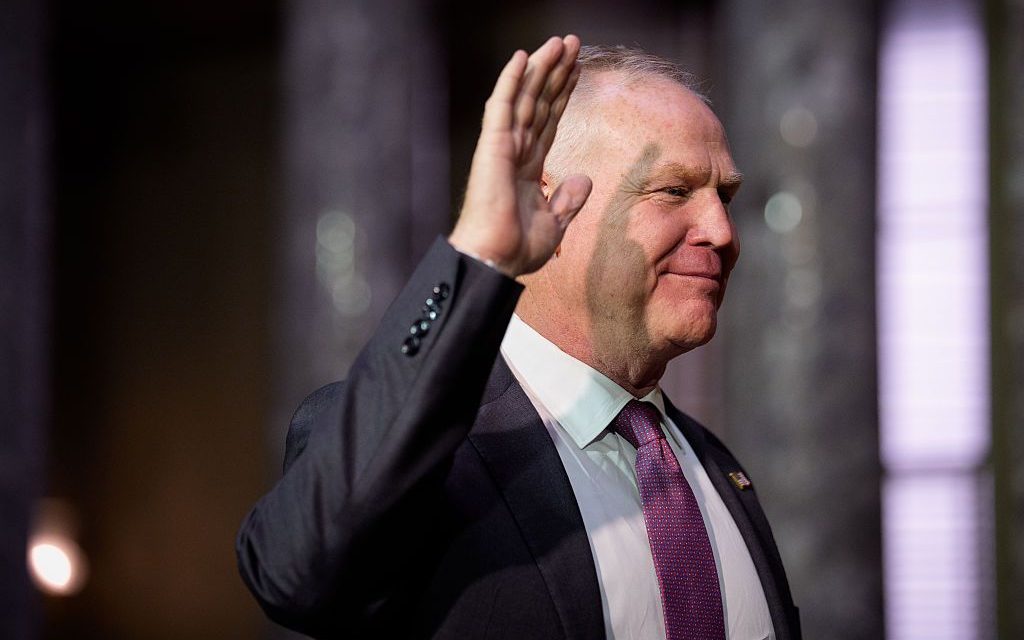
Oklahoma Republican Senator Alan Armstrong advocates for changes in federal permitting rules. In an interview with Newsweek, he stresses the need for new power infrastructure. The aim is to support data centers and other rising electricity demands without burdening households financially.
His comments come at a time when the growth of artificial intelligence infrastructure is a notable issue. According to Gallup, 71 percent of Americans oppose building a new AI data center in their area. Researchers question if this expansion is already raising household electricity prices.
“I think that we have to have data centers,” Armstrong stated in the Newsweek interview. “I think data centers have kind of become the scapegoat on high energy prices.”
Armstrong attributes rising electricity costs to inadequate generation and grid capabilities. His proposal includes making new, large-scale power users pay for the extra costs they cause. This issue is pressing in his own state, Oklahoma, where there is opposition to proposed data centers due to concerns over electricity costs, resource consumption, and community impacts.
Public Concerns Over Data Centers
Opposition to data centers is significant and widespread. A March Gallup survey found that 71 percent of U.S. adults are against building AI data centers nearby, with 48 percent strongly opposed. Only 7 percent strongly supported the idea. This is a higher opposition rate than the 53 percent against nuclear power plants in their locality. Resource use, potential cost increases, and overall economic impact are major concerns.
Armstrong’s Stance on Data Center Growth
Armstrong disagrees with halting the industry’s expansion. He believes in setting clear standards and maintaining a favorable environment for technological development. He argues that attempts to limit industry growth could drive investment abroad.
Electricity demand from data centers is increasing. A study by Lawrence Berkeley National Laboratory and the Brattle Group indicated that electricity demand from data centers could triple between 2024 and 2028.
Debate on Energy and Costs
Different studies offer conflicting views on how data center growth impacts household energy costs. Researchers, including Cameron Scalera from Columbia University, suggest residential electricity prices rise with more data centers, especially in areas with limited power capacity. Large-load tariffs, as Armstrong proposes, aim to shield residential customers from these costs, but their impact is still uncertain.
Other sources, like a 2026 study by the Electric Power Research Institute, argue that data center growth has historically reduced retail electricity prices by spreading fixed costs over more sales, though future conditions could alter these findings.
Armstrong’s Political Stances and Future
Armstrong has publicly disagreed with former President Donald Trump on issues like Russian diesel imports. He recommends increasing domestic infrastructure to reduce reliance on foreign energy sources. Though his Senate appointment is temporary, Armstrong has no plans to run for office again or return to his previous job at Williams. He expresses frustration with the slow pace of policy change in Washington.
Concluding Thoughts
The debate over who should bear the costs of new infrastructure continues. Armstrong’s proposal seeks to address these concerns, but the outcome is uncertain. Research indicates that proximity to adequate power supply and regulatory decisions will significantly influence whether data centers increase household bills.
 No Kings Movement Organizes Early Voting Push Before Midterms
  Microsoft President Criticizes Trump Administration’s Visa Policy
  Lake County Clerk Race: Democratic Incumbent Mike Brown vs. Republican Challenger Leslie Dallner
  Protect Your Finances from Cyber Threats
  Federal Investigators Probe Suspicious Mail Sent to Senators
  Trump Criticizes Michigan Senate Candidate Abdul El-Sayed