The Skokie trustees have adjusted the town’s short-term rental rules, aiming to make platforms like Airbnb and VRBO more appealing to locals seeking extra income. The changes follow a previously implemented 18-month pilot program started in February, which sought to regulate short-term stays to enhance safety and deter investors from converting affordable housing into dedicated vacation properties.
Feedback from residents influenced the decision to revise the program. Many found initial fees excessively high, ranging from $3,650 for owner-occupied rentals to $4,800 for investor-owned units, compared to neighboring towns. As part of the revisions approved on September 8, the fee structure was reduced considerably to $550, including a $400 registration fee per dwelling unit and a $150 operator rental license fee.
Additional modifications include reducing the minimum rental duration from five nights to one night. Hourly or part-day rentals remain prohibited, and the restriction of 18 stays per property during the pilot period is lifted. Properties can now be rented more frequently than once a month within the pilot’s duration.
Adjustments will solely affect owner-hosted properties, where homeowners are present during visitors’ stays. Changes will not apply to owner-occupied rentals (where owners vacate during stays) or investor-occupied rentals (where owners do not reside on the property).
According to Skokie’s Community Development Director Johanna Nyden, the village currently has two compliant short-term rental listings, none of which are owner-hosted. There are no registered investor-owned listings presently. Entry into the program requires operators to apply to determine eligibility, attend training, notify neighboring residents, pass inspections, and pay fees. Initially, of 129 active short-term rental listings, 119 did not apply for a license. Only two became fully licensed after meeting all requirements.
Nyden outlined ongoing challenges such as identifying non-compliant operators. By August, 54 operators were still non-compliant, and steps were planned to improve enforcement. The program won’t accept new investor-owned applications, limiting participation to existing and registered units.
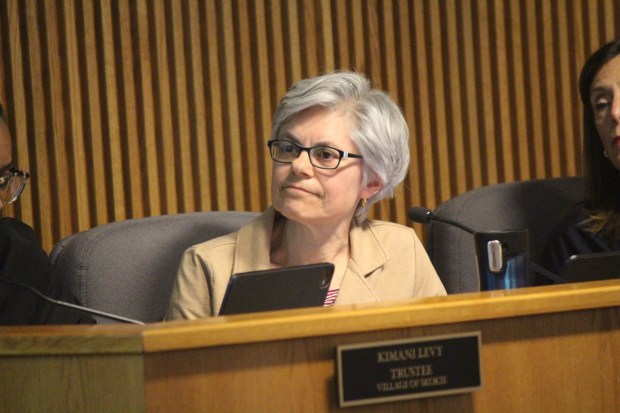
Some trustees voiced concerns about not compensating compliant operators for previously paid fees. Trustee Lissa Levy expressed fairness concerns about the fee changes for future participants. Trustee Gail Schechter voted against the modifications, worried about short-term rentals’ impact on affordable housing and the lack of advisory oversight in the decision-making process.
Schechter suggested an amendment to involve an advisory committee in reviewing collected pilot data, which passed with a 5-1 vote. Modifications also increased controls over whether owners are present during stays. Village Manager John Lockerby acknowledged the difficulty of enforcing presence regulations but planned improvements with Mayor Ann Tennes suggesting stricter penalties for non-compliance.
The board approved the modifications with a 5-1 vote, leaving room for further adjustments. Trustee Keith Robinson noted the importance of the actions taken and future learning opportunities from the program.
The revised pilot program awaits final approval by the Village Board, with the date yet to be specified.
 U.S. Housing Market Trends: Opportunities and Challenges for Homebuyers
  Homeowners Accelerate Mortgage Payments Despite Low Interest Rates
  Luxury Loop Residence with Stunning Views for Sale
  The Pittsfield Building’s Transformation: A Historic Skyscraper Reimagined
  U.S. Housing Market Faces Challenges Amid Rising Costs and Changing Trends
  Neighbors Battle Unlawful Construction as Chicago’s Historic Wacker House Faces Alteration Challenges