Understanding the 2027 Cost-of-Living Adjustment
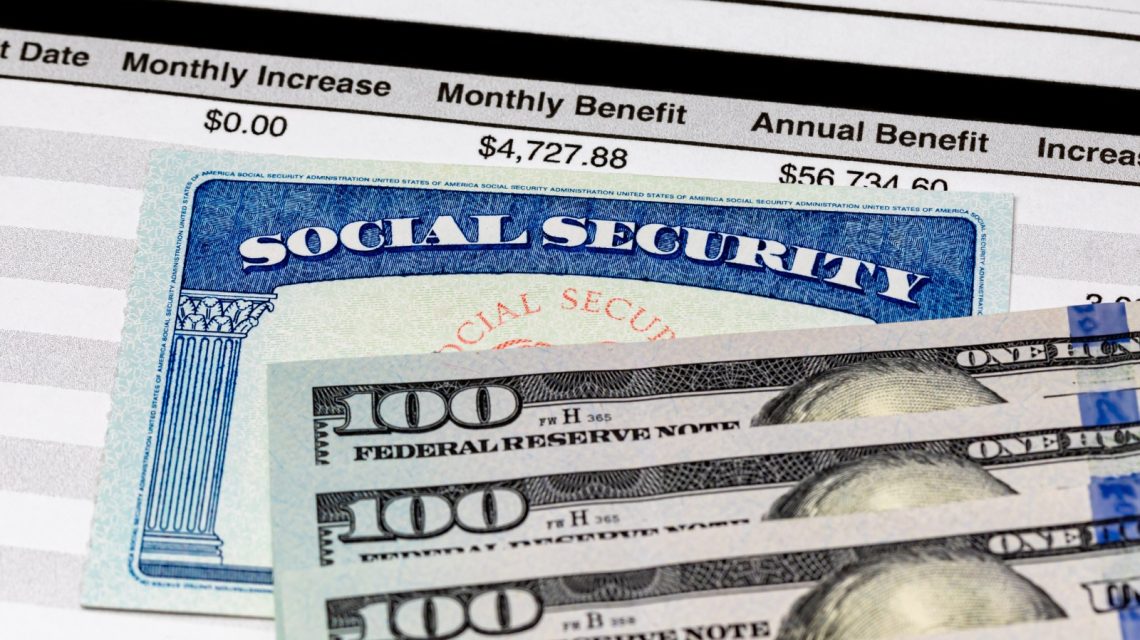
Millions of Social Security recipients now have a clearer understanding of the potential size of their 2027 cost-of-living adjustment (COLA). The federal government released the second inflation reading used for calculating next year’s increase, shedding light on this important matter.
The Bureau of Labor Statistics reported a 3.5 percent rise in the Consumer Price Index for Urban Wage Earners and Clerical Workers (CPI-W) over the 12 months leading up to August. Notably, the CPI-W reached an index level of 328.481 in August.
While the broader Consumer Price Index for All Urban Consumers (CPI-U), commonly known as the CPI, saw a 0.4 percent increase from the previous month and was 3.4 percent higher than a year earlier, the CPI-W remains crucial. It serves as the measure for calculating the annual COLA.
The Calculation Process
Friday’s figures have brought the final 2027 COLA calculation closer to completion. With August being the second month in the comparison period, the September CPI-W is all that remains to finalize the adjustment.
According to the Social Security Administration data from July, over 75.7 million people were receiving Social Security, Supplemental Security Income, or both. For these beneficiaries, the annual COLA determines how much their payments will increase to account for higher consumer prices.
The 2027 adjustment is particularly important due to the accelerated inflation earlier this year. In July, the CPI-W was 327.104, up 3.4 percent from July 2025. Both the headline CPI-U and CPI-W readings increased substantially.
Historical Context and Projections
Social Security recipients received a 2.8 percent COLA for 2026, following adjustments of 2.5 percent in 2025 and 3.2 percent in 2024. In 2023, a larger 8.7 percent adjustment was paid, resulting from earlier inflation trends.
Before the August inflation report, the Senior Citizens League projected a 3.6 percent COLA for 2027, down from their previous forecasts of 3.8 percent in June and July. Their August projection was based on July’s 3.4 percent annual CPI-W increase.
Finalizing the COLA
The CPI-W inflation rate reported should not be confused with the eventual Social Security COLA. The Social Security Administration calculates the adjustment by averaging CPI-W index levels for July, August, and September and comparing this average with the same months from the last year a COLA took effect.
The comparison point for the 2027 calculation is the third quarter of 2025, where CPI-W stood at 316.349 in July, 317.306 in August, and 318.139 in September. These figures produced a three-month average of 317.265, resulting in a 2.8 percent COLA for 2026 when compared with the corresponding 2024 data.
The first number in the 2026 side of the calculation was July’s CPI-W reading of 327.104. The August reading has now been added, and the upcoming September figure will complete the calculation for the exact 2027 COLA.
Anticipated Amounts
While it is too early to definitively predict how much benefits might rise, the Committee for a Responsible Federal Budget (CRFB) estimated a 3.4 percent COLA based on recent inflation data. If this prediction holds, benefits would increase 0.6 percentage points higher than the 2026 COLA of 2.8 percent.
As an illustration, a 3.45 percent average from July’s 3.4 percent and August’s 3.5 percent CPI-W readings would mean the average retired-worker benefit could rise by approximately $71.97 a month or $863.60 a year. Currently, the average retired worker receives $2,085.98 a month, according to the Social Security Administration, meaning a 3.45 percent increase would bring payments to roughly $2,157.95 a month or $25,895.36 a year.
Beneficiaries will need to wait for the Bureau of Labor Statistics to release the final Consumer Price Index data for September to confirm the COLA’s final figure. This release is scheduled for October 14 at 8:30 a.m. ET, with the Social Security Administration announcing the official 2027 COLA the same day.
The new adjustment will apply to Social Security benefits payable for December 2026, with recipients receiving the increased benefits in January 2027. Supplemental Security Income payments will reflect the annual COLA increase as well.