
A drifting SpaceX rocket is set to collide with the moon after launching lunar landers over a year ago. The rocket’s upper stage will impact the moon on Wednesday, creating a crater and a plume of dust that scientists and enthusiasts are eager to observe.
Space tracking expert Bill Gray predicts the collision will occur at 5,400 mph (8,700 kph) near the Einstein Crater on the moon’s sunlit western limb. This event will be visible best from the eastern parts of the U.S., Canada, and much of South America since it will happen in the early morning hours.
“Things are getting crowded up there,” said Gray, who plans to watch the event from New Brunswick, Canada.
This incident highlights concerns about space debris. Although SpaceX did not intend to hit the moon, experts believe the crash might have been avoided if the rocket’s upper stage had been redirected into solar orbit. Previously, a Chinese rocket segment hit the moon’s far side in 2022.
This crash will take place on the moon’s near side and is expected to release energy equivalent to three tons of TNT. According to experts, the impact flash might be too dim to see, but the ejected material could stretch several miles into space and be observable for minutes through telescopes.
“The gravity on the moon is low, and there’s no wind to clear the dust,” said Benjamin Fernando from Los Alamos National Laboratory.
Fernando anticipates the crater will measure around 90 feet across and 16 feet deep. NASA’s Lunar Reconnaissance Orbiter and South Korea’s Danuri lunar orbiter will capture the crash site before and after the impact.
The abandoned rocket segment — around 40 feet long and weighing 10,000 pounds — launched two private lunar landers on January 15, 2025. Firefly Aerospace’s Blue Ghost successfully landed, while the Japan-based ispace’s lander was destroyed.
With the moon becoming a focal point for exploration, understanding and managing debris is crucial, especially as the U.S. and China aim to land astronauts on the lunar surface in coming years. SpaceX and Blue Origin are competing to provide the lunar lander for NASA’s Artemis IV missions.
“This impact will not be a problem,” said retired astrophysicist Jonathan McDowell. “But in a future with long-term lunar bases, similar impacts could pose a risk.”
Enhancing debris monitoring and traffic control is vital before more robots and astronauts visit the moon.
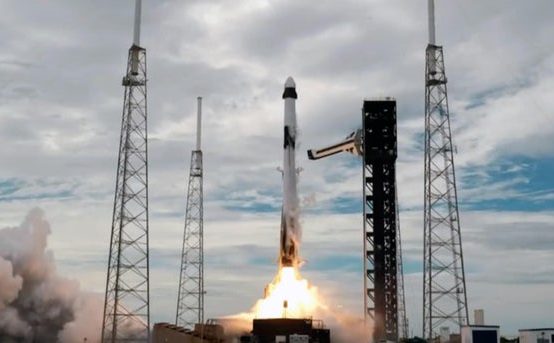 SpaceX Falcon 9 Delivers Crew to International Space Station
 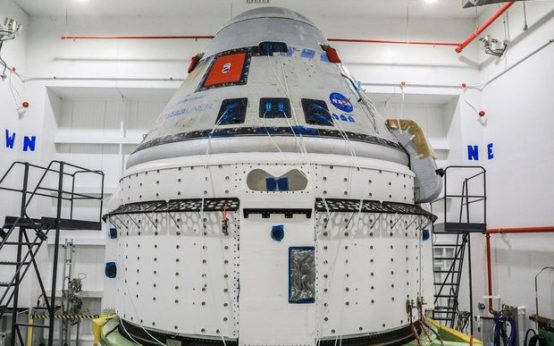 NASA Collaborates with Boeing to Launch Unpiloted Starliner Test
  NASA’s New Space Telescope Launch: A Breakthrough in Cosmic Exploration
  Trump’s Call with ISS Astronauts and Honors at NASA
 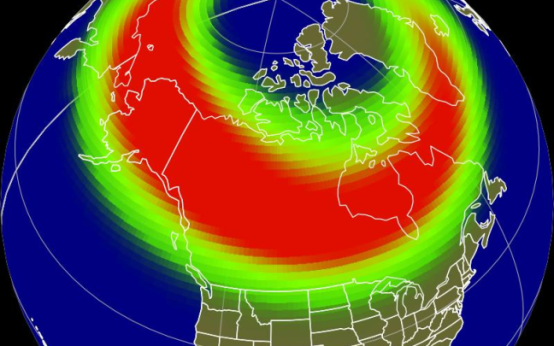 Anticipated Northern Lights Due to Solar Activity
  NASA’s Nancy Grace Roman Telescope Prepares for Launch