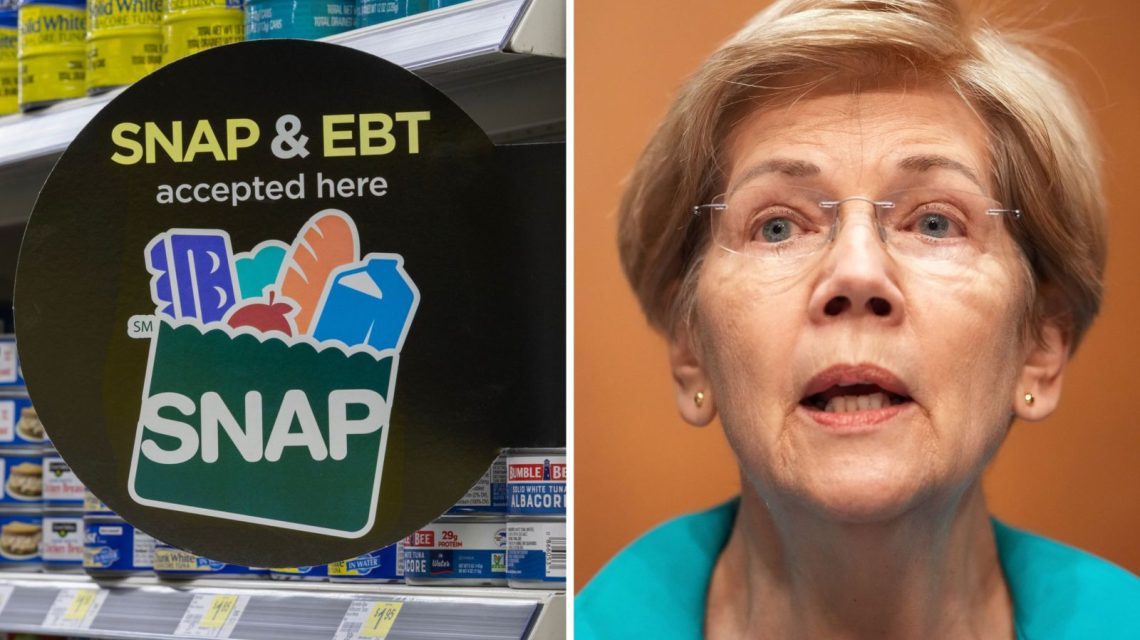
Senator Elizabeth Warren has raised a warning about an impending crisis related to changes in federal funding for the Supplemental Nutrition Assistance Program (SNAP). With the federal government’s contribution to SNAP administrative costs dropping from 50% to 25%, states are expected to face significant budget challenges.
The Massachusetts senator expressed concerns on X, emphasizing that states shouldn’t be forced to choose between essential services such as SNAP or education. Warren urges Congress to overturn these funding cuts, which form part of the broader One Big Beautiful Bill Act (OBBBA). This legislation, signed by President Donald Trump on July 4, 2025, includes further provisions requiring states to fund some of the food benefits, previously covered by Washington, creating potential shifts in billions of dollars.
New Cost Structures in SNAP
Under previous guidelines, the federal government shouldered all SNAP food benefits while sharing administrative costs equally with states. However, the OBBBA alters this balance. Starting from October 1, 2026, the federal government will cover only 25% of state SNAP administrative expenses, adding about $16.9 billion in costs to states between FY2027 and FY2031, averaging $3.4 billion annually.
Moreover, starting from October 1, 2027, states will need to contribute to SNAP benefits if their payment error rate exceeds 6%. States with lower error rates will face no additional costs, while those with higher rates could pay up to 15% of benefits, depending on their specific rates.
Potential Financial Impact
Analysis from the Center on Budget and Policy Priorities (CBPP) estimates that in FY2028, 35 states and one territory could be responsible for an additional $9 billion due to these changes. Over half of these states could encounter costs surpassing $100 million. States with particularly high error rates such as Alaska, Delaware, Georgia, Illinois, New Mexico, and Oregon might qualify for a delay, instead of immediately paying the 15% share.
Republican Perspective on Accountability
The Trump administration and congressional Republicans justify these changes as a way to incentivize states to reduce improper payments. In FY2025, the USDA reported a national SNAP payment error rate of 10.62%, translating to $10.1 billion in overpayments and underpayments. This error rate isn’t solely about fraud, but includes miscalculations in eligibility and benefits.
Agriculture Secretary Brooke Rollins criticized the current system for lacking accountability, advocating for states to reduce waste. Senate Agriculture Committee Chairman John Boozman pointed out the significant potential for mismanagement as a concern, aligning the reforms to protect taxpayer money. The House Agriculture Committee, led by Chairman Glenn Thompson, emphasized that financially involving states will encourage more prudent management.
States Voice Concerns about Budget Strain
State leaders warn that the financial requirements could lead to tough budget decisions. The National Governors Association, along with various groups, has cautioned that these cost changes could endanger the sustainability of SNAP. They advocate for a delay in the new funding mandates, allowing states time to refine their systems and improve accuracy.
For instance, New York anticipates an annual financial burden of up to $1.4 billion in SNAP costs, a sum including $1.2 billion for benefits and over $200 million in combined state and local administrative costs. Meanwhile, California’s State Auditor suggests potential costs could reach $2.5 billion annually, posing a threat to balanced budgeting in the state.
The Congressional Budget Office anticipates varied responses from states. While some may absorb the costs, others might reconsider eligibility, alter benefits, or exit the program, depending on the financial strain posed by the newfound obligations.
 California Residents Leave Due to Tax Hikes and Political Climate
  GOP Convention Day 2: Key Highlights and Developments
  Proposed Legislation to Restrict Insanity Defense in Federal Cases
  Legal Controversies Surround President Trump’s Cash Gifts
  Supreme Court Blocks Missouri GOP Redistricting Map Before Midterms
  Reflecting on the 25th Anniversary of 9/11: George Bush’s Initiative to Unite America