
Supreme Court Ruling on Green Card Holders
The U.S. Supreme Court has authorized the federal government to revoke the standard legal status of returning green card holders if they travel abroad with pending criminal charges. This decision passed with a 6-3 vote.
Justice Jackson’s Dissent
Justice Ketanji Brown Jackson provided a strong dissent, critiquing the decision as giving the executive branch excessive power. She expressed concern that this ruling could negatively impact millions of permanent residents. Jackson highlighted that even during wartime, Congress seldom offers the President unchecked authority.
Impact on Immigration Policy
The ruling benefits the Trump administration’s immigration policies, allowing tighter control. Under the decision, green card holders must demonstrate their right to remain in the U.S., shifting the burden away from the government.
Blanche v. Lau Case Details
The Supreme Court’s decision stemmed from the case of Muk Choi Lau, a permanent resident. Lau faced issues upon reentry into the U.S. after a brief trip. He was dealing with unresolved state charges concerning trademark counterfeiting.
Lau contested the government’s actions, which included using his parole status to initiate deportation proceedings. Although a lower court sided with Lau, requiring “clear and convincing evidence” for deportation, the Supreme Court overturned this.
Justice Clarence Thomas wrote the majority opinion, asserting that border officials need quick decision-making abilities. He claimed that mere suspicion of a crime justifies holding a resident on parole while awaiting charge resolutions.
Dissenting Opinions
Justices Sotomayor and Kagan joined Jackson in dissent, arguing that treating permanent residents as newcomers based solely on accusations broadens executive authority beyond Congress’s intent.
Future Considerations
Other cases regarding immigration policy, like birthright citizenship and asylum regulation, are also under Supreme Court review. These decisions will further shape the landscape of U.S. immigration law.
This development remains part of ongoing coverage, with more information to come.
 Challenges Facing the Supreme Court’s Public Perception
  California Democratic Aide Arrested for Visa Overstay by Federal Authorities
  Experts Doubt Export Ban Will Lower Fuel Prices
  Trump Delivers Warning to Iran, Cuba at UN General Assembly
  Trump Delivers Stern UN Speech on Iran, AI, and Global Security
 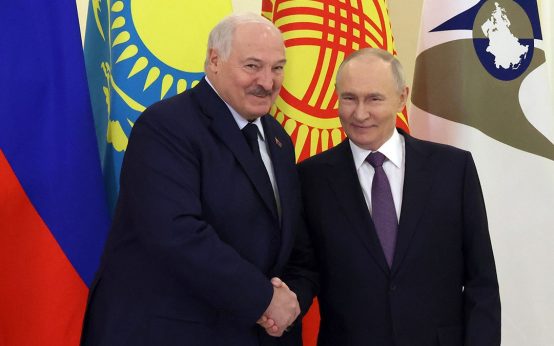 Lukashenko and Putin’s Unique Relationship and Belarus’ Strategic Role