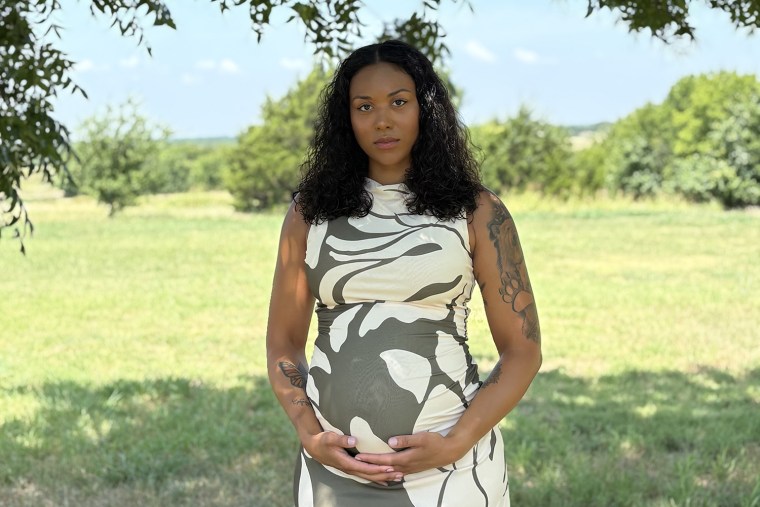
A surrogate involved in a multi-state legal dispute over a newborn with a rare heart defect expressed her motivations through an opinion piece in the New York Post. McKenna West, a cardiac nurse from Alaska, delivered a baby boy named Rumi in Texas on behalf of Omar Ahmed and Nausheen Gilkar. Rumi required surgery for hypoplastic left heart syndrome, a serious congenital heart condition, with ongoing medical needs likely.
West, in her editorial, stressed her commitment to giving Rumi a chance at life, drawing from her nursing experience. She refuted claims of political motivations, emphasizing the child’s right to life. Despite requests for privacy from the court-appointed guardian, a representative for Ahmed and Gilkar declined to comment on her statements.
Legal issues preceded the birth, arising from disagreement over a 20-week scan that revealed Rumi’s condition. The surrogacy agreement allowed the parents to request an abortion for fetal abnormalities, but West chose not to proceed with termination, citing personal reasons in her legal complaint.
Following her decision, West claimed that Ahmed and Gilkar applied legal pressure based on the surrogacy contract. The couple’s counterclaim acknowledged their initial legal response but later understanding of West’s stance. The conflict extended across Alaska, Texas, and California courts, with West seeking custody in Alaska and the biological parents pursuing parental rights in California.
Amid the legal wranglings, differing views on medical care emerged. West voiced confidence in Texas medical facilities, whereas the parents preferred Los Angeles for Rumi’s treatment. She cited support networks in Texas as further motivation for her location choice.
West accused the parents of hesitance in committing to Rumi’s necessary surgeries, prompting Texas Attorney General Ken Paxton to intervene for mandatory medical procedures. The parents denied reluctance, asserting their concern for Rumi’s well-being.
Legal support for West came from the Alliance Defending Freedom, with Paxton, a known anti-abortion figure, championing her case. Despite political undertones linked to the case, West emphasized her focus on Rumi’s health.
Rumi successfully underwent an initial Norwood procedure, yet faces additional surgeries. The survival rate for such procedures, while high for the initial surgery, highlights long-term risks, with potential developmental impacts, as explained by Dr. Scott Hadland of Harvard Medical School.