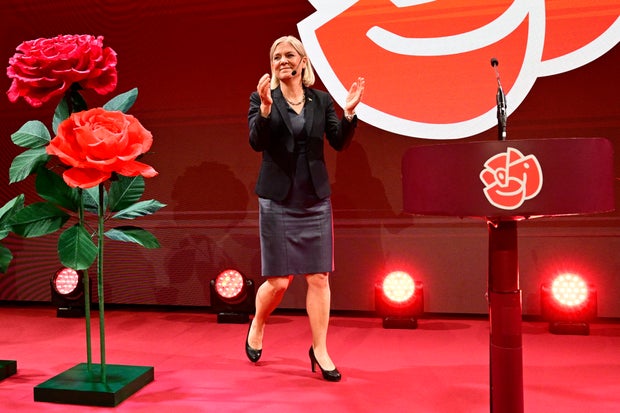
Sweden entered a period of political uncertainty following an intense election that left the left-wing opposition clinging to a narrow lead with some votes yet to be counted.
The election also marked a setback for the far-right Sweden Democrats, who saw their first decline since entering parliament 16 years ago. Both Magdalena Andersson, leader of the Social Democrats, and outgoing Prime Minister Ulf Kristersson expressed intentions to explore coalition options to secure power. However, both leaders face the necessity of making significant compromises to achieve a majority.
While the left-wing opposition holds a slim lead, the formation of a new government is expected to involve complex negotiations that could extend over several weeks. The earliest possible parliamentary vote on a new prime minister is set for September 29.
“We anticipate a long and challenging government formation process, which could potentially lead to a snap election,” said political analyst Mats Knutson from public broadcaster SVT.
By Monday, with 95% of the votes counted, the opposition bloc had a slight three-seat majority over Prime Minister Kristersson’s alliance. However, results remained uncertain as some votes were outstanding until Wednesday.
A local construction worker, Mikko Duvaldt, noted the increasing polarization in Sweden, predicting difficulties for both sides in forming a government.
A Challenging Coalition Process
If the left-wing maintains its majority, Andersson aims to create a government with the Greens, the Left, and Center parties. Yet, ideological differences pose obstacles. The Center Party refuses to support a government including the Left, which also insists on being part of any government it backs.
Kristersson, meanwhile, hopes to engage the Center Party to secure a majority, yet the Center’s fundamental opposition to alliances with the far-right suggests little hope of success.
“Kristersson’s attempts to involve the Center Party are expected, but the center is unlikely to align with the far-right,” Annika Freden, a political science associate professor, observed.
Negotiations are expected to focus on maximizing policy influence and relaxing ‘red lines.’ Sweden’s cultural avoidance of snap elections is expected to drive these discussions.
Sweden Democrats’ Decline
The Sweden Democrats saw their vote percentage drop to 17.6%, down from over 20% four years ago, placing them behind the Social Democrats and Moderates. Known for its strong anti-immigration stance, the party’s decreasing popularity results form the mainstream acceptance of its stringent policies.
“Migration and crime issues have become mainstream, diminishing the Sweden Democrats’ distinctiveness,” commented Freden.
The Sweden Democrats, having held significant influence without formal cabinet roles since 2010, now find their main issues absorbed by other parties.
This election results indicate a dynamic political landscape in Sweden, with each major party seeking new strategies and alliances to secure long-term power.
 Venezuelan Leadership at the United Nations
  Ontario Synagogue Shooting During Yom Kippur Leaves One Officer and Shooter Injured
  Pope Leo XIV’s Upcoming Visit to Latin America: An Overview
  Ukraine Deploys Ground Robots in ‘Operation Vivaldi’
  Understanding AI’s Impact Compared to Historical Threats
  State Department Alerts on Middle East Travel Amid Rising Tensions