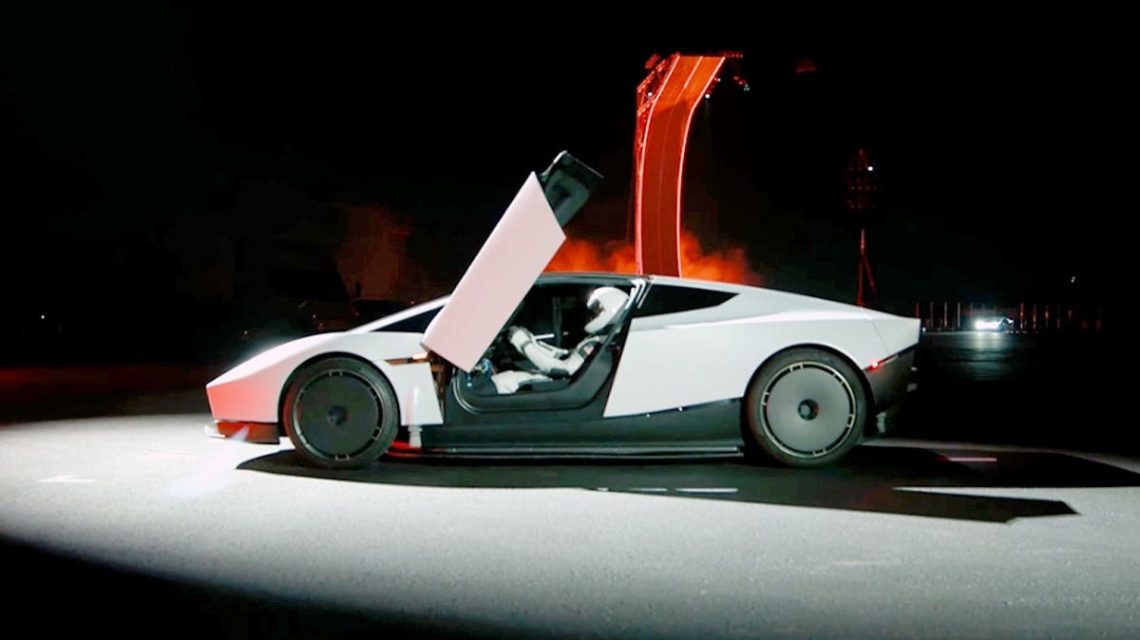
Elon Musk recently introduced the latest Tesla Roadster prototype, notably featuring flying technology. Analyzing its engineering design, Mike Caudill, founder of Chasing Horsepower, highlighted its rocket-powered boosters which enable acceleration from zero to 60 mph in under one second.
Reports from Fox News detailed a fascinating demonstration where a stylish white sports car soared up an arched ramp, became airborne, flipped, and landed efficiently back on the ground. This was only part of the event where Tesla showcased the Roadster’s ability to accelerate to 60 mph in about 0.81 seconds. The big question remains: Can Tesla deliver this innovation to consumers?
Flying Sports Car Unveiling
On October 15, 2026, Tesla introduced the reimagined Roadster at SpaceX’s McGregor, Texas, facility. Engineers from both Tesla and SpaceX elaborated on their integration of rocket-surpassing technology into the Roadster. A significant aspect of the demonstration was the car speeding up a steep ramp and leveraging a suction system to hold its position upside down before its thrusters projected it into the air, showcasing Tesla’s collaboration with SpaceX.
During this event, Tesla also conducted another air-borne maneuver, flying the Roadster above other Tesla models like the Cybertruck and Tesla Semi. It was done under automated control to ensure no human risk. Tesla released the footage online, sharing the spectacle with a broader audience.
SpaceX Technology in Roadster
The Roadster uniquely employs cold-gas thrusters, utilizing high-pressure gas for thrust, differing from traditional fuel-burning rocket engines. Positioned under the car, these thrusters boost its aerodynamic efficiency. Additionally, four rear-positioned electric fans foster a significant downforce by pulling air beneath the vehicle. This enhances tire grip, crucial for inverted driving.
Lars Moravy from Tesla elaborated on the thruster system, mentioning the 200-liter gas storage vessel behind the seats in the standard configuration. The Rocket setup expands this with an extra 400 liters but occupies passenger space. Yet, the substantial six to seven hour refill time for the gas storage highlights its current limitation, suggesting more work is needed for sustainable flight-like performance.
The Roadster’s Remarkable Speed
Tesla boasted about the Roadster’s rapid acceleration during the showcase. Reportedly, the car zoomed from zero to 60 mph in about 0.81 seconds, placing it among the quickest electric vehicles. However, the claim awaits independent validation on market vehicles. Additionally, Tesla has ambitions for the Roadster hitting speeds nearing 230 mph, with Elon Musk envisioning even reaching half the speed of sound.
This ambition extends beyond speed. Originally promised a range of about 620 miles, Tesla now projects a 300-mile range per charge, reflecting developmental adjustments since the Roadster’s initial reveal in 2017.
Vehicle Configurations and Challenges
The Roadster has three configurations: Performance, Thrust, and the advanced Rocket version. The Performance model prioritizes conventional driving with added aerodynamic features, accelerating to 60 mph in under 1.6 seconds using traditional systems.
The Thrust version enhances acceleration with additional rear thrusters, achieving speeds under 0.9 seconds to 60 mph. This iteration caters to race enthusiasts.
The Rocket design maximizes capability with ten thrusters, enabling airborne maneuvers but requires passenger space compromise, accommodating only one person. Such technology still lacks regulatory approval for public roads.
Market Pricing and Development
Originally estimated at $200,000 in 2017, Tesla reopened Roadster reservations without a definitive final price during the October 2026 event. Consumers must make a significant upfront payment of $5,000 followed by $45,000 for the Performance model reservation. The Thrust model reservation requires a total of $250,000, underscoring consumer risk without a guaranteed delivery date.
Tesla explicitly notes that a reservation secures a place in line, not the order of a finished vehicle, subjecting customers to future changes in specifications. The company remains committed to its production timeline, targeting 2028 for commencement despite past delays.
Considering Future of Human Driven Cars
Musk’s comments that the Roadster might be among the last Tesla vehicles designed for human drivers underscores an irony. As Tesla continues its push toward autonomy with models like the Cybercab lacking steering controls, the Roadster emphasizes the traditional thrill of driving. Despite advancements in autonomous technology, this model remains aimed at drivers who cherish the drive’s excitement.
Considerations for Buyers
While unlikely to purchase a Roadster, its innovations might intrigue you about vehicle technology’s future. Tesla is pioneering with designs that impact traction and performance in specialized vehicles, yet many challenges await the broader adoption of such advancements.
For those considering a reservation, evaluate Tesla’s parameters carefully, considering the prototype stage of development and potential changes, hence indicating a cautious approach in deposits for a future Roadster.
Ultimately, while Tesla’s engineering feats impress, deciding on diving into this venture needs consideration of associated risks and timeline realities.
 Meta’s Settlement and AI’s Impact on Youth
  Potential Scenarios of an AI-Controlled World
 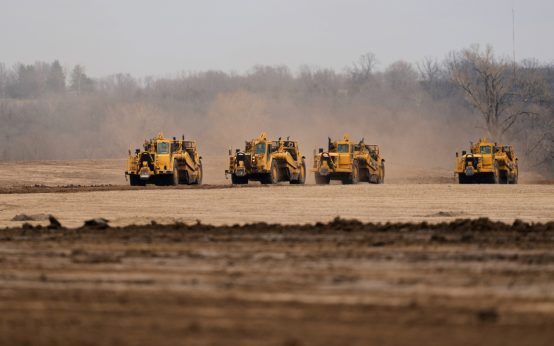 Geography and Politics Shape Future of AI Data Centers in Red States
 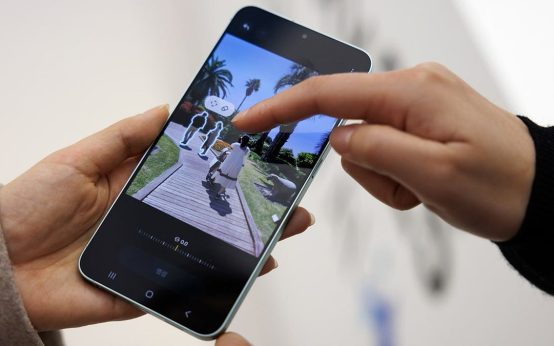 Efficient Ways to Organize Photos on Smartphones
  Party’s 2028 Agenda: Addressing AI and Economic Concerns
 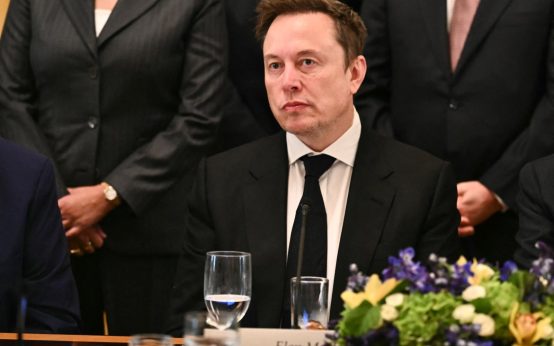 Elon Musk’s Tesla Roadster: Hovering Capability Unveiled