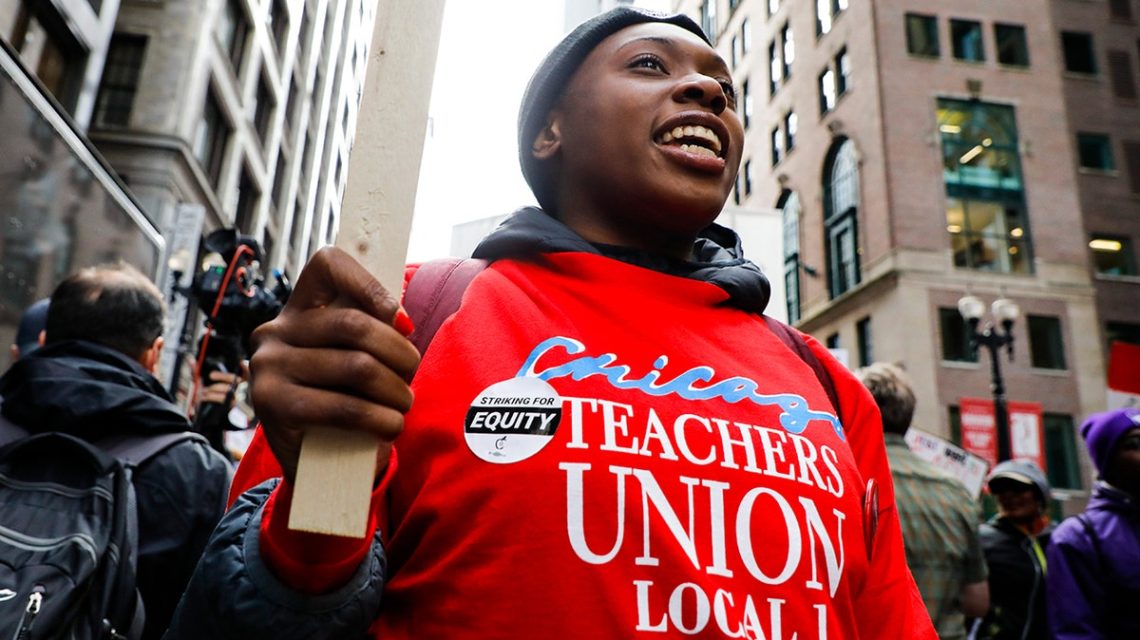
As summer ends, many Americans anticipate Labor Day, a day dedicated to honoring the contributions of American workers. This day acknowledges workers’ efforts that enhance our living standards.
Each year, controversy arises as union leaders overshadow this occasion. They use the day to argue for increased governmental powers. Critics argue these leaders focus more on political influence than celebrating the workers they claim to represent.
Today, unions rely heavily on government-backed power. Union officials often do not need to earn the support of all workers. Federal laws sometimes allow them to impose uniform representation policies, regardless of individual objections. In states lacking right-to-work laws, unions can legally threaten non-complying workers with dismissal if they refuse to pay dues.
EXPLOSIVE REPORT UNEARTHS PROMINENT UNION MONEY TRAIL LABELED A ‘STUNNING BETRAYAL’ OF MAGA MEMBERS
Even supporters of enforced unionism sometimes admit to its flaws. Take Robert Reich, former Secretary of Labor under the Clinton administration. He has often favored expanded union powers but has criticized changes in the law that emphasize union voluntary aspects.
Reich once articulated that to sustain themselves, unions require some authority to bind their members, illustrating a reliance on coercion.
Similarly, former Vice President Kamala Harris acknowledged the harm caused to workers by uniform union contracts. As California attorney general, Harris filed a brief with the Supreme Court that noted the potential conflicts unions might create against employees’ economic interests.
FRUSTRATED BLUE-COLLAR UNION BOSSES RIP SOCIALIST POLITICIANS, WARN OF LABOR EXODUS FROM DEM PARTY
Many union members recognize the coercion within their organizations. A Rasmussen poll indicates 79% of union members believe workers should not be forced to join or pay dues as an employment condition.
Despite this, union officials seek to expand coercive powers through legislation. Their primary legislative goal is the “PRO Act,” a bill that aims to repeal right-to-work laws in numerous states. This would enforce compulsory union dues and centralized bargaining.
Another contentious element in the PRO Act is the “card check” unionizing method. It replaces secret ballots, allowing organizers to pressure workers into signing union authorization cards, counted as votes.
The PRO Act also restricts workers’ ability to vote out unwanted unions. These provisions can trap workers in unwanted union regimes even in unanimous opposition.
Early union leaders advocated for voluntary membership and support. Samuel Gompers, a pivotal union figure, promoted voluntarism, emphasizing liberty and warning against coercive practices in his 1924 speech.
Today’s union leaders often deviate from Gompers’ principles, pursuing policies that compromise workers’ rights for power. This Labor Day, reflect on the importance of workers’ freedom of choice, distinguishing between genuine pro-worker sentiments and overarching union agendas.
Mark Mix serves as president of the National Right to Work Committee and Foundation.
 New York Mayor’s Legal Move Against Promised Bonuses
 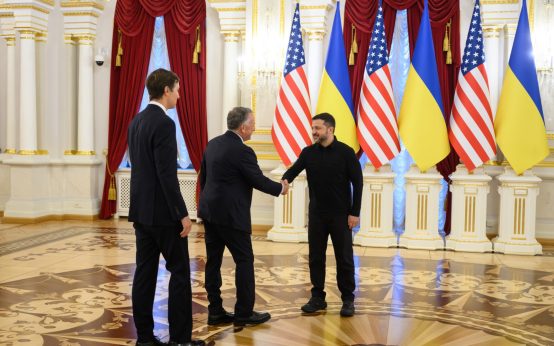 Diplomatic Efforts Amid Ongoing Conflict: Witkoff’s Strategy in Ukraine
  Can the U.S. Afford a Major War? The Impact of the Deficit on National Defense
  Public Scrutiny of Tech Giants and Historical Parallels
  Challenges in U.S. Economy Amid Global Trade Changes
  Antiestablishment Candidate Randy Villegas Challenges Conventional Political Strategy