Introduction
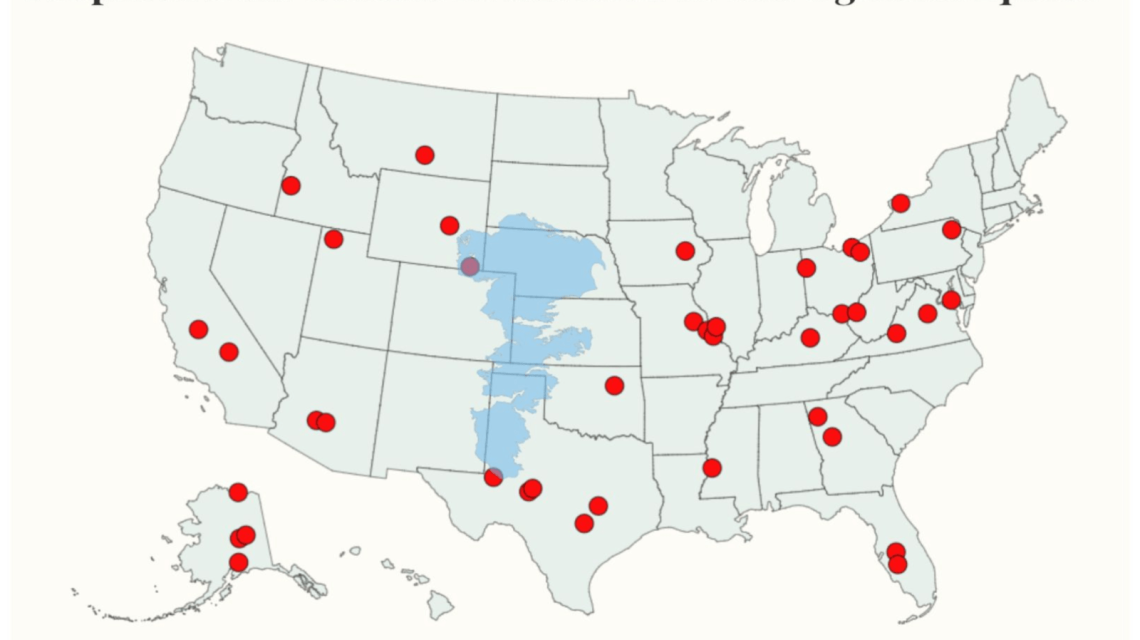
The rise of AI data centers is posing a critical environmental question in the Great Plains: can one of America’s key groundwater reserves, the Ogallala Aquifer, support both the burgeoning digital economy and agricultural communities that rely on it? Reports show AI facilities directly over or near this vital water source.
Current Developments
Recently compiled mappings outline several proposed and ongoing AI projects situated close to the Ogallala Aquifer. Texas and Wyoming local governments are evaluating the benefits of these investments against concerns of water availability.
Project Overviews
- Texas Critical Data Centers: A proposed 438-acre site near Odessa, Texas.
- Microsoft Cheyenne Expansion: Plans to acquire 3,200 acres near Cheyenne, Wyoming with a multiyear improvement project.
- Prometheus Hyperscale Casper: A 1.5 GW data center proposed east of Casper, Wyoming.
- Beacon Data Center Dove Creek: Proposed near San Angelo, Texas, currently undergoing early planning stages.
Existing Projects
Currently, four data centers over the Ogallala are under construction, contributing to the ongoing debate.
- Crusoe Project Jade: A 1.8 GW AI campus in Wyoming scheduled for completion by 2027.
- Related Digital Cheyenne: A $1.2 billion project with minimal water usage.
- Fermi Project Matador: An 11 GW campus in Texas facing a paused construction phase.
- Aligned Project Caprock: A campus in Abernathy, Texas, beginning service in 2027.
Water Usage and Technology
Data centers use various cooling technologies, impacting their water consumption. Some employ water-saving designs like air-cooled systems, while others use evaporative cooling, which consumes significant water.
The Ogallala Aquifer’s Importance
Spanning eight states, the Ogallala Aquifer supports 30% of U.S. groundwater irrigation and 20% of agricultural production. Decades of withdrawals have reduced water levels significantly.
“In subregions, depletion rates exceed 100,000 acre-feet per year,” notes Professor Sudeep Pasricha.
Scientists caution that the aquifer recharges slowly, making lost water potentially irretrievable for centuries.
Reasons for Development in the Great Plains
Despite scrutiny, the Great Plains attract developers due to low land costs, power access, tax incentives, and fewer land-use constraints. Site selection considers energy and water availability, among other factors.
The Impact of AI on Water Use
AI workloads are increasing demands on infrastructure. One study highlights that 20 to 50 AI queries consume about 500 milliliters of water due to cooling needs.
Community Concerns
Local communities, particularly in Texas and Wyoming, express concerns over water usage, water source origins, and the risks of supply shortages. The San Angelo region illustrates these growing tensions.
Future Implications
The consequences of AI development hinge on several factors. Key possible outcomes include permanent depletion of irrigation capabilities, shifts in crop production and rural economics, and long-term groundwater depletion.
“Semi-arid regions with declining aquifers pose high risks for data centers,” warns Pasricha.
Conclusion
Current debates focus on technological choices, site locations, and the balance between development and resource management. Decisions made today will determine the sustainability of AI infrastructure and crucial agricultural support.
 Cold Weather Alerts and El Niño Influence
  Turning Home Food Waste into Compost: A Guide
  Chicagohenge: When Sunlight Aligns with City Streets
  Fat Bear Week 2026: A Look at the Contest and Its Competitors
  Congressional Inaction Amid AI Concerns
  Rising Demand for Data Centers Driven by AI Development