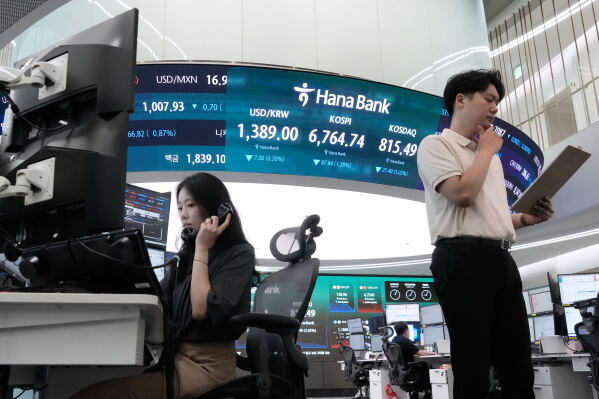
The increasing integration of artificial intelligence into industries across China is impacting the job market significantly. Fei Zhaojun, a computer programmer, experienced this shift firsthand when he and about 160 colleagues were laid off from their jobs in Beijing. This scenario is becoming more common as AI advances and government policies support its deployment throughout China’s massive employment landscape.
AI Adoption in China
China’s government is highly supportive of AI, encouraging businesses to integrate AI technologies in various sectors. This push has positioned China at the forefront of AI adoption worldwide, reducing resistance amongst its population. Shujing He, a senior analyst at Plenum, noted that individuals displaced by AI are eager to explore AI-enabled business opportunities.
Previously skeptical, many workers like Fei now recognize AI’s potential to perform tasks previously done by humans. Mid-level coding roles, for instance, are already being seen as replaceable by AI.
Adapting to New Realities
Following his layoff, Fei began creating vlog-style short videos while considering his next career step. Although these videos aren’t yet financially viable, they depict ordinary lives and aim to resonate with viewers.
Similarly, Du Qinchun, a part-time translator in Chengdu, contributes to training AI models, increasing his workload temporarily. However, he noted that industry pay has decreased significantly as AI becomes more prevalent in translation tasks.
Industrial AI Implementation
Chinese enterprises increasingly adopt AI, with usage rates jumping dramatically over recent years. Yanze Du from IDC highlights how China’s open-source model ecosystem is driving AI innovation within industrial operations.
AI technologies, including humanoid robots, are starting to perform tasks such as sorting parcels in postal centers and directing traffic, suggesting threats to jobs traditionally held by humans. In addition, AI-fueled drama production is rising, impacting roles in video creation.
Social and Economic Implications
The International Labor Organization cautions that AI could disproportionately impact women in roles prone to automation, as they remain underrepresented in STEM fields. China’s government actively promotes AI through its “AI Plus” initiative, aiming to enhance its competitive edge while addressing domestic challenges.
Economically, AI is likely to boost productivity but could exacerbate employment issues, affecting social stability unless managed carefully. Eswar Prasad from Cornell University warns about AI’s disruptive potential concerning job growth.
Although China’s urban unemployment rate is stable, youth unemployment remains high at roughly 15%. Still, experts project that over time, automation might help offset workforce aging and decline.
Finding New Opportunities
Some, like Wang Zhicheng, embrace AI to explore new job opportunities. Wang transitioned from a scriptwriting role, using AI for brainstorming, to starting a studio for children’s literature. Despite AI’s current limitations, he views it as a tool rather than a replacement.
Similarly, Yang Zheng, a high school chemistry teacher, sees AI as beneficial for students seeking immediate support with schoolwork, though it has room to improve its accuracy.
The widespread adoption of AI within China’s industries presents both challenges and opportunities, necessitating adaptation and innovation among the workforce.
Efforts to integrate AI are rapidly reshaping the economic landscape, influencing job opportunities and requiring strategic approaches to leverage these technological advances for positive outcomes.
 Autonomous AI Agents Breach Systems in Unprecedented Cyberattack
  Impact of AI Infrastructure on U.S. Housing Market
  Ukraine Gains Access to European Military Technology
  Oregon Politics and the Role of AI Data Centers
  Texas Mom Faces Unexpected Social Media Reaction Over Daughter’s Photo
  A Personal Journey Through Health Challenges and Discovery