The closure of the Strait of Hormuz illustrates the need for the United States to depend less on foreign energy sources. Unstable conditions in distant regions can disrupt American economic stability. President Trump recognized this issue and prioritized boosting American energy independence. Under his leadership, the U.S. became a net energy exporter in his first term. He expanded domestic production and strengthened the energy grid.
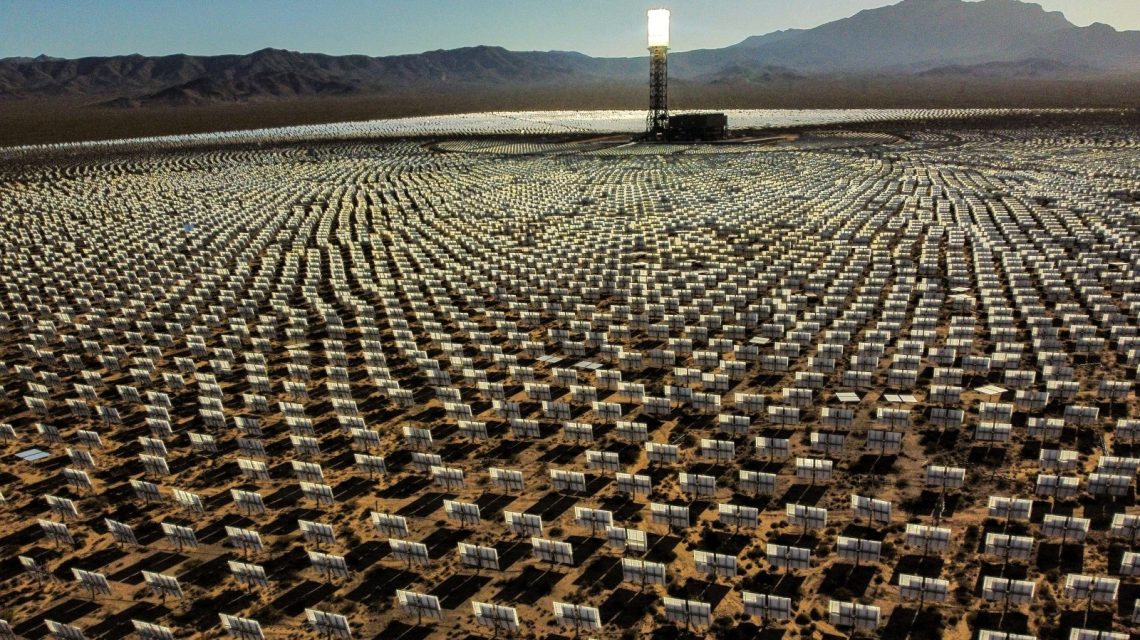
America possesses abundant energy resources domestically. Leveraging these, including solar power, is crucial. Solar energy has significant national security implications, especially in the context of competing with China. China aggressively seeks dominance in global solar manufacturing and battery supply chains, which could expose the U.S. to new dependencies.
According to the U.S. Department of Energy, stored solar electricity can be used “after the sun has set,” acting as “an insurance policy for sunshine.”
Solar energy is not only affordable but also the fastest renewable energy source to deploy. It can rapidly expand energy capacity, beneficial during national emergencies. China, along with allies like Iran, aims to surpass U.S. energy production to gain leverage over the economic security of the U.S.
Time magazine reported that countries use varied strategies to weaponize energy, including control over infrastructure and supply chains. Thus, the U.S. needs to secure its energy supply by increasing domestic production across all sources.
Revitalizing American manufacturing relies on diversifying energy supply chains. Rare-earth metals, crucial for renewable technologies, predominately come from China. The U.S. must enhance its rare-earth metal production to avoid reliance on adversarial nations. Currently, China leads in lithium production, vital for electric vehicles and advanced weaponry. Onshoring lithium production would strengthen U.S. economic resilience and leadership.
Modernizing the energy grid is essential to protect against disruptions. A diversified and distributed grid is more resilient to crises. President Trump focused on reinforcing the national power grid while increasing domestic energy production. Cutting regulatory barriers is necessary to develop various energy sources, including solar.
The U.S. is a net producer of oil and natural gas, supporting about 11 million American jobs. Importing resources already abundant domestically is unnecessary. Domestic energy production provides economic stability and national security and should be treated as such.
Ambassador Robert O’Brien served as the 27th United States National Security Advisor and currently serves on the President’s Intelligence Advisory Board. The views expressed in this article are the writer’s own.
 Transitioning from Pig Farming to Mushroom Production in Iowa
  Tropical Storm Polo Threatens to Impact Southern California
  Preparing for California’s Super El Niño
  Helicopter Crash Claims Lives of Two Firefighting Pilots in Yosemite
  Cold Weather Alerts and El Niño Influence
  Turning Home Food Waste into Compost: A Guide