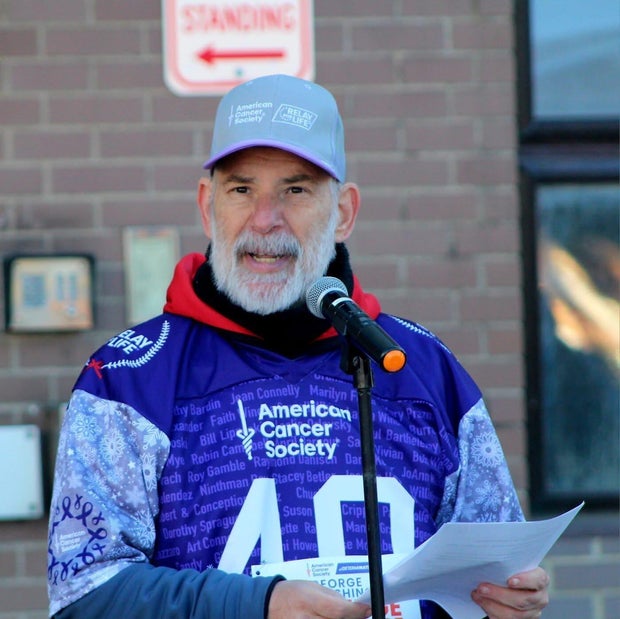
Joe Gillette faced a significant shift in his routine commute when the highway expanded from three to four lanes. This change coincided with his experience of double vision in one eye. Initially suspecting it was a side effect of a recent COVID-19 infection, Gillette quickly scheduled a medical appointment. His doctor recommended consulting an eye specialist and undergoing a brain scan.
The specialist diagnosed nerve damage causing his double vision. Gillette, aware of the critical importance of thorough examinations from his decade of volunteering with the American Cancer Society, pursued the brain scan. On his 57th birthday, the scan results delivered shocking news: cancerous tumors were found in multiple organs, including his kidney, brain, lungs, and stomach.
“My wife and I were stunned by the diagnosis of cancer,” recalled Gillette. “It was undoubtedly the worst birthday gift. I was devastated.”
His doctor confirmed Stage IV kidney cancer, which had metastasized to other parts of his body. Despite the severity of his condition, Gillette’s sole symptom was his visual impairment. Reflecting on his experience, Gillette noted that the COVID-19-related double vision led to the timely discovery of the cancer.
Under Dr. Martin Voss at Memorial Sloan Kettering Cancer Center, Gillette underwent an aggressive treatment plan. With fewer than 20% of Stage IV kidney cancer patients surviving beyond five years, the urgency was palpable. The treatment began with immunotherapy, followed by radiation and brain surgery. His recovery involved a 10-week medically induced coma.
Upon awakening, Gillette was disoriented regarding the passage of time. “I attempted to leave my bed, thinking it was just an afternoon nap,” he recounted. “The nurse informed me that I had been under for over two months. It was a shocking revelation.”
After extensive physical and occupational rehabilitation, Gillette continued radiation therapy. This treatment, coupled with two years of immunotherapy, proved effective in reducing tumor size. In April 2024, he successfully underwent surgery to remove the original kidney tumor, surprisingly requiring only a brief hospital stay.
Gillette now maintains his health through daily oral immunotherapy and regular consultations with his medical team. Despite occasional tumor growths, targeted treatments have managed the cancer effectively. Dr. Alpa Patel, a senior vice president at the American Cancer Society, emphasized the importance of advancements in cancer treatment, noting Gillette’s remarkable response to such therapies.
While the prospect of new scans still induces anxiety, Gillette remains optimistic and focused on present moments. Celebrating family milestones, such as welcoming a grandchild and preparing for a child’s wedding, brings him joy. His commitment to connecting with fellow cancer survivors and continuing his volunteer work with the American Cancer Society remains steadfast.
“I am grateful for each day, cherishing the support and opportunity to overcome these challenges,” Gillette expressed. “I am content with ongoing treatment if it ensures more time with my loved ones.”
 Understanding and Addressing the Complexity of Suicide
  The Unlikely Intrigue of a 1990 NBA Trading Card
  Recall of Meat Products from Star Meat Delivery Inc.
  Questions Arise After Presley Gerber’s Death in Rehab
  Upcoming Concerns and Influence in Health Politics
  Fraud Task Force Saves Billions by Tackling Obamacare Misuse