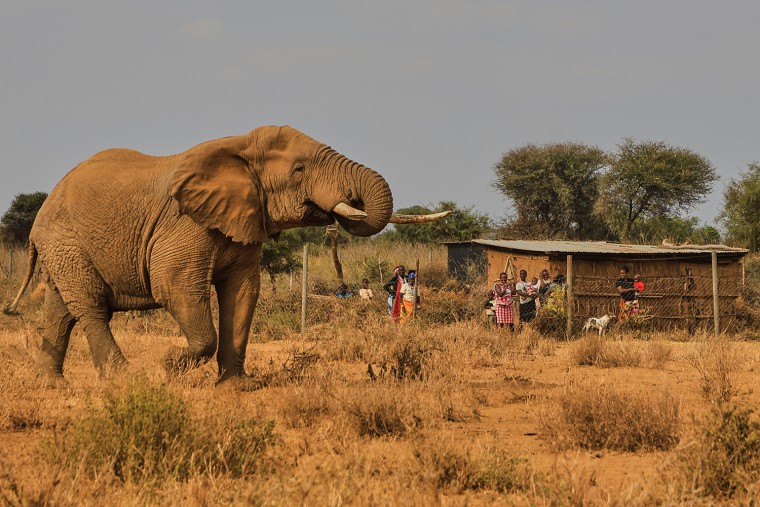
In Kimana, Kenya, the discovery of two elephant carcasses has raised alarms about possible cyanide poisoning. Fifteen elephants have reportedly died in Kenya’s Amboseli National Park following the consumption of tomatoes from nearby farms.
Authorities are investigating how cyanide could enter this ecosystem, where both wild and domestic animals live, and where tomatoes and onions are commonly grown. Farmers dispute claims that their crops contained cyanide, resulting in the elephants’ deaths.
Elvis Muchai, a local farmer for two decades, expressed doubt about the reports linking farmers to the poisoning. Muchai asserted that local communities have long coexisted with the elephants, despite loss of crops when elephants breach park fences, particularly in dry seasons.
“We are used to the animals eating from our farms,” said Muchai.
In July, the Kenya Wildlife Service reported the death of the elephants in a month. Dr. Isaac Lekolool from Kenya’s wildlife agency noted signs of “paralysis and difficulty breathing” in the elephants before they died. Initial testing revealed traces of cyanide, with further tests examining the chemical’s concentration.
Kimana is a key agricultural hub, producing crops such as tomatoes, onions, and beans for Nairobi markets. Dr. Lekolool stated that samples were taken from the elephants’ stomachs and blood is being analyzed to confirm cyanide sources.
Kenya’s National Elephant Plan identified farm expansion as a key factor leading to human-wildlife conflict. Between 2000 and 2020, approximately 1,160 elephants died due to human-related incidents. Despite this trend, wildlife service communications director Duncan Juma dismissed human-wildlife conflict as a cause in these instances, citing community respect for elephants.
The International Fund for Animal Welfare (IFAW) emphasized the importance of resolving underlying issues contributing to human-wildlife conflict. IFAW’s East Africa Director, Ben Wandago, stressed the need for a thorough investigation and recommended strategies to improve coexistence between wildlife and local communities.
“This tragedy underscores the need for strict regulation of toxic substances to prevent environmental contamination,” Wandago stated.
Farmers like Muchai expressed doubt that cyanide could come from agricultural inputs, since available products are regulated. Muchai recounted his losses due to elephant raids, noting a lack of compensation for destroyed crops.
“We have never seen or heard of this chemical in our area,” Muchai said.
Another farmer, Rymondy Mrosso, questioned why only elephants seemed affected if pesticides were responsible, given that other animals also graze in the same areas.
 Cold Weather Alerts and El Niño Influence
  Turning Home Food Waste into Compost: A Guide
  Chicagohenge: When Sunlight Aligns with City Streets
  Fat Bear Week 2026: A Look at the Contest and Its Competitors
  California Governor Declares Statewide Emergency Ahead of El Niño Storms
  EPA Rollbacks and the Impact on Indiana Communities