
The coastal waters around Cape Town, South Africa, have been famous for great white sharks. However, around a decade ago, carcasses of these predators started appearing on beaches with missing livers. Now, their presence is scarce, sparking a fierce debate among scientists and conservationists attempting to identify the culprit.
Historically, the ocean off Cape Town was renowned as the ideal spot to see great whites. Abundant smaller sharks and numerous seals on nearby Seal Island made it a prime location for sightings. Chris Fallows, a photographer and naturalist, used to document 250 to 300 great whites annually. His images captured the awe-inspiring moment when these majestic creatures breached the surface.
Fallows shared, “It’s a sight you never forget. It’s truly incredible to see them fly out of the water.” Yet, sightings began to decline a few years after a 2010 dive reported on by Anderson Cooper without a protective cage in waters chummed for sharks. A 15-foot great white approached, demonstrating their curiosity and grandeur.
Alison Kock, a marine biologist with South African National Parks, started investigating the mysterious disappearance. In 2015, divers discovered small shark carcasses on the sea floor with peculiar incisions. Initial assumptions pointed to human actions, only to be dispelled by tooth marks found, suggesting an animal perpetrator.
Kock and colleagues later encountered orcas as unlikely suspects during an evidence dive. In 2017, great whites began washing ashore, missing their livers. Orcas, known for consuming liver—a calorie-rich organ—emerged as potential culprits.
David Hurwitz, a whale-watching tour operator, identified two male orcas with collapsed dorsal fins as shark hunters. Dubbed Port and Starboard, these orcas gained notoriety for hunting sharks in pairs, unlike typical pod behavior. Scientists theorize these orcas may be teaching others to hunt sharks, supported by drone footage in 2022 capturing five orcas working cooperatively against a great white.
Kock believes the intelligence of orcas has driven great white sharks further down the coast, though overall population remains stable. Enrico Gennari, an Italian marine biologist, disagrees, noting discrepancies with shark return patterns observed in places like California and Australia.
Both Gennari and Fallows attribute declining shark numbers more to human activities than orcas. Commercial fishing boats employ long lines with hooks that deplete the shark’s prey, impacting the predators indirectly.
Additionally, shark nets and baited hooks deployed by South African authorities since the 1950s are accused of harming marine life. Gennari advocates for alternatives like underwater magnetic fields or smaller meshed nets to protect swimmers without lethal consequences.
Fallows encourages focusing on controllable factors such as unsustainable fishing and outdated protection methods. South Africa, the first country to legally protect great whites in 1991, now risks losing them.
Fallows acknowledges the importance of preserving these sharks, likening them to formerly hunted whales now thriving due to conservation efforts. Presently, he photographs humpback whales, a species rebounding from the brink of extinction.
The story serves as a poignant reminder that conservation is essential for maintaining ecological balance—an advocacy Fallows continues to champion. “A balanced ocean is a healthy ocean,” he asserts.
Produced by Michael H. Gavshon. Associate producer, Nadim Roberts. Broadcast associate, Grace Conley. Edited by Matthew Lev.
 Tropical Storm Moke’s Impact on Hawaii
  Robin Wall Kimmerer’s Inspired Approach to Nature and Indigenous Wisdom
 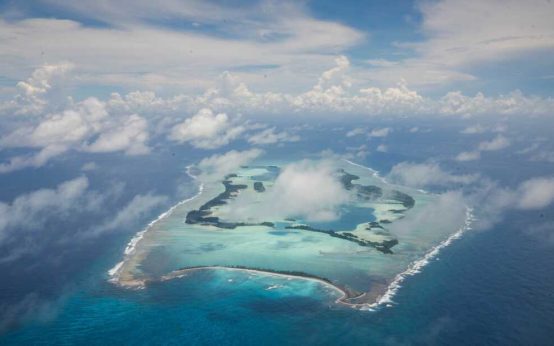 Exploring Palmyra Atoll’s Ecosystem Amid Protection Changes
  Hawk Fire Forces Massive Evacuations in Reno
  Successful Electronics Recycling Event Held in Aurora
  Tax Breaks for Data Centers Near O’Hare Shift Burden Onto Homeowners