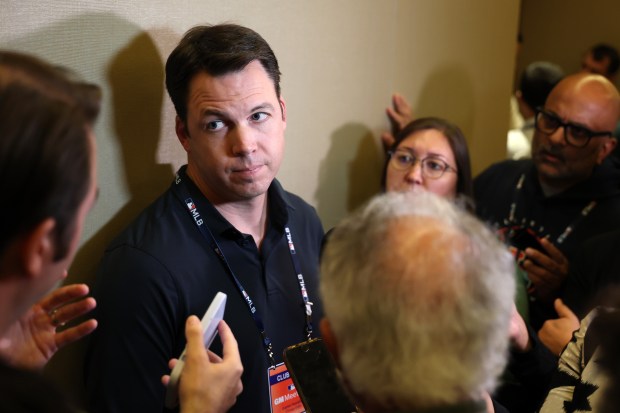
Goaltender Connor Hellebuyck recently faced a challenging return to Winnipeg after his trade to the New Jersey Devils. Despite the anticipation, the Devils’ management chose not to field him for the game, missing the chance to face the Winnipeg Jets’ fans directly on the ice. According to Devils’ General Manager Sunny Mehta, the decision was based on a projection that playing Hellebuyck would lower their win probability. This statement stirred discussions about the rising use of complex corporate language within sports organizations.
There’s a growing trend where sports executives use business jargon mixed with analytics, leaving fans puzzled. Such communication contrasts with the straightforwardness often appreciated by sports enthusiasts. Mehta’s statement could be simplified by saying the team wanted to avoid a potentially hostile environment for Hellebuyck. Instead, the focus was on ‘expected win probabilities.’
This trend can be attributed to the influx of highly-educated individuals into sports management. These professionals often prefer corporate language over plain-speaking communication. For instance, Chicago Cubs’ GM Carter Hawkins recently spoke about the team’s roster with vague phrases like “all scenarios are on the table.” While striving to keep plans discreet, such language often leaves fans unclear about the intentions.
In hockey, Kyle Davidson, GM of the Chicago Blackhawks, discussed the risks of making roster changes without specific commitments: “…we don’t want to do something for the sake of…” This cautious approach is characteristic of risk-averse corporate strategies traditionally seen outside sports.
The Major League Baseball general managers’ meetings are often a stage for such talk. Some of the leadership titles in organizations, for instance, are evolving to reflect more corporate structures. Boston Red Sox executive Craig Breslow, with a background from Yale, highlighted keeping the same responsibilities despite his title change. Such shifts, while perhaps designed to inspire confidence, can appear superficial to outside observers.
Agent Scott Boras, representing players like pitcher Tarik Skubal, also contributes his share of cryptic metaphors during negotiations. His unconventional language offers a break from the usual, often predictable corporate discourse.
When it comes to direct communication, some figures stand out for their straightforwardness, such as Milwaukee Brewers Manager Pat Murphy. Known for his blunt honesty, his comments after the World Series win highlighted a rare case of plain speaking in a field often dominated by business-speak.
This rise in corporate language marks a shift in sports management communication, yet many fans and writers yearn for clearer, more accessible dialogue. Balancing professional rhetoric with fan-friendly language could enrich the sport’s engagement and appreciation for its stakeholders.
 Chicago Bears: Midseason Outlook and Strategic Adjustments
 Assessing NFL Teams’ Super Bowl Prospects at Midseason
 Philadelphia Eagles Make Strategic Moves with Trades and Waivers
 Cade Cunningham’s Historic Night Leads Pistons to Victory
 Commanders Clinch Crucial Win Over Giants in NFC East Clash
 Stefon Diggs Secures Victory with Late Touchdown