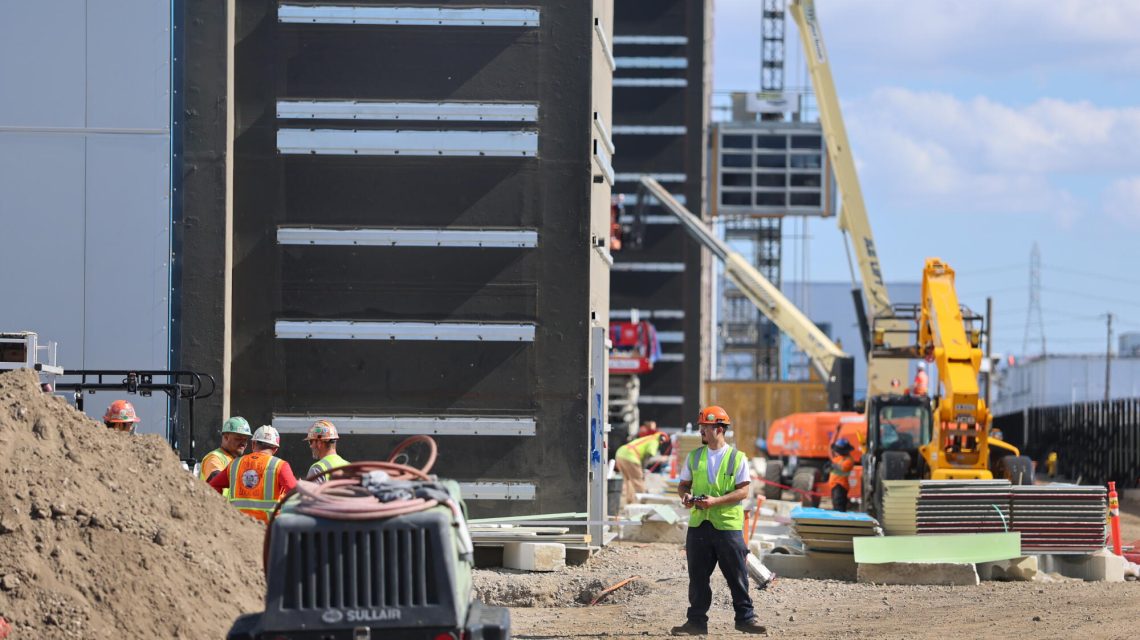
Vernon, located just south of downtown Los Angeles, has become a focal point for new data center developments in the area. Despite its industrial-friendly reputation, the city is now reconsidering its stance on data centers amid growing concerns.
Vernon hosts numerous businesses, with approximately 50,000 workers commuting daily to the city, although only about 300 people reside there. The city has traditionally welcomed heavy industries, attracting data centers while surrounding areas impose moratoriums due to increasing opposition.
Vernon’s city council has begun exploring zoning changes to subject data centers to environmental reviews. At a recent meeting, Mayor Pro Tem Jesus Rivera emphasized the need for regulations around data centers. Concerns have arisen over data centers’ demands on local infrastructure and their environmental impact. Community feedback prompted the city to review the potential consequences of these developments.
“Even the Vernon employers, residents, businesses, those who work in Vernon are concerned,” stated Marisa Olguin, president of the Chamber of Commerce.
Data centers require continuous operation, often utilizing diesel generators that emit pollutants. The South Coast Air Quality Management District has already authorized numerous generators in Vernon, permitted to run during emergencies and limited testing hours.
Local opposition is mounting, spearheaded by entities like the Los Angeles Unified School District. A proposed data center near Vernon City Elementary School has drawn criticism, with the school district demanding thorough environmental reviews.
Pedro Salcido, Deputy Superintendent of the school district, expressed concerns about noise, pollution, and dust impacts on the nearby school.
The environmental costs linked to data center operations are significant. A report from UC Riverside estimated a $33 million health impact cost for California, with a substantial portion from the Los Angeles region.
Vernon City Elementary School, the only school in Vernon, faces challenges due to its proximity to heavy industry. It serves 144 students, many with special needs, primarily from Latino backgrounds.
Prime Data Centers has a substantial presence in Vernon. Their large facility uses significant power, impacting thousands of homes annually. Yet, current zoning allows development without formal reviews.
Developers like Digital Realty claim to prioritize open communication to address community concerns. They have requested considerable power resources for new projects, raising further questions about regional impact.
Future data center plans include several large projects by groups like CoreSite Real Estate and Goodman Group. These projects add substantial power demands and generator installations, prompting calls for stronger regulations.
Environmental justice advocates argue that current processes inadequately protect local health. Vanessa Vasquez, a lawyer with Communities for a Better Environment, emphasizes the need for change.
Vernon’s City Council is scheduled to discuss these developments and potential zoning changes. Public opinion remains divided, with industry voices both supporting expanded development and urging for controlled growth. The decisions made could significantly shape the city’s future as a hub for data centers.
 Cultural and Economic Headlines: An In-Depth Analysis
 North Korean Hackers Steal $400 Million in Cryptocurrency
 The Consequences of Leadership Structures: A Look at Jensen Huang’s Nvidia
 Jensen Huang’s Resignation and Its Impact on NVIDIA and AI Industry
 Navigating Reliability Issues in Wireless Networking
 Microsoft Outage Not Linked to Cyberattack, Says Australian Minister