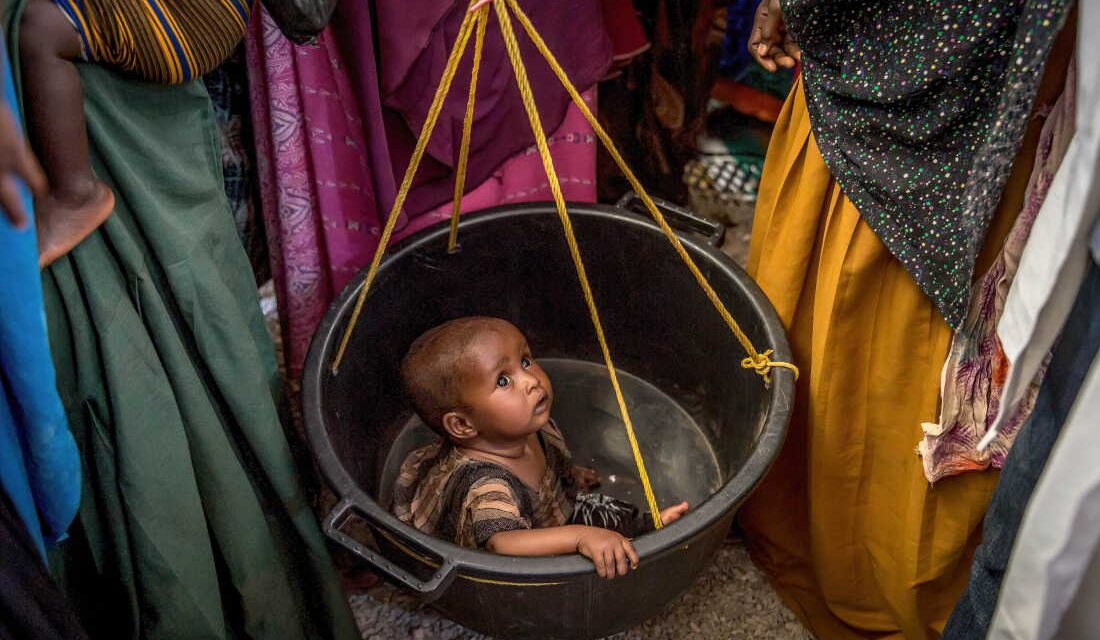
In Baidoa, Somalia, a child undergoes a malnutrition screening at a health clinic. Drought and other difficult conditions have sparked fears of famine in the region. Concerns about effective famine monitoring systems, like FEWS NET, are rising as well.
In February 2025, a respected U.S. famine warning system known as FEWS NET became unavailable. This system had provided aid groups with essential data to prepare for potential famine risks. Now, its site displays a message indicating the service was offline.
NPR noted: “The website that once served up detailed, color-coded maps of hunger hot spots around the world now bears a stark message: The site and its data are ‘currently unavailable.'”
FEWS NET eventually resumed operations. However, new challenges have emerged. In early August, Jeremy Konyndyk, president of Refugees International and a former USAID official, experienced delays in accessing updated maps of East Africa, highlighting a gap in data reporting for Somalia and other countries.
Despite Somalia’s food crisis affecting around 6.5 million people, updates stalled after July. Somalia, Afghanistan, and Yemen were removed from a “Peak Food Assistance Needs Outlook Brief” published on August 14, 2026. The Trump administration previously cut aid to these countries, despite widespread food insecurity.
Konyndyk remarked, “The conditions are extremely dangerous, extremely precarious, and now is the moment where you really need that sort of reporting.” Various organizations and former USAID employees criticized the halt in reporting, fearing it would obscure policy consequences.
A Reversal
The State Department stated that FEWS NET reporting for these countries would resume in September. This reversal aims to ensure resources align with foreign policy priorities.
FEWS NET has faced challenges before. Developed 40 years ago to aid USAID, it uses crop reports, market data, and satellite images to predict crises, allowing strategic planning up to nine months in advance.
In Afghanistan, the UN estimates 14 million people face acute hunger. In Yemen, five million face severe food insecurity. Somalia has about 6.5 million people in similar distress, exacerbated by extended drought and missed rainy seasons.
A survey by Doctors Without Borders found half of children under five near Baidoa suffered malnutrition. In two months, the organization treated 2,600 malnourished pregnant and breastfeeding women.
Challenges and Efforts
U.S. aid, once vital for Somalia, has diminished. Other nations have also cut assistance, reducing the World Food Program’s reach significantly. UNICEF reports the closure of 205 clinics that fed malnourished kids due to funding shortages.
Conditions are dire: “When you close facilities, you create longer journeys for mums and their babies,” explained UNICEF’s James Elder.
The Importance of Data
The international famine threshold in Somalia hinges on upcoming harvests and aid program success. Accurate FEWS NET data is crucial for preemptive aid delivery.
Colin Thomas-Jensen, from the Aurora Humanitarian Initiative, emphasizes FEWS NET’s role in addressing food insecurity. The system, predicting crises up to nine months in advance, aids effective resource deployment.
Other data sources like the U.N.’s Integrated Food Security Phase Classification and the World Food Program’s HungerMap exist, yet FEWS NET remains a top resource.
Michelle Jurkovich, a food aid policy expert, warns against politicizing data, stressing the system’s credibility hinges on objective reporting free from governmental influence.
 Rabies Exposure Incident at North Carolina Petting Zoo
  FDA Proposal to Revise GRAS Notification
  SNAP Benefit Restrictions Delayed in Two States Following Court Ruling
  Challenges in Maternity Care Accessibility in Arkansas
  AI Chatbots and Their Influence on Conversations About Suicide
  Understanding the True Impact of Heat-Related Deaths in the U.S.