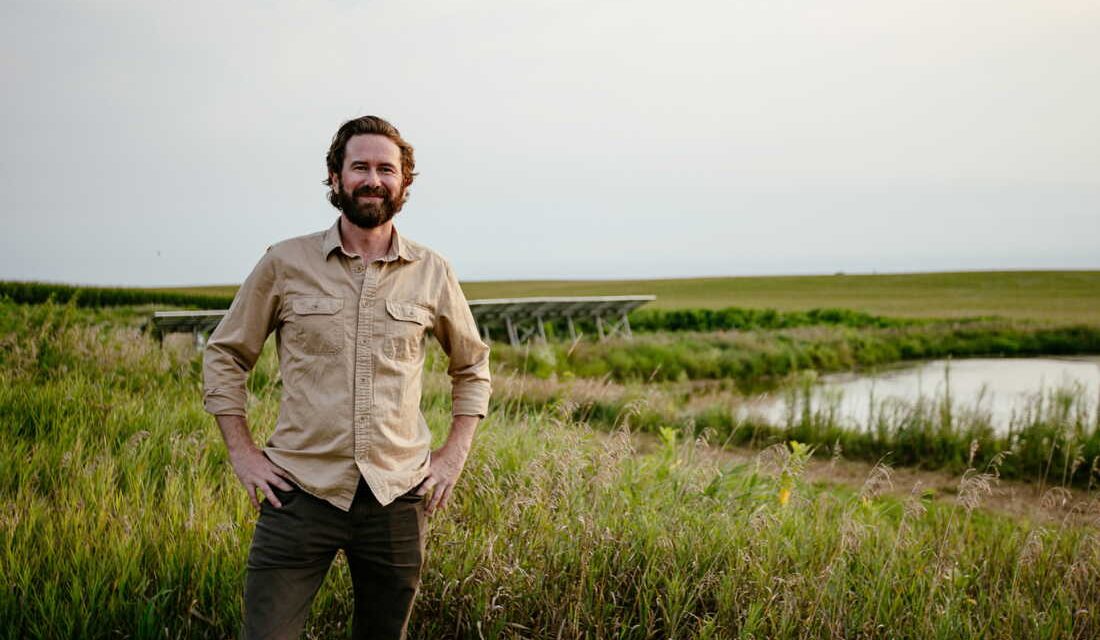

In central Iowa, the Faaborg family has transformed their farming operation, shifting from raising pigs to cultivating specialty mushrooms. At 1100 Farm, this evolution marks a significant change in their agricultural practices.
Inside the New Operation
Within a dimly lit building, Tyler Faaborg enters a “fruiting room” designed specifically for mushroom cultivation. Shelves are filled with sprouting mushrooms, enveloped in a layer of fog. Among these is the lion’s mane fungus, set for harvest after another week. Tyler explains how its color transitions from pinkish to nearly white as it matures.
The family generates mushroom products such as tinctures, coffee blends, and flavored salts. 1100 Farm is named after the number of hogs that occupied their previous barns for years.
Transition Support and Methodology
The shift from hogs to mushrooms received backing from The Transfarmation Project, a Mercy for Animals initiative. Katherine Jernigan, director of the project, explains how the initiative aids farmers to move from industrial animal farming to sustainable practices like mushroom cultivation and diverse vegetable growth.
The unique aspect of Transfarmation is repurposing current infrastructure.
Resources include online support, expert networks, and open-source designs for converting barns previously used for livestock like pigs, poultry, and dairy.
Tyler Faaborg mentions the cost-effectiveness of producing their own mushroom blocks, which consist of a mix of soy hull and hardwood pellets. The family finished converting half of a large barn this past summer, intending to increase production scale following a pilot project’s success.
Data Collection and Demonstration Hub
The site serves as a resource and demonstration hub for other farmers, complementing a similar setup on a former chicken farm in North Carolina. This data hub collects information on costs, labor, product margins, and lessons learned during the transition process.
A Transfarmation spokesperson states the Faaborgs earn $216,000 through a four-year contract to share insights and data with other program participants.
Evolution of Faaborg Farm
Rand and Tammy Faaborg had initially entered contract feeding, a common element of CAFOs, where a company supplies animals and feed while farmers provide labor and infrastructure. This arrangement initially proved profitable but later demanded excessive working hours and physical exertion.
Large CAFOs in Iowa rose significantly from 789 in 1990 to 4,444 in 2025. The increase led to competition, affecting profitability for smaller operators like the Faaborgs.
Seeking Change and Sustainability
Years ago, the Faaborgs decided to leave hog farming, exploring alternative uses for their existing buildings. Tanner Faaborg envisioned this transition, introducing the idea of sustainable mushroom farming and its potential to benefit both the environment and their community.
Tanner developed a passion for sustainability through college and his work with Urban Ambassadors and Des Moines’ climate action plan. The mushroom initiative aligns with his values and experience.
Challenges and Progress
The transition from pig farming wasn’t simple, facing challenges and requiring adaptation. However, efforts such as converting manure pits into ponds, planting native flora, and rewilding areas have offered rewards. Conservation efforts receive partial funding from Natural Resources Conservation Service grants, fostering environmental recovery.
Looking forward, Tanner Faaborg aims to develop further projects on the farm, including accommodations for visitors and expanding their agricultural reach.
The transformation from raising pigs to specialty mushroom farming reflects broader changes and opportunities within agriculture in Iowa, highlighting sustainability and community engagement.
 Tropical Storm Polo Threatens to Impact Southern California
  Preparing for California’s Super El Niño
  Helicopter Crash Claims Lives of Two Firefighting Pilots in Yosemite
  Cold Weather Alerts and El Niño Influence
  Turning Home Food Waste into Compost: A Guide
  Chicagohenge: When Sunlight Aligns with City Streets