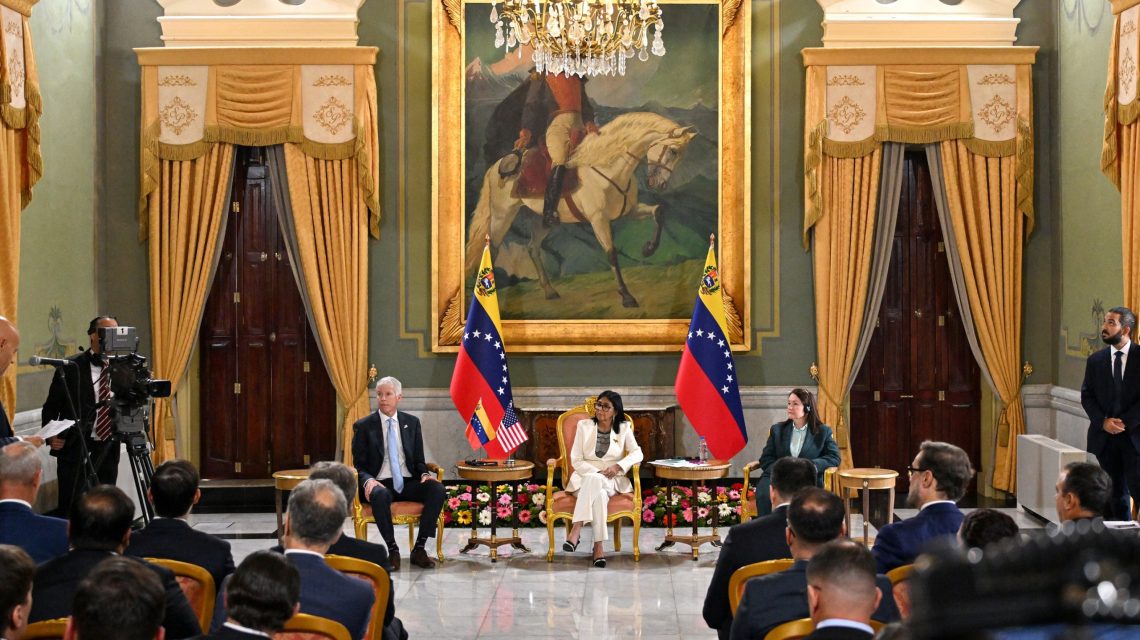
Deal Overview
In August, President Donald Trump called the newly signed oil deal with Venezuela the “biggest oil deal in world history.” This agreement grants the U.S. significant access to Venezuela’s oil reserves. ProPublica obtained a copy of the document signed by Secretary of State Marco Rubio and Defense Secretary Pete Hegseth.
The deal heavily favors U.S. interests and secures the power of a select few chosen by the Trump administration.
The agreement notably sidelines the Venezuelan government and its potential advantages.
Concerns Over Partnership
The partnership with Alejandro Betancourt, a Venezuelan oligarch, is under scrutiny. His past involves facing money-laundering investigations in various countries. Despite this, the U.S. administration acquired a 35% stake in Betancourt’s firm, North American Blue Energy Partners (NABEP), through a parent company in Barbados. The true investors behind this company remain undisclosed.
NABEP’s spokesperson stated that Betancourt and Alvarado have not been charged with any crime, dismissing claims against them.
Terms and Legalities
The deal stipulates a 15-year governance term with a board composed mainly of U.S. citizens. Venezuela’s involvement is minimal in these arrangements. Furthermore, the company has protection from Venezuelan legal challenges, ensuring conflict resolution under U.S. law in Texas courts.
The U.S. will pay $0.01 per warrant share for its 35% stake, with these rights set to expire after 75 years.
Economic Impact and Practical Challenges
One of the central arguments made by Trump is energy dominance. Yet, the document shows that U.S. purchasing rights are limited, and Venezuelan laws cap oil concessions at 25 years. Washington secured a favorable discount on oil purchases, though import and blending costs are not covered.
NABEP currently produces 200,000 barrels per day, with intentions to double by 2028. However, this output equates to just three days of U.S. consumption.
Substantial initial costs are expected, and the U.S. is likely to face delays before any significant oil supply impacts arise.
Partnership Dynamics
The choice of NABEP over major oil companies is questioned, given Betancourt’s controversial past and current legal issues. The Trump administration, however, cited practical successes of NABEP in Venezuela’s oil sector as a reason for the partnership.
Former U.S. officials and political analysts view Betancourt as an emblematic figure with more influence than direct industry experience.
The government’s involvement with Betancourt unfolded amid challenges, including securing legal investment channels. The International Development Finance Corporation, the Pentagon’s Office of Strategic Capital, and other entities worked toward this controversial agreement.
Political and Public Reactions
This agreement faces potential scrutiny in both the U.S. and Venezuela, particularly if Democrats gain control in upcoming elections. There are calls for congressional hearings to clarify the rationale behind the partnership and the legality of such moves by the Pentagon.
While some public officials defend the agreement’s strategy, its impact on Venezuelan resources is a continuing concern.
 Dani Watt Questions NFL Decision to Play in France Amid Civil Unrest
 Growing Tensions: Poland’s Support for Ukrainian Refugees Erodes
 Efforts to Free American Teacher Detained in Russia
 U.S. Efforts to Release American Detained in Russia and Shifts in Southern Senate Races
 US Issues Security Warnings Amid Rising Middle Eastern Tensions
 British Police Rearrest Suspects Linked to Alleged Iranian Plot