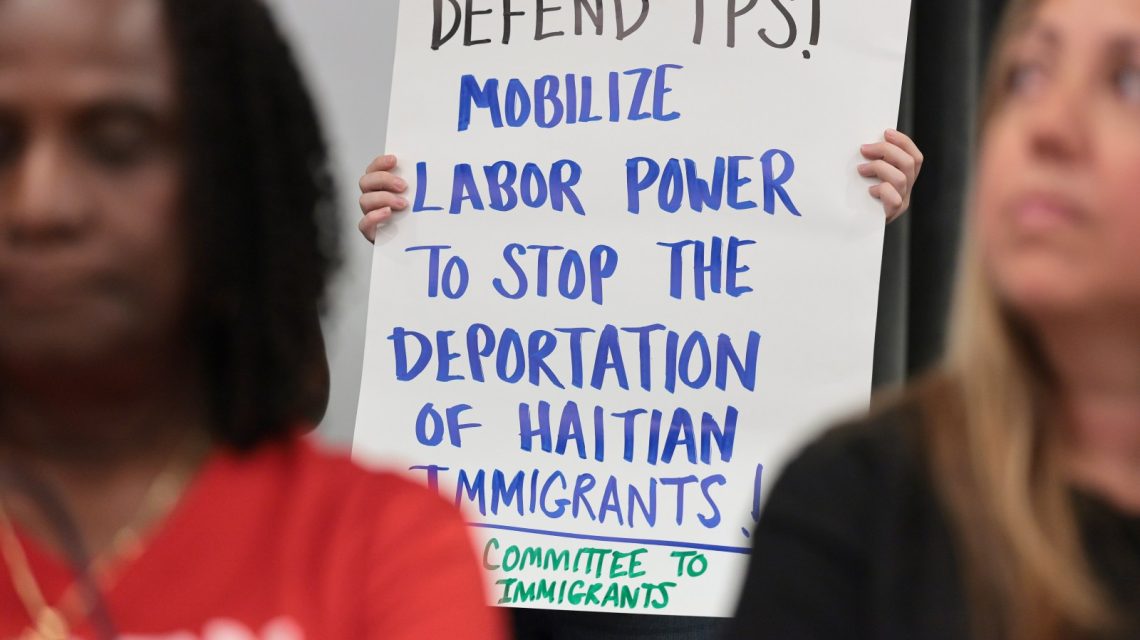
The Trump administration marked a significant legal win on Tuesday regarding Temporary Protected Status (TPS). A district judge lifted an earlier order that had stopped the Department of Homeland Security (DHS) from ending TPS for individuals from Ethiopia. Judge Brian Murphy’s decision affects 13 nations that lost TPS protections during Trump’s second term.
While some nations saw their TPS terminated in the previous year, others were impacted by a Supreme Court decision in June supporting DHS. A few countries continue to hold TPS, but all face renewal decisions imminently.
“Every day, DHS conducts law enforcement activities to keep Americans safe. DHS does not discuss ongoing or future operations,” a DHS spokesperson told Newsweek in response to questions about next steps for those affected by the rulings.
TPS is temporary by definition. Critics argue that TPS has been used as a de facto amnesty program contrary to Congress’s original intent.
Judge Murphy’s Insights
Murphy noted that Ethiopian TPS holders raised valid legal concerns. Yet, Supreme Court decisions have sidelined many of their arguments. Consequently, he did not maintain protections while the case continued. However, he allowed a crucial claim regarding racial or national-origin bias to proceed.
Murphy referred to another court’s conclusion that suggests claims of discrimination should be explored further. This decision allows plaintiffs to seek evidence during discovery.
“This is disappointing. The crisis in Ethiopia persists,” Diana Konaté of African Communities Together stated. She highlighted ongoing conflict in Ethiopia and the immense challenges faced by displaced people.
Trump’s TPS Strategy
TPS offers legal status and work rights to nationals from countries afflicted by war or disasters. On Trump’s return in January 2025, 17 countries held TPS. His administration has since reduced this to just 4 nations, affecting about 1 million people out of the initial 1.3 million TPS beneficiaries.
Officials such as ex-DHS Secretary Kristi Noem argue that previous extensions were excessive. They assert that conditions have improved enough in many countries for migrants to return.
Advocates counter this, saying that many nations still suffer from instability, conflict, economic issues, or humanitarian crises. Legal actions have been unsuccessful post-Supreme Court’s 2026 decision, which endorsed DHS’s stance.
Remaining TPS Countries
Presently, few countries maintain TPS designations, including Ukraine, Sudan, Lebanon, and El Salvador. Lebanon recently received an extension due to ongoing turmoil in the Middle East. This extension is unique under the Trump administration.
Concerns remain over future renewals. The administration claims broad discretion in determining TPS eligibility, often prevailing in court cases.
Potential Outcomes
Migrants losing TPS face varied outcomes. Some have alternative protections, such as asylum cases, family immigration petitions, or employment applications. Others might try adjusting status via marriage to U.S. citizens but may face deportation without another legal status.
The DHS spokesperson commented, “You don’t have to go home, but you can’t stay here.” They mentioned options like a $2,600 check and ticket home.
Advocates stress that many TPS holders have long-term ties to the U.S., and returning home poses challenges or dangers.
Despite Murphy’s recent ruling, legal battles persist. The continuation of the Equal Protection claim means efforts to demonstrate discriminatory intent behind TPS terminations remain. However, with numerous favorable Supreme Court outcomes for the administration, halting broader TPS efforts has become challenging.
 Trump Pauses Tariffs on Canadian Imports Amid Tentative US-Canada Agreement
  America’s Catholic Bishops Challenge Florida Jury Practice
  U.S. Delays Tariffs on Canadian Imports After Last-Minute Deal
  Diverse Primary Elections Set Stage for Midterms
  Wyoming Republicans Select Harriet Hageman as Senate Nominee
  Senator Lummis Advocates for CLARITY Act Passage