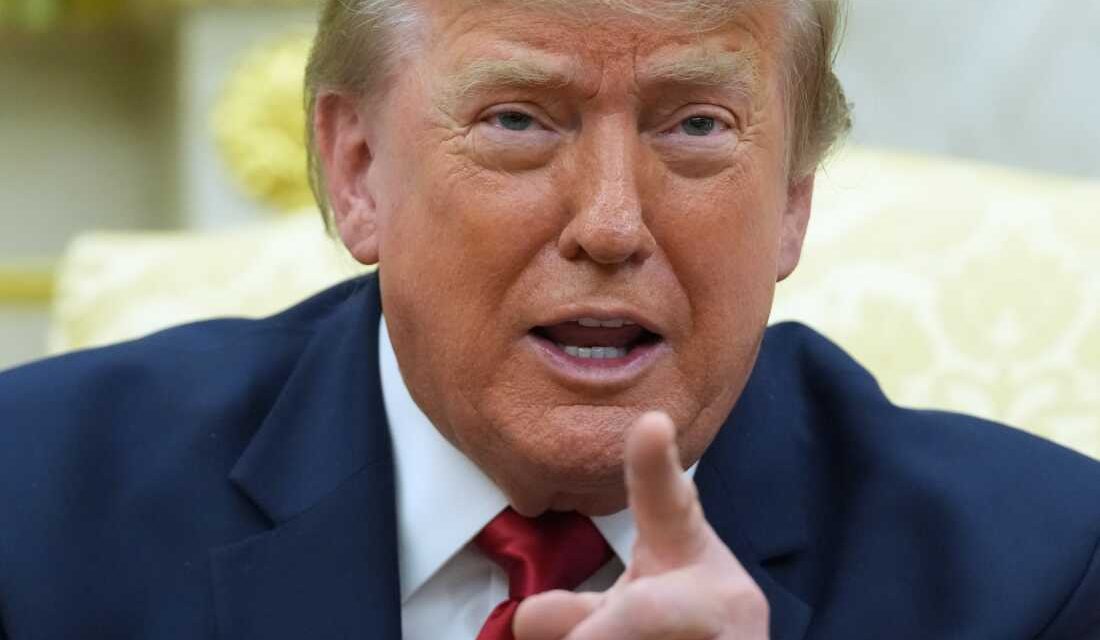
President Donald Trump, during a meeting with Iraq’s Prime Minister Ali al-Zaidi in the Oval Office on July 14, 2026, is set to deliver a primetime address this week. This speech is expected to focus on electoral issues. Trump hints at revisiting discredited theories regarding his 2020 defeat to Democrat Joe Biden. He has increased pressure on Republicans to pass stricter voting regulations ahead of the midterm elections in November.
In the Oval Office, Trump shared limited insights about the content of his 9 p.m. Thursday speech. He promised ‘really big news,’ emphasizing the importance of free and fair elections for the country’s health. Trump alluded to addressing various topics, though specifics remain veiled.
Previously, Trump has leveraged primetime presidential addresses, typically for significant national matters, to deliver politically charged messages. During a December speech, he attributed economic difficulties to Democrats. The forthcoming address seems poised to amplify these tactics, leveraging unfounded election fraud claims to galvanize Republicans ahead of the midterms, which could impact his presidential term.
On Monday, Trump reiterated errors regarding voter fraud, specifically mentioning the Los Angeles mayoral primary. Trump inaccurately blamed voter fraud for Republican Spencer Pratt’s primary loss, citing slow vote counts in California. Federal prosecutors began fraud investigations in the state following Trump’s accusations.
Trump’s fixation on voter fraud and security strategies originated as early as 2016 during his campaign against Democrat Hillary Clinton. Despite winning, he argued that fraudulent activities led to his popular vote loss, eventually forming a voting integrity commission that disbanded without evidence of widespread wrongdoing. Trump’s 2020 loss to Biden renewed these unfounded claims, especially in states like Georgia, where he pressed the secretary of state to ‘find 11,780 votes.’ Multiple audits, including those led by Republicans and Trump’s own then-attorney general, refuted substantial fraud claims during 2020.
After his 2024 victory, Trump filled his administration with individuals supporting his fraudulent claims from 2020. Ensuring voting regulation remained central in his second term, he advocated for voter ID requirements and restrictions on mail-in voting. Trump’s rhetoric has sown doubt over election outcomes that might undermine his Washington influence as midterm races approach.
This year, FBI agents executed a search warrant in Georgia’s Fulton County election offices, retrieving materials from the 2020 election. Tulsi Gabbard, Trump’s director of national intelligence, oversaw the operation.
Maryland Governor Wes Moore, campaigning in Georgia, dismissed Trump’s focus on previous elections as a ‘strategy for losers,’ suggesting public fatigue over discussions of election results that occurred years ago. Moore criticized Trump for his inability to accept potential defeat.
Beyond Georgia, Trump criticized states permitting mail-in voting and contacted a U.S. attorney in California, pushing for scrutiny during vote tallies last month. Trump also removed the remaining members of the federal Election Assistance Commission, which had resisted his pushes for increased voter documentation requirements.
 Legal Battle Over Media Ban at White House
  Governor Pritzker Addresses Hasan Piker Controversy
  Trump and NYC Mayor Mamdani: Political Divides and Collaborative Efforts
  Rep. Jared Golden Endorses Mike Lawler for Reelection
  Seattle Protects Nonmonogamous Relationships from Discrimination
  Democratic Lawmakers Criticize Trump’s $5,000 Payout Promise