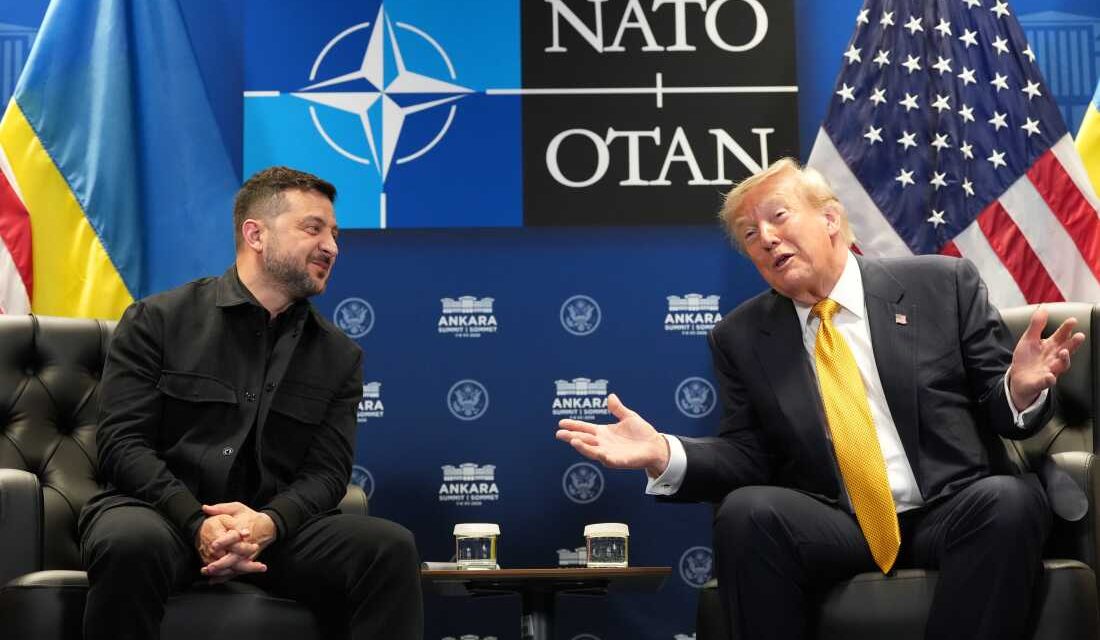
U.S. President Donald Trump met with Ukraine’s President Volodymyr Zelenskyy at the NATO summit in Ankara, Turkey, on July 8, 2026. Trump promised Ukraine a license to manufacture Patriot air defense systems. This development serves Ukraine’s need to counter Russian missiles in their ongoing conflict. Previously, the U.S. was reluctant to allow foreign production of these systems, highlighting a shift in Trump’s policies.
Trump began the summit by criticizing European NATO members. He specifically targeted their resistance to his Greenland acquisition proposal and their lack of support in Iran. By the day’s end, Trump praised NATO members for increasing defense spending, noting significant progress.
NATO’s European members, alongside Canada, are working to meet higher defense spending targets. This aligns with Trump’s call for greater European responsibility for continental security. Denmark’s Prime Minister Mette Frederiksen responded to Trump’s Greenland remarks, affirming NATO’s commitment to defend all its territories, including Denmark’s.
The meeting with Zelenskyy marked a positive change in tone. Trump lauded Zelenskyy’s efforts to resolve Ukraine’s conflict and mentioned plans for a security package to bolster Ukraine’s capabilities. Zelenskyy has long requested the Patriots, which are expensive and time-consuming to manufacture.
NATO Chief Supports U.S. Moves on Iran
NATO Secretary-General Mark Rutte commended Trump’s decisive strikes on Iran following attacks in the Strait of Hormuz. The U.S. actions included revoking Iran’s oil sale license, reflecting the fragile state of interim peace talks. While Trump showed dissatisfaction with the agreement, he left room for continued negotiations.
Rutte focused on maintaining strong U.S. support for NATO. He acknowledged recent defense spending increases from allies like Estonia, Latvia, Poland, and Denmark but emphasized that Europe and Canada must match U.S. spending levels.
At a recent event, Rutte highlighted the “Trump Trillion”—a significant rise in defense spending by European allies and Canada since Trump’s election. New investments, especially in U.S. companies, aim to create numerous jobs for Americans. Some countries, however, notably Slovenia, Belgium, Spain, and the Czech Republic, have not met NATO’s previous spending targets.
Zelenskyy’s NATO Membership Appeal
Ukraine’s President Zelenskyy renewed his request for NATO membership. He touted Ukraine’s military prowess and its potential contributions to NATO. Zelenskyy noted Ukraine’s ability to operate effectively within Russia, claiming significant Russian troop losses. NATO leaders responded by pledging $80 billion to support Ukraine’s defense.
Concerns about a potential Russian hybrid attack persist among nations with Russian borders. The Trump administration aims to create a leaner “NATO 3.0,” emphasizing European responsibility for conventional defense, while the U.S. maintains nuclear security.
Changes in U.S.-Syria Relations
Trump also held discussions with Syrian President Ahmad al-Sharaa, a former al-Qaida affiliate who replaced Bashar Assad. Al-Sharaa has received U.S. support for Syria’s rebuilding efforts. Secretary of State Marco Rubio announced plans to remove Syria’s terrorism designation, part of a strategy to normalize relations and lift sanctions.
Previously, sanctions were partially lifted, and al-Sharaa had his terrorism designation removed. Lifting these designations aims to boost international trade and investment in Syria.
 States Face Accountability for Food Stamp Mismanagement
  Corruption and Controversy: The Reflecting Pool Saga
  The Complex Debate over Proposition 40
  Advancements in Strait of Hormuz Negotiations
 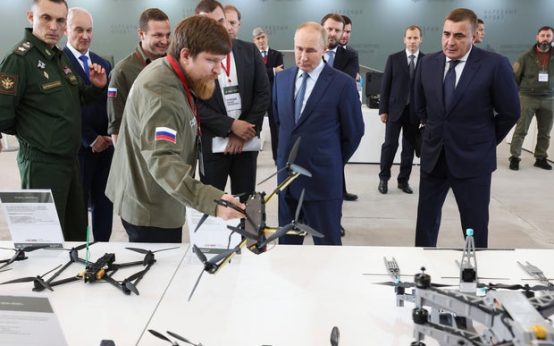 Director of Russian Drone Factory Injured in Car Explosion
  Ohio Congressman Faces Domestic Abuse Allegations