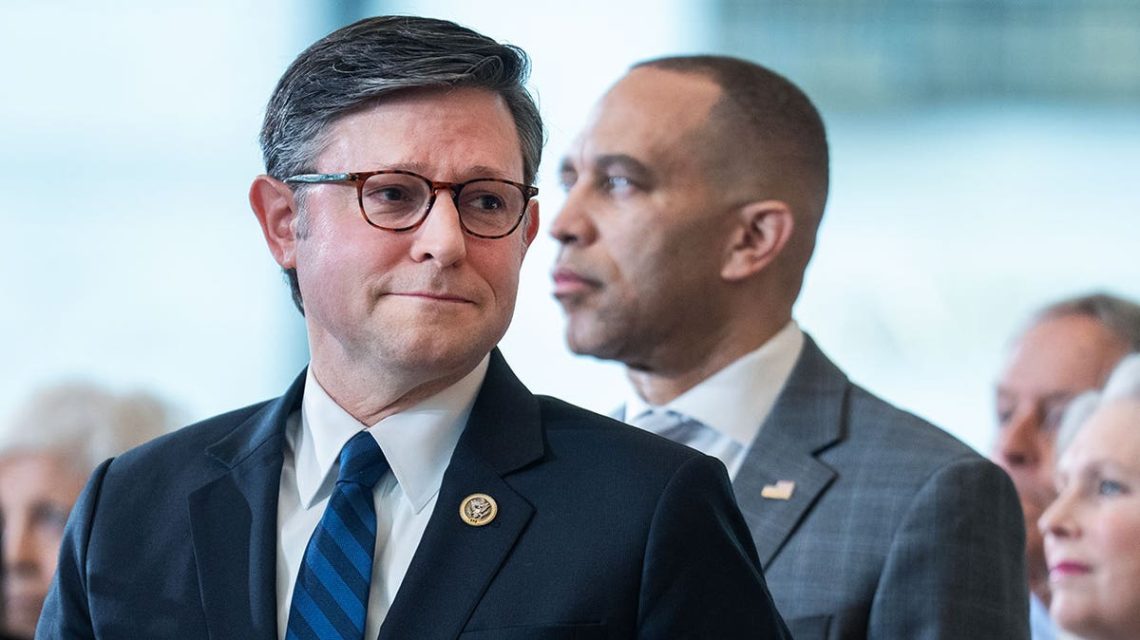
President Trump has called on lawmakers to pass the Save America Act, a bill he believes will strengthen election security. Despite support from most House Republicans, the legislation faces skepticism from some GOP Senators. Concerns focus on the bill’s implementation and its potential effect on election integrity.
Speaker Mike Johnson, R-La., is working to advance the act by integrating parts of it into a larger budget reconciliation bill. This move could potentially bypass Democratic opposition, pushing the act closer to a House-wide vote. The reconciliation strategy allows the party in power to enact fiscal policy changes without needing bipartisan support by aligning the Senate’s passage threshold with the House’s majority requirement.
The reconciliation bill may cover various areas, including funding for state election integrity efforts, replenishing military funds due to the U.S. conflict with Iran, and providing aid to American farmers. Overall, the bill would authorize $95 billion in new federal spending over the next decade.
The process begins with passing a framework in the House, leading committees to allocate their budgets and finalize details. These are then consolidated into a single bill for approval by both the House and Senate before reaching the President’s desk for a signature. The House Rules Committee’s approval means the bill will undergo a chamber-wide vote, followed by debate and a final vote. This vote is scheduled for Tuesday, with the concluding vote planned for the next day.
Earlier on Monday, Trump encouraged Republicans to prioritize advancing the bill. He emphasized incorporating as much of the Save America Act as feasible, alongside funding for farmers and military support. However, Democrats have criticized the effort, describing it as an attempt to unfairly influence elections.
House Minority Leader Hakeem Jeffries, D-N.Y., accused Trump of focusing on voter suppression, neglecting pressing issues like housing, healthcare, and grocery expenses. Likewise, Senate Minority Leader Chuck Schumer, D-N.Y., labeled the legislation as “Jim Crow 2.0.” He argued that it aims to disenfranchise citizens, particularly affecting low-income Americans and people of color.
In contrast, Republicans contend the SAVE America Act would enhance election safety by introducing federal voter ID requirements and mandating proof of citizenship during voter registration.
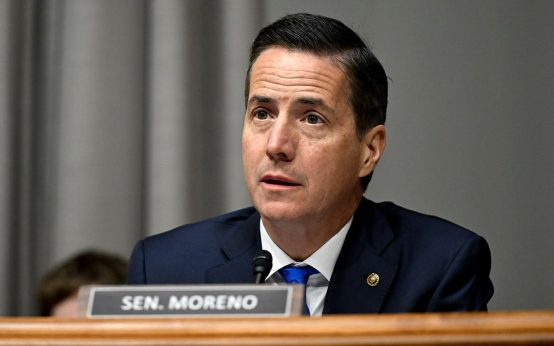 Senator Bernie Moreno Urges DOJ to Address Drug Policy Enabling Forced Abortions
  Karoline Leavitt Offers Insights on Trump’s Calls With Putin and Xi
 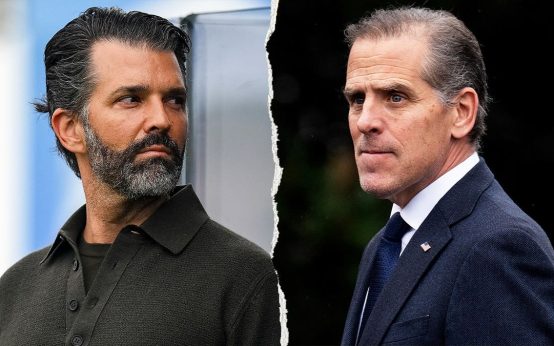 Curtis Pushes for Investigation into Trump Jr. and Biden
  Israeli Prime Minister’s Visit to the U.N. Amid Controversy
  Reader Perspectives on Social Security Reform and Competency-Based Degree Programs
  Republicans in Battleground States Urge End to Iran Conflict