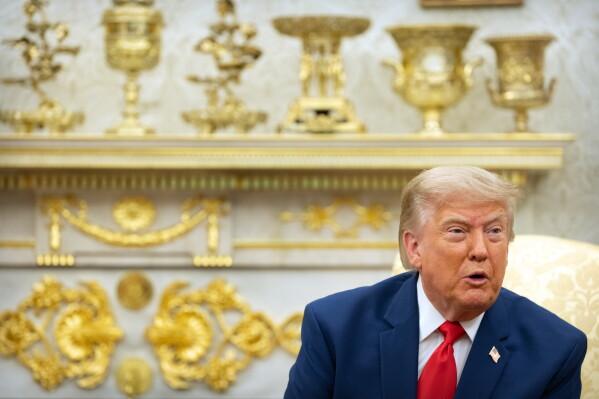
President Donald Trump’s decision to reduce joint military exercises with South Korea has raised significant concerns about U.S. security interests in Asia. Trump’s explanation for this move involved South Korea’s reluctance to support his stance on Iran and his perceived good relations with North Korean leader, Kim Jong Un. This approach, focusing on personal and transactional diplomacy, has become a hallmark of his presidency.
There is no American interest that I can see in this,
said Dan Fried, a former assistant secretary of state for European affairs in the George W. Bush administration. He emphasized that the decision undermines South Korean and Japanese security, frightens Taiwan, unnerves NATO, and emboldens China, not to mention North Korea.
Danny Russel, who served in the Obama administration as an assistant secretary of state for East Asia and the Pacific, critiqued the decision, stating it favored an adversary over an ally. Russel, now with the Asia Society Policy Institute, described Trump’s choice as punishing South Korea while benefiting Kim Jong Un.
Trump ordered a reduction in the 11-day Ulchi Freedom Shield exercises, which were underway. The extent of the downsizing was unclear and baffled many in South Korea, a nation that prioritizes national security due to threats from nuclear-armed North Korea.
This move drew criticism from Democrats in Congress. Rep. Greg Meeks of New York noted that treating allies like adversaries undermines alliances and benefits competitors like China and North Korea. Trump’s social media post, featuring North Korea’s leader and a caption reading, HEY DONALD … WE COOL, RIGHT?
added to the controversy.
Retired Ambassador Robert Wood highlighted the importance of these exercises in deterring North Korea, which has avoided talks with the U.S. about its nuclear program and accelerated weapon testing. He expressed concerns that South Korea might consider developing its own nuclear weapons if it doubts U.S. protection.
Matthew Kroenig of the Atlantic Council noted that polls indicate growing South Korean support for a nuclear capability. Reducing military exercises may undermine the U.S. message of protection. Despite efforts by South Korea to curry favor with Trump, the decision surprised many, including those who praised him in the past.
Trump’s approach has caused allies to reconsider their security strategies without U.S. aid. Charles Kupchan, a senior fellow at the Council on Foreign Relations, said, They are hoping that the American umbrella is there for the future,
though they must consider the possibility of its absence.
Despite Trump’s wish for allies to contribute more to defense, his unpredictability strains alliances. John Herbst, a former ambassador to Ukraine, noted that while the U.S. maintains long-term alliances, inconsistency could erode this system.
The outcome of Trump’s message to South Korea remains uncertain. As Matthew Kroenig pointed out, given Trump’s unpredictability, the exercises might proceed as planned if no further actions are taken.
 White House Criticizes CNN Reporter After Oval Office Exchange
  Illinois Funding Debate Highlights Challenges of School Budget Allocation
  Debbie Wasserman Schultz Runs in New District Amid Controversial Redistricting
  Trump Votes by Mail Despite Criticism
  Political Battle Heats Up Over Social Security and Tax Policies
  Honor System Threatens Election Integrity, Warns Fox News Contributor