
As one of the most devastating wildfires wreaked havoc in Colorado, former President Trump concentrated on supporting Tina Peters, a MAGA advocate and former top election official. Peters pursued Trump’s unproven assertions that faulty voting machines cost him the 2020 election. A court sentenced Peters to nearly nine years in prison. Trump aimed to secure her release through Colorado Governor Jared Polis.
Peters’ Legal Troubles
Peters faced legal issues after being accused of allowing unauthorized access to state voting machines. Colorado’s Secretary of State, Jena Griswold, accused Peters of helping someone pose as a county employee to access and copy sensitive election software.
“Tina Peters ordered that her video cameras be turned off, then shared images of the voting equipment,” Griswold stated.
Peters spoke at a conference where the copied data was revealed. She faced obstruction charges when she failed to cooperate with an investigation into the security breach. A jury found her guilty of multiple felonies and misdemeanors, resulting in her lengthy sentence.
Political Fallout
Phil Weiser, Colorado’s Attorney General, alleged Trump punished the state for Peters’ imprisonment. The President reportedly threatened to withhold federal disaster aid if Peters weren’t released. Trump dismissed these claims, stating there was no politicization of disaster relief. Despite this, federal aid for the wildfire was initially denied, among other funding threats.
The President’s actions, according to Weiser, were a public retaliation campaign. Trump labeled Peters a political prisoner and criticized Colorado Governor Polis, whom he called “weak” and “pathetic.” A federal pardon from Trump had no legal effect on Peters’ state convictions.
Commutation and Its Impact
Governor Polis eventually commuted Peters’ sentence after less than two years served, citing the nature of her offenses and her age. His decision drew criticism from the Colorado County Clerks Association, who felt betrayed by what they saw as political pressure from Trump.
“This was a nonviolent, elderly, first-time offender,” Polis defended his commutation decision.
Critics, however, questioned the timing of the commutation, noting it coincided with court reviews of Peters’ sentence.
Peters’ Remained Unapologetic
Since her release, Peters has remained active in election skepticism circles, attending summits and speaking on conspiracy platforms. In a 60 Minutes interview, she continued to question the reliability of voting machines.
Federal and state investigations, including those led by Republicans, found no evidence of voter fraud that could have impacted the 2020 election outcome. However, Peters maintained that election records were improperly wiped, a claim countered by election officials stating it was part of routine updates.
The Colorado County Clerks Association clarified all necessary election records were properly backed up and retained, contradicting Peters’ claims of data destruction.
Restoring Confidence
Federal funds have since resumed flow into Colorado, with stalled projects receiving green light. Still, Griswold and other officials express concern over the lasting damage to voter confidence caused by Peters’ actions and the resultant political turmoil.
Election officers, like Matt Crane, note the increased hostility and threats faced by workers, attributing a significant part of the blame to the national stage provided by Trump’s stance.
“We lack the platform to counter disinformation like the President,” Crane stressed.
The state aims to rebuild trust in its election systems, emphasizing integrity and transparency moving forward.
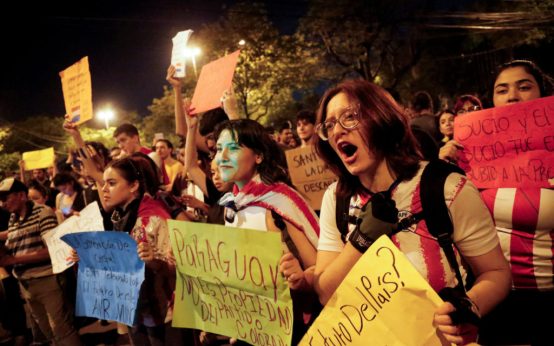 Paraguay’s Political Crisis: Former President’s Ouster and Bank Collapse
 Stephen Miller Named New White House Chief of Staff, Causing Democratic Outrage
 Latino Voter Shift and Democratic Gains in Midterms
 Democratic Doctors and Scientists Enter Congress with New Agendas
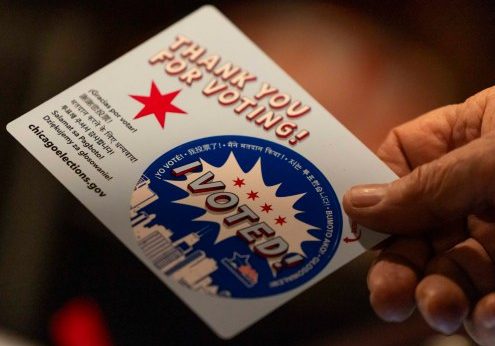 Mary E. Miller Wins Reelection in Illinois’ 15th Congressional District
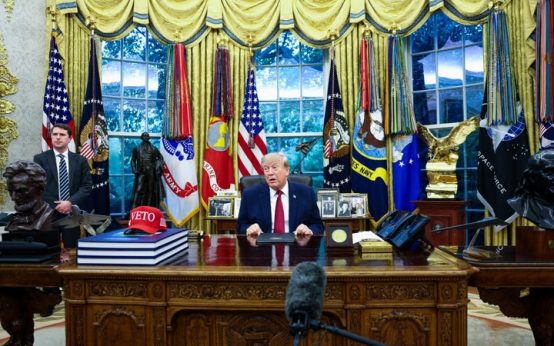 Trump Designates the Oval Office as a National Monument