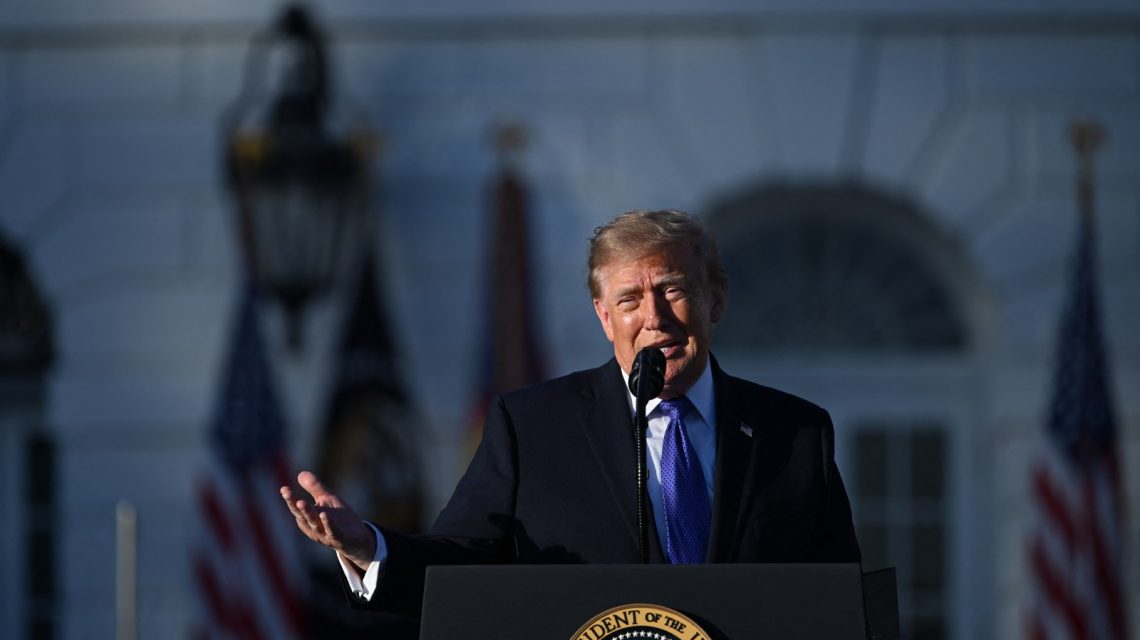
Hugh Hewitt, a former adviser to President Ronald Reagan, has urged President Donald Trump to use his pardoning authority to help over a million undocumented immigrants. Hewitt’s suggestion appears in an op-ed for Fox News, describing this potential action as a ‘golden touch’ for Trump, offering relief to immigrants anxious about deportation.
Trump raised the idea of collaborating with Democrats on immigration reform in an interview with CBS’ 60 Minutes after the midterms. However, his plans faced objections from his MAGA supporters and senior officials concerned about amnesty for immigrants without criminal records. Ilya Somin, a law professor at George Mason University, explained to Newsweek, ‘He can pardon undocumented immigrants for any federal crimes they might have committed. That’s different from legalizing their status, which raises different issues.’
Hewitt’s Proposal
Hewitt’s plan does not involve mass amnesty but suggests a selective pardon program. This program would target individuals like those who entered illegally, returned after deportation, or overstayed their visas. Criteria might include those living in the U.S. before January 2020, consistently employed, and having paid taxes. Hewitt also recommends focusing initially on parents of U.S. citizens, noting that Trump need not await Congress’s action.
According to Hewitt, such a presidential act would be unparalleled in American history and likely viewed as one of Trump’s significant achievements, gaining approval from a broad range of Americans. He advised that White House Counsel Will Scharf draft options for Trump’s consideration.
Jeremy Beck, co-president of NumbersUSA, disagrees, suggesting Hewitt misinterprets election data. Beck asserts that Americans demand reliable enforcement and that an emphasis on workplaces and audits aligns with voter desires for economic security.
The Power and Limitations of the Pardon
Trump holds substantial constitutional power to issue pardons. Yet, extending pardon power to undocumented immigrants would present complex legal challenges. Article II of the Constitution permits presidential pardons for ‘Offenses against the United States’. This power, as interpreted by the Supreme Court, allows presidents to pardon groups of individuals. Trump, therefore, might pardon certain federal immigration offenses.
Legal expert Jason A. Cade observes, ‘A mass pardon would be interesting and unprecedented. The effectiveness is hard to predict.’ While a pardon might nullify civil penalties, it confers no legal status on its recipients. Entering or reentering the U.S. illegally could bear consequences as federal offenses, but pardoning alone does not provide lawful residency or work rights.
David Bier from the Cato Institute explains, ‘The president can pardon illegal immigrants for crimes, but they would still lack legal status. Thus, they remain susceptible to deportation.’
Reagan’s Immigration Legacy
Hewitt, referencing his time in the Reagan administration, recalls the Immigration Reform and Control Act of 1986, which combined enforcement with legalization. This policy allowed millions of undocumented immigrants to attain legal permanent residence. Aligning with this legacy could resonate with Trump, who aims to make significant changes in immigration policy.
Support for a Mass Pardon?
While conservative figures might oppose leniency for those who entered or overstayed illegally, Hewitt’s proposal could gain public favor. Trump’s CBS interview indicated his awareness of public opinion regarding his immigration strategies.
Polls reveal a public interest in legal pathways for long-term undocumented immigrants. Still, as Bier noted, ‘A mass pardon would not resolve the fundamental issues in the immigration debate.’ The Supreme Court allows presidential discretion over deportation priorities, as shown in Biden’s term. Yet, Trump has not leveraged this power to protect immigrants, suggesting skepticism about implementing Hewitt’s concept.
 USS Doris Miller: Navy Retains Historic Name Amid Renaming Debate
 Dan Sullivan Concedes Alaska Senate Race to Mary Peltola
 Democrats’ Strategic Decisions Ahead of New Congress
 President Trump’s Approval Rating Post-Midterms
 Texas Governor-elect and YouTube Teacher Unite to Oppose Family Detention
 House Ethics Probe Results in Repayment from Congressman Mike Collins