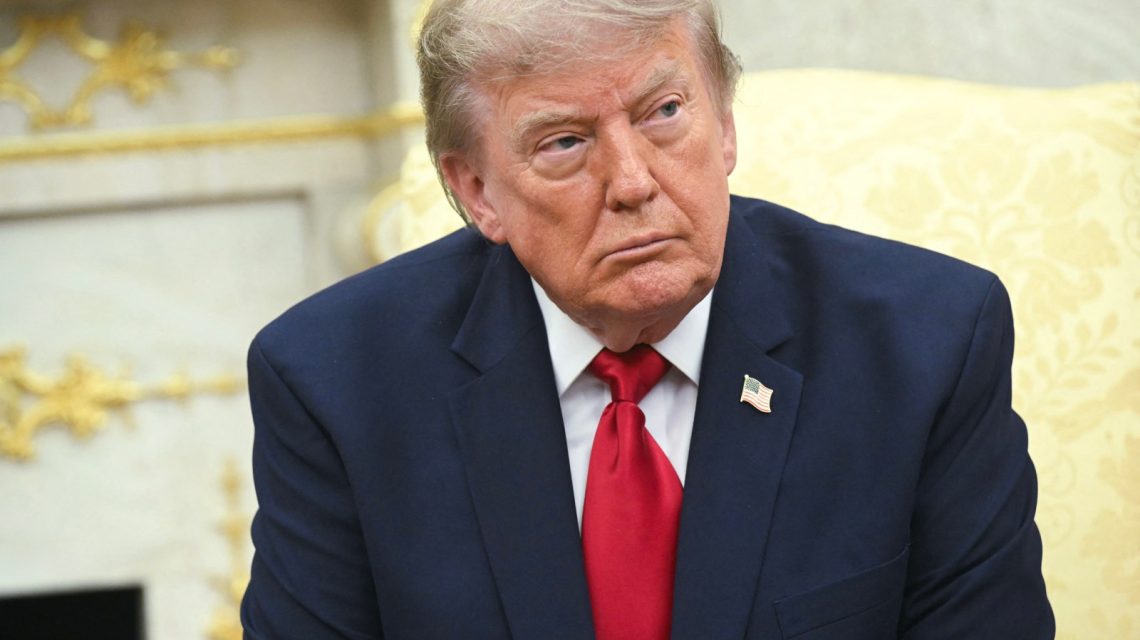
President Donald Trump has highlighted significant decreases in violent crime and murders during the tenure of Acting Attorney General Todd Blanche, especially as Blanche approaches his confirmation hearing before the Senate Judiciary Committee. Trump appointed Blanche to lead the Department of Justice after Attorney General Pam Bondi resigned in April. The upcoming hearing is crucial for Blanche, who needs the support of the Judiciary Committee to advance his nomination to the Senate floor. Following the death of Senator Lindsey Graham, the committee’s dynamics may allow only one Republican to vote against Blanche.
Not all Republican members have shown unwavering support for Blanche. Some, like Senators John Cornyn of Texas and Thom Tillis of North Carolina, are considered potential swing votes. Trump expressed the importance of supporting Blanche through Truth Social, citing drops in violent crime as key reasoning for backing his nominee.
Trump pointed out that under Blanche’s command at the DOJ, murder rates have hit their lowest levels since 1900, and violent crime arrests are up by 100%. Crime statistics, including robberies, carjackings, and assaults, have reportedly decreased. He credited this decline to imposing strict law and order in communities, contrasting previous Democratic leadership’s approach.
Preliminary FBI data supports some of Trump’s claims. Notably, violent crime rates have broadly fallen during his administration, although complete 2025 crime figures are pending.
The FBI released early crime data showing violent crime decreased 9.3% from 2024 to 2025, with property crime dropping 12.4%. These figures may change when final reports are published. Criminologist Angelo Kevin Brown from Arkansas State University highlighted the economy as a key influence on crime trends, alongside policies involving education, healthcare, and social safety nets.
Brown asserted much crime-relating policymaking occurs at local or state levels, unaffected directly by federal government changes. The reduction in crime trends predates Trump’s administration.
Four claims by Trump are analyzed below:
Murder Rates and Their Dramatic Drop
The White House referred to a Council on Criminal Justice Report predicting a possible drop in homicide rates in 2025 to 4 per 100,000 residents, considered the lowest since 1900 and a historic one-year decline. However, full FBI data to confirm these figures have not yet been released, leaving the assertion temporarily unverified.
Violent Crime Arrests Increase
Trump claimed that violent crime arrests doubled. FBI Director Kash Patel disclosed that arrests doubled across 17 field offices during Trump’s first year. Data across all 56 field offices remains unclearly reported.
Decrease in Robberies, Carjackings, Assaults
According to preliminary FBI data, these crimes indeed saw a decline last year. Robbery decreased by 18.5%, and aggravated assault dropped by 7.2%. Specific percentages for motor vehicle theft were not provided.
Seizure of Deadly Drug Doses
Trump accurately stated over 500 million deadly drug doses have been seized. In 2026, more than 190 million were confiscated according to the Drug Enforcement Administration, following over 369 million in 2025.
Scrutiny of FBI’s Crime Statistics
May’s report questioned the methods by which FBI arrest statistics were reported. Allegations arose that policies inflated arrest figures. The FBI repudiated these claims as attempts to discredit their record reduction in crime.
Brown noted the increase in crime incidents during the COVID-19 pandemic. Factors beyond economic implications, such as societal stress and lifestyle changes during the pandemic, influenced crime patterns.
Some attributed the crime spike to progressive criminal justice reforms. Nonetheless, various experts argue socioeconomic factors and increased gun purchases played more notable roles. According to a Brennan Center for Justice report from July 2022, the pandemic’s economic impact, mental health concerns, and disruptions to community-led crime prevention initiatives further fueled rising crime rates.
The pandemic’s recession proved starkly unequal, highlighting disparities among different workforce sectors. For individuals with a criminal record, particularly, the job market became increasingly challenging, exacerbating the situation.
 Republican Senator Criticizes Trump’s $5,000 Check Proposal
  Trump’s Approach to Iran at the United Nations
  Trump’s Triumphal Arch Controversy
  Concerns Over Abdul El-Sayed’s Potential Senate Role and National Security
  Kentucky Governor Andy Beshear Discusses Tariffs, Faith, and Political Ambitions
  Sunday Highlights: Lane Kiffin, Nancy Mace, and College Football Drama